You're in a quiet house, the owner's flight has departed, and the cat is tucked behind the sofa. You top up the food, scoop the litter, and send a reassuring message. The bowl still contains food, so everything seems fine.
By the next evening, you can't say what the cat ate. You added fresh kibble over yesterday's leftovers, didn't note the litter output, and assumed the hiding was normal. The problem isn't a lack of care. It's the absence of a baseline.
Useful cat sitting tips connect the handover to what happens every day. Written instructions tell you what normal looks like; feeding and litter records show whether that's changing; clear updates help the owner respond before a concern becomes harder to manage.
Before the owner leaves, you need more than a cupboard tour and a promise to send pictures. You need a routine you can repeat even when the cat won't approach, the owner is asleep in another time zone, or the automatic feeder doesn't work.
1. Create a Detailed Written Care Sheet Before the Sit
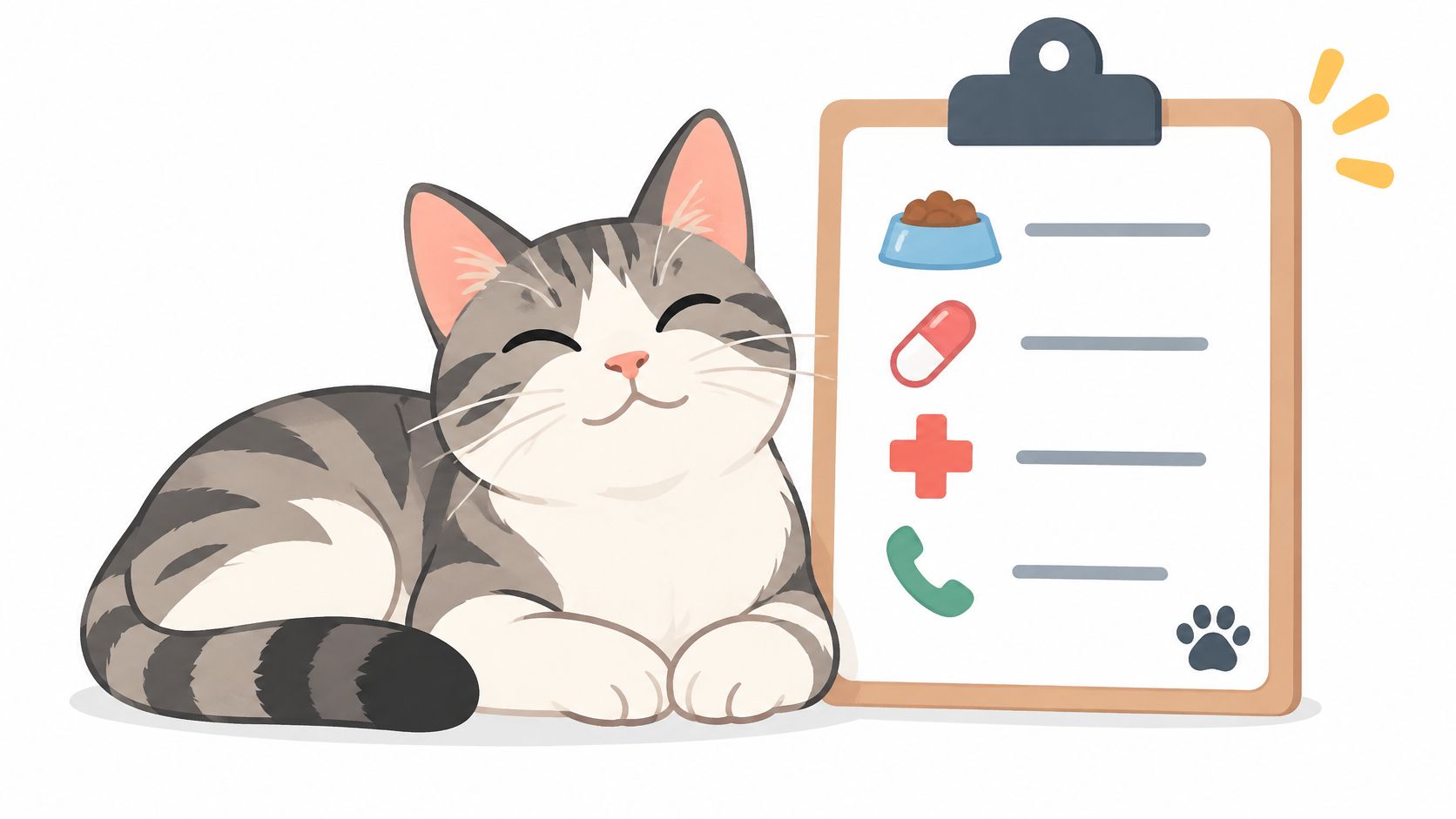
A good handover leaves you able to do the job without reconstructing instructions from scattered messages. Keep the working care sheet brief, put medical concerns and emergency contacts at the top, and attach longer veterinary instructions separately.
At Global Pet Sitter, we require written care instructions alongside a handover, either in person or by video call. Owners must remain accessible for questions and emergencies, and the handover must cover routines, feeding, veterinary information, house rules, and special requirements.
Write instructions someone can actually follow
- Food and medication: Record the exact product, portion, timing, storage instructions, and prescribed medication directions. Photograph packaging so similar-looking bags don't cause confusion.
- Normal behavior: Describe appetite, litter habits, preferred hiding places, handling tolerance, and what usually happens when strangers arrive.
- Supplies and access: Locate the carrier, spare key, cleaning supplies, first-aid kit, and water shut-off valve.
- Emergency arrangements: Include the regular vet, emergency clinic, backup contact, treatment authorization, and payment arrangements.
Say the owner says to give a scoop of food, but their messages describe a different amount. Resolve that during the handover, then have the owner demonstrate the agreed portion.
For a medication-dependent cat, watch the owner administer the treatment and demonstrate the procedure yourself if appropriate. If you can't safely perform essential care, say so before accepting responsibility. A detailed document doesn't replace practical competence.
2. Keep Feeding and Routines as Consistent as Possible
Topping up a bowl tells you what you supplied, not what the cat ate. Start each feeding by checking and recording what remains, then serve the owner's agreed portion using their scale or marked measuring cup.
Keep the same food, bowls, feeding locations, and meal schedule. A prescription diet isn't interchangeable with another bag carrying similar wording, and an unfamiliar treat isn't a sensible appetite experiment.
The American Veterinary Society of Animal Behavior's summary of home and clinic examinations reports that cats were significantly more likely to hide during clinic examinations, supporting the value of familiar surroundings.
Practical rule: Preserve the routine before trying to improve it. A holiday sit isn't the time to redesign a cat's diet or feeding setup.
Make meals observable
Ask the owner to demonstrate automatic feeders, fountain cleaning, and any separation needed during meals. Refresh drinking water daily, check that fountains are running, and keep an accessible water bowl available if that's part of the agreed setup.
In a multi-cat household, an empty shared bowl doesn't prove that every cat ate. Say a confident cat finishes its own meal and then pushes a timid companion away. Feed in the owner's established separate spaces and watch who eats before clearing the dishes.
Record leftovers consistently, using the kitchen scale when practical or a clear description when it isn't. If food intake falls, report the change rather than repeatedly adding treats and losing track of what happened.
3. Maintain a Clean and Sufficient Litter Box Setup
The litter tray is both a cleaning task and a health observation point. Before scooping, look at urine output, stool appearance, and anything unusual around the box; once you've bagged the waste, that information is harder to recover.
A peer-reviewed review in Veterinary Medicine International identifies overgrooming and elimination outside the litter box among signs associated with feline fear, anxiety, and stress. Accidents deserve investigation, not punishment or an assumption that the cat is misbehaving.
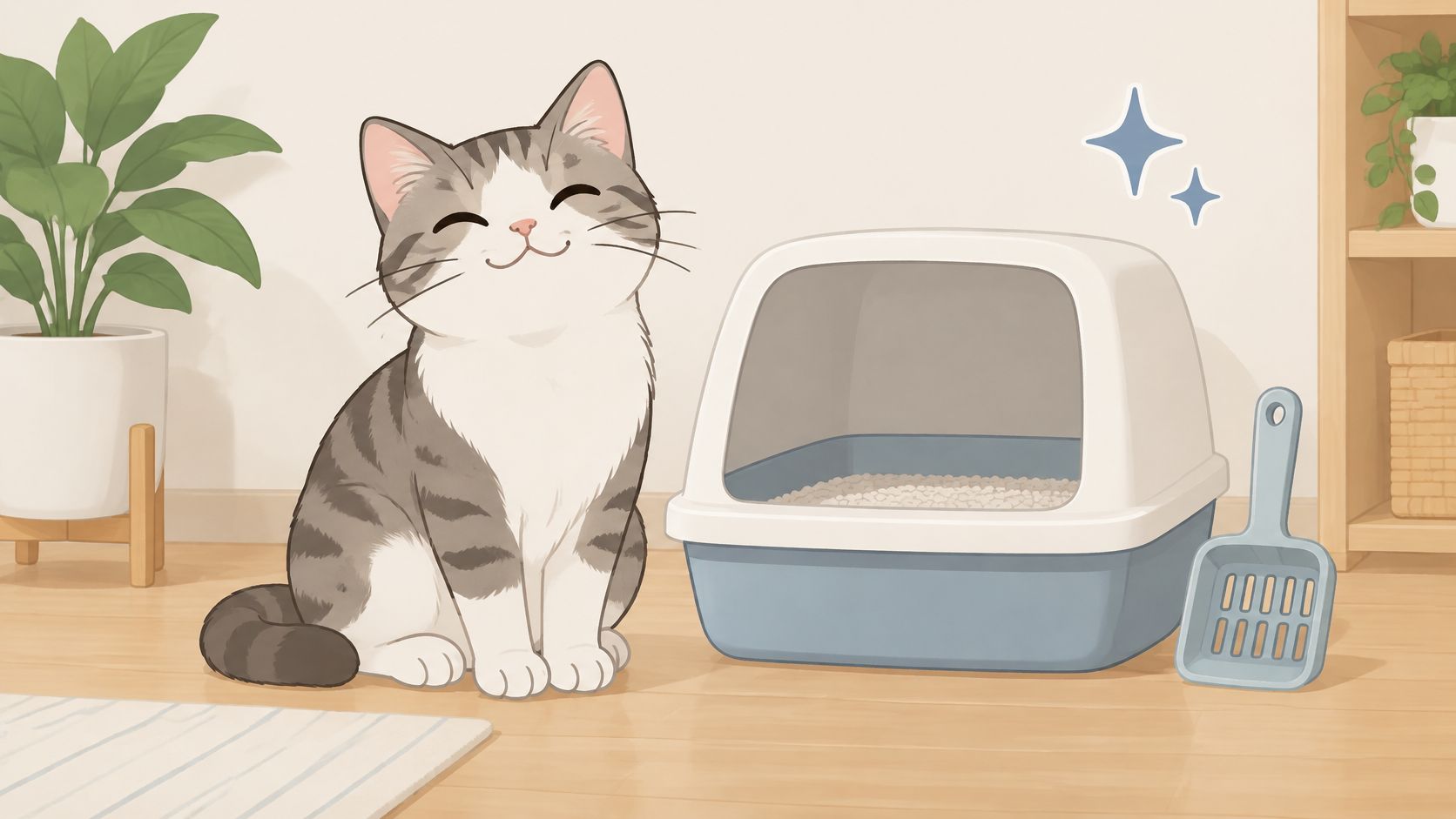
- During handover: Confirm the usual litter, box locations, cleaning method, disposal arrangements, and normal output.
- During daily care: Scoop, check for blood or unusual stool, replenish the familiar litter, and clean scattered debris.
- When something changes: Record what you found and when. In shared boxes, acknowledge when you can't identify which cat produced it.
Don't relocate trays to make housekeeping easier. Check that doors stay open and that another cat can't block access; discuss additional boxes with the owner if the existing setup is inadequate.
Say a male cat repeatedly enters the tray, strains, and produces little or no urine. That needs emergency veterinary attention, not another observation period or a routine update later.
Use the owner's established cleaning products, avoid heavily scented chemicals around the tray, and wash your hands afterward. Cleanliness matters, but removing every familiar smell through unnecessary deep cleaning can add disruption.
4. Provide Daily Play and Mental Enrichment
Ask the owner to show you a game the cat enjoys. A wand dragged along the floor may work better than feathers waved overhead, while an elderly cat may prefer watching and batting from a comfortable resting place.
The AAHA/AAFP feline environmental-needs guidelines identify play, simulated hunting, vertical territory, hiding places, and accessible resources as important parts of feline wellbeing. Preserve those familiar options instead of arriving with a new enrichment regime.

Offer play without demanding participation
Build short, cat-led opportunities into the daily routine. Move the toy away from the cat like prey, allow catches, and stop when the cat disengages or becomes tense.
- Use familiar equipment: Ask which toys are safe to leave out and which require supervision.
- Account for food rewards: Take approved treats or puzzle-feeder portions from the agreed food allowance.
- Finish safely: Put away string, ribbons, feather attachments, and damaged toys after supervised play.
Say a shy cat watches from beneath a chair but won't chase. Place a familiar toy within reach, sit at a comfortable distance, and record that the cat watched without engaging. Don't pull it out to complete a play session.
Our guide to recognizing boredom in cats can help distinguish a need for more suitable activity from an expectation that every cat should play the same way. Daily notes should record participation and changes, not judge success by enthusiasm alone.
5. Learn the Early Signs of Illness and Respond Promptly
A written care sheet needs an action plan, not just a vet's telephone number. Agree beforehand which changes require an owner update, which need veterinary advice, and which mean seeking emergency care immediately.
Use the cat's normal appetite, breathing, movement, toileting, and hiding behavior as your baseline. Our guide to lethargy in cats helps explain why unusual inactivity deserves attention rather than being dismissed as extra sleep.
Separate a concern from an emergency
- Contact the owner promptly: Report a clear appetite reduction, unusual hiding, altered grooming, or a change in stool or mobility. Seek veterinary advice when the change is concerning or persists.
- Seek emergency help: Breathing difficulty, collapse, suspected poisoning, or straining with little or no urine shouldn't wait for a scheduled update.
- Prepare the practical details: Save clinic contacts, locate the carrier, confirm transport, and obtain written treatment and payment authorization.
Don't wait for a universal missed-meal deadline. A cat's medical history, medication, and accompanying symptoms affect how urgently a veterinarian needs to assess it.
Say a normally food-motivated cat refuses its meal and appears weak. Contact the owner and veterinarian promptly rather than assuming separation stress; describe the last confirmed meal and the behavior you observed.
Record photos or video only if doing so won't delay treatment. Never give human medication or change prescribed doses without veterinary direction.
Under our policies, sitters should contact owners before veterinary expenses where possible. If an owner can't be reached, protect the cat's welfare, including seeking veterinary care when necessary.
6. Cat-Proof the Home and Remove Toxic Hazards
Walk through the property with the owner before unpacking. Learn how doors latch, which windows must remain closed, where the cat waits during deliveries, and whether it has a habit of entering cupboards or appliances.
Your belongings can introduce hazards into an otherwise familiar home. Secure medication, toiletries, charging cables, sewing supplies, rubber bands, and hair ties rather than leaving an open suitcase available for investigation.
Repeat a brief safety sweep
- Doors and windows: Don't treat an insect screen as a secure cat barrier. Close vulnerable windows and follow the agreed balcony and outdoor-access rules.
- Plants and flowers: Identify arrangements before leaving them accessible. Remove lilies from the cat's environment and contact a veterinarian immediately if exposure is suspected.
- Household products: Secure cleaners, essential oils, medicines, and rubbish. Don't rely on a high shelf if the cat can climb there.
- Appliances and hiding places: Check inside washing machines, dryers, cupboards, and recliners before operating or closing them.
Say a flower delivery arrives while the owner is away. Keep it inaccessible until you've identified the plants rather than putting it on the dining table. Plant names matter: our guide to whether ferns are toxic to cats explains why a broad description isn't enough to judge safety.
Use this video as a prompt for the household safety discussion.
Preserve safe hiding places during these checks. Removing hazards doesn't mean blocking every retreat or rearranging the home until the cat has nowhere familiar to rest.
7. Communicate Clearly and Document Each Day
A photograph proves the cat was visible, not that it ate or urinated normally. Agree on an update window, communication channel, and urgent-contact method before the owner travels, including how time-zone differences will work.
Keep a dated working log, then send a readable summary. Separate observations from interpretations: write that the cat left most of its usual meal, not that it's sulking.
Send information the owner can use
- Food and water: Note what was offered, what remained, and any obvious change in drinking.
- Litter: Describe urine and stool observations, accidents, or uncertainty in a shared setup.
- Medication: Record administration, refusal, or a problem immediately after it happens.
- Activity and mood: Include movement, play, grooming, hiding, and handling tolerance.
- Action needed: State whether you're asking a question, contacting the vet, or just documenting normal care.
Say the cat stays beneath the guest bed but eats after you leave the room and uses the tray normally. Report those observations and how you confirmed them, without claiming the cat is definitely well.
Useful update: Describe what changed, what you checked, and what you're doing next. Save urgent concerns for direct contact, not the end of a cheerful photo message.
Don't force a shy cat into view for proof of care. Agree on a low-pressure welfare-check method during handover, and take photographs only when the cat is comfortable.
If you can't locate or assess the cat, say so promptly. Honest uncertainty gives the owner something useful to respond to; invented reassurance doesn't.
How each cat sitting tip protects the cat and the stay
| Item | Main Risk Addressed | Key Supplies or Setup | Frequency |
|---|---|---|---|
| Create a Detailed Written Care Sheet Before the Sit | Missed care or misunderstandings | Written instructions for feeding, medication, litter, preferences, house rules, and emergency contacts | Prepare and review before each sit |
| Keep Feeding and Routines as Consistent as Possible | Stress, appetite changes, and digestive upset | Familiar food, measured portions, fresh water, and consistent routines | Follow the routine daily |
| Maintain a Clean and Sufficient Litter Box Setup | Litter box avoidance and missed health warning signs | Familiar litter, clean accessible boxes, and a scoop | Scoop at least once daily |
| Provide Daily Play and Mental Enrichment | Boredom, stress behaviors, and inactivity | Interactive toys, puzzle feeders, scratching posts, and perches | Daily; typically 10–15-minute sessions several times a day |
| Learn the Early Signs of Illness and Respond Promptly | Delayed care for illness or emergencies | Vet and emergency contacts; monitor appetite, behavior, breathing, and litter habits | Monitor throughout the sit; respond promptly to warning signs |
| Cat-Proof the Home and Remove Toxic Hazards | Poisoning, escapes, and household accidents | Secure windows and doors; store toxic substances, cords, and small objects safely | Check before the sit and throughout the stay |
| Communicate Clearly and Document Each Day | Owner uncertainty and undocumented concerns | Daily messages, photos, and a log of food, litter, play, and behavior | Send updates and keep notes daily |
Turn These Seven Habits Into a Routine You Can Reuse
Start every sit with written instructions and a practical handover. Locate supplies, demonstrate essential tasks, confirm what's normal for the cat, and resolve contradictions before the owner leaves.
Then repeat the same daily sequence: observe the cat, check food and water, inspect and clean the litter, provide appropriate interaction, review household hazards, and record what happened. Send the owner a concise update drawn from those observations rather than trying to remember everything later.
Keep the routine consistent, not rigid
Consistency makes changes easier to notice, but it shouldn't stop you responding to the cat in front of you. A cat that declines play may need space; a cat that declines food and moves unusually may need veterinary advice.
Use the care sheet as a baseline, not permission to ignore a developing problem. When something doesn't fit, document the difference and choose an action rather than repeating the routine automatically.
- Before departure: Confirm care instructions, medical needs, emergency authorization, access, and communication.
- During the stay: Record what the cat eats, produces, and does, including anything you couldn't verify.
- Before finishing: Summarize unresolved concerns, recent medication, food supplies, and anything the returning owner needs to monitor.
The final handover matters too. Don't bury reduced appetite in an old message and assume the owner remembers it after travelling; flag any continuing concern directly and leave the record accessible.
For owners, preparation means describing the cat clearly, including awkward medication, escape attempts, and intolerance of handling. For sitters, preparation means accepting only care you can carry out safely and asking specific questions before responsibility transfers.
The strongest cat sitting tips aren't tricks for making every cat affectionate. They're habits that help you preserve familiar routines, notice meaningful changes, and communicate clearly. A settled cat may spend much of the stay keeping its distance, and that can still be a successful sit when its care and welfare are reliably accounted for.
Global Pet Sitter connects owners with sitters who care for pets at home in exchange for accommodation, with no money changing hands. Visit Global Pet Sitter to post your dates and care needs or find a sit that matches your skills, then use the handover to agree on a daily routine before the stay begins.
Bitte melde dich an, um einen Kommentar zu hinterlassen
