The kitten is home, the travel dates are already booked, and you are standing in the kitchen trying names out loud. That name will be said by other people too. A neighbour calling him in, a vet nurse on the phone, and a house sitter reading your notes at breakfast all need the same word. A good choice is clear, calm-sounding and easy to spell on a care sheet.
We have grouped these 10 boy cat names by feel. The list moves from soft and gentle through classic British, short and bold, playful, characterful, and finally distinctive and storybook. Match the sound to your kitten's personality rather than to a trend.
We judge each name on a test most lists skip. Can a stranger say it clearly, and can a new kitten learn it fast? Syllable count, whether it clashes with commands such as "no" or "down", and how cleanly it sits on a microchip record and a written routine all count. You do not need a huge shortlist. You need one name you will still want to call next year.
1. Milo
Milo is the soft end of the list. Two syllables, a friendly ending, and a sound a stranger can get right across a room. A young cat still building trust does better with a gentle call than a sharp one.
It is a familiar UK choice, not a novelty. In Cats Protection's 2019 Big Cat Name Survey, which received approximately 34,000 responses, Milo sat among the leading male names after Charlie, Oscar, Alfie, George and Jasper. Rankings are not population shares, but they show the name is already easy for other people to recognise.
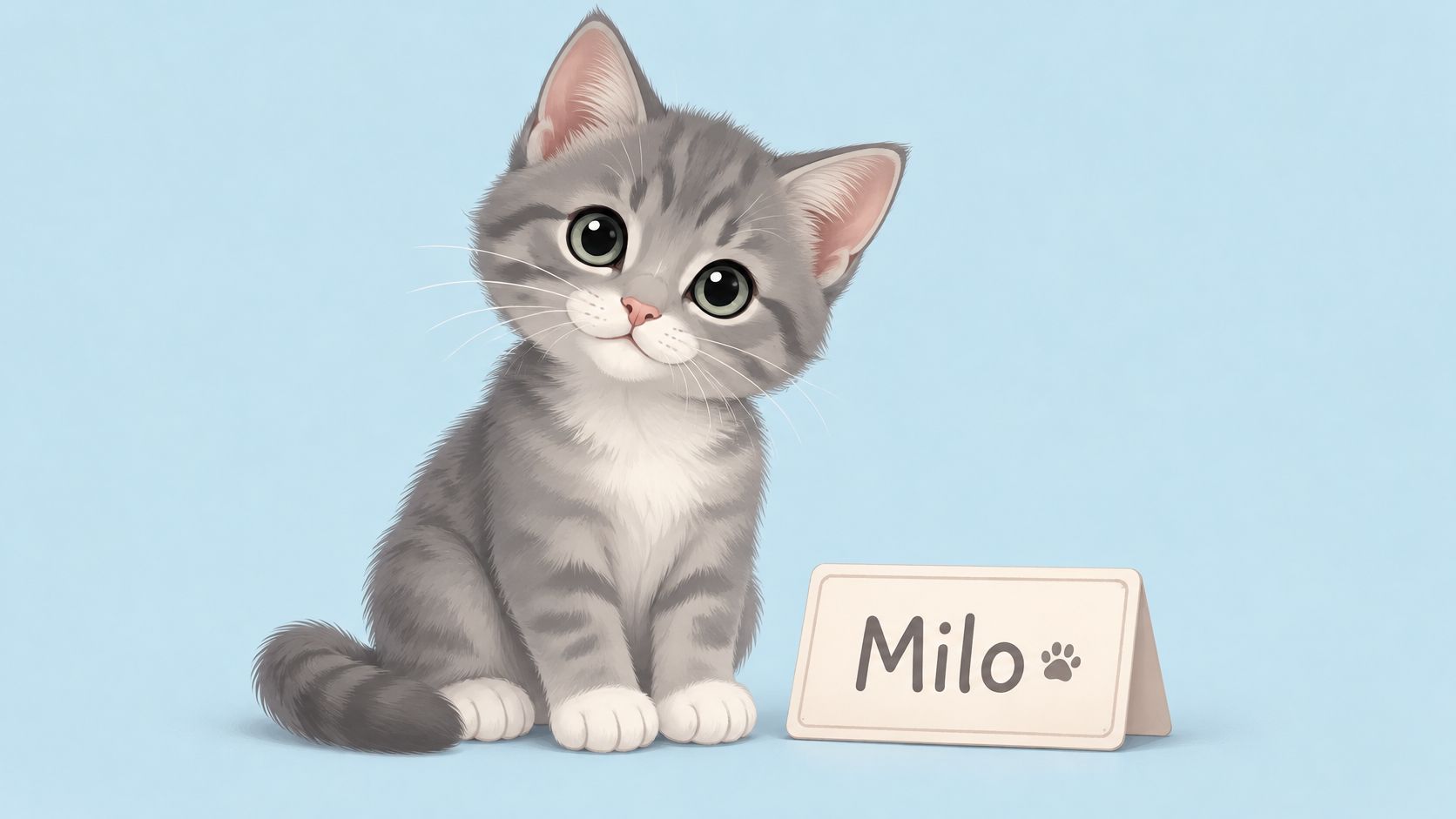
The 1986 film Milo and Otis helped fix the name for cats through the 1980s and 1990s, and many UK rescue centres still list Milo among frequent names for young males. Say a shy grey tabby hides under the sofa on day one. Your sitter calls "Milo" the same way you do at every meal, and he learns that the word means food and a calm voice, not a chase.
Practical rule: If the vowel might slip, write MY-lo on the care sheet and add a short video of him answering.
If he is new to the house, settle him before you travel. You can arrange trusted in-home care through our sitter search, and we recommend one meeting before the trip. If a second cat is on the cards, our girl cat names guide uses the same clarity test.
2. Oliver
Oliver carries a warm British weight that a one-beat nickname cannot. Three syllables give it rhythm, and most homes shorten it to Ollie or Olly for daily life. Keep Oliver on the microchip and the vet record. Put the nickname on the care sheet, and tell your sitter which form he answers.
Charles Dickens' Oliver Twist gives the name a literary root that British ears already know. That helps at the clinic. It does not help at 6pm if you have been calling him three different things. Pick the everyday form and stick to it while he is learning.
Say he is confident indoors and silly at bedtime. You might use Oliver when you want his attention, and Ollie when you are praising him. Write that split down. A sitter should not have to guess which version means "stop chewing the cable".
Before you leave, check windows, the cat flap and your house rules, then put them in a written agreement. Our pet sitting contract template is a plain place to record the name he knows, visit times and who to call.
3. Leo
Leo is one syllable, so it cuts through a noisy kitchen and a secure garden. The lion link gives it a bold feel without making the call long. For a playful kitten who bolts toward a toy, that shortness is the point.
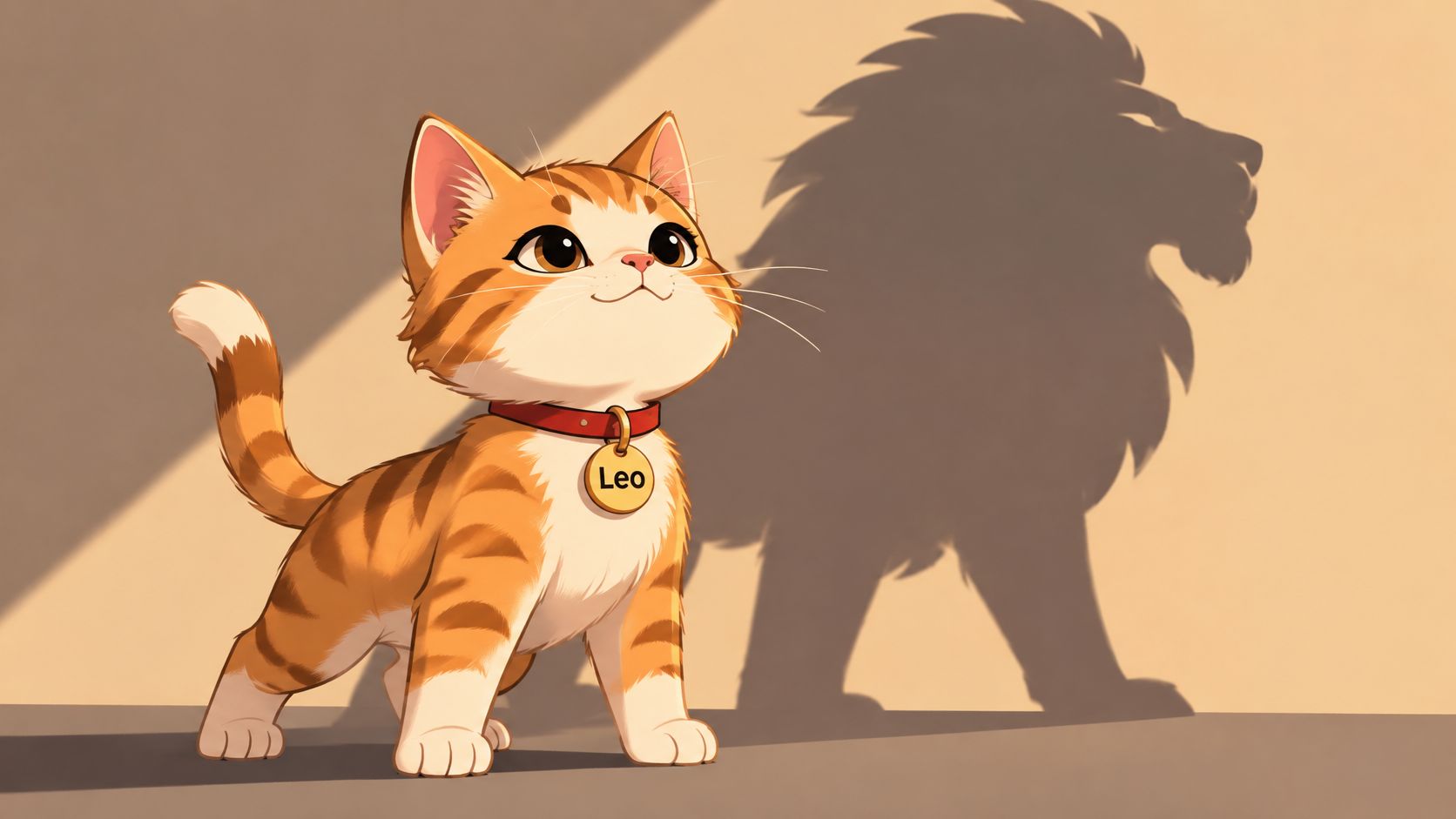
Some owners keep Leonardo for the formal record and Leo for the house. That works if the chip, the vet card and the care sheet all show both, and you tell the sitter to call only Leo. UK shelters and adoption listings use Leo often for male cats, so a sitter is unlikely to stumble on it.
- Same phrase each time: "Leo, dinner" at the bowl, not a new sentence every meal.
- Show the response: Let your sitter watch feeding and bedtime once, so they hear the pitch you use.
- Skip lookalikes: Do not pair it with a command that already ends in a hard "o".
A bold name does not make a stranger safe. Read our notes on red flags before you choose who stays in your home.
4. Felix
Felix is cheerful, two beats, and already famous, so a first meeting feels less blank. Felix the Cat, the silent-era cartoon star, made the name one of the most recognised in animation. Plenty of UK homes still use it, especially where someone grew up with the character.
That fame is useful and slightly risky. A sitter may assume they know the cat before they know your cat. Share a clear photo before arrival so the name matches the face, not a cartoon. Then do a short handover at home. Your kitten should see the new person while you are still in the room, calling "Felix" in your normal voice.
Say he is the kitten who bats pens off the table. Put that on the sheet as play, not as a fault, and note which toy tires him. A lively name still needs a calm routine.
Cheerful recognition is not the same as trust. Learn how we suggest you check ID and references in our trust guidance before you hand over a key.
5. Oscar
Oscar sounds warm and a little formal, with a clear final consonant that carries into the next room. It suits a kitten with a big personality, and a sitter can say it right first time without asking how. Spell it one way everywhere: on the microchip, the vet record and the care sheet. Oscar and Oskar look alike on paper and confuse a stand-in scanning your notes in a hurry.
The name is no passing fad in Britain. Cats Protection's 2020 Cats Report placed Oscar in its top five male names, after Bobby or Bob, Charlie and Alfie, and ahead of Jack. The report ranks name families rather than counting every cat, but the practical point holds: your sitter has probably met an Oscar before, and the name will not get mangled in a busy house.
What matters is the Oscar in your kitchen. List his treats and the game he plays, so your sitter can bond with him through the routine he already knows instead of inventing a new one. If he hides from visitors, book a trial visit before the holiday. A stranger arriving on departure day is a shock; a stranger who once offered him a treat is nearly a friend.
6. Simba
Simba comes from a Swahili word for lion, and the two syllables stand out in a busy house. The Lion King (1994) made it one of the best-known cat-like names in popular culture. UK shelters often list it for young males with a bold streak. Fame helps a sitter remember it. It does not replace a written day.

Say your Simba follows people from room to room. That sociable habit is useful for care, and it also means he may slip toward an open door when someone new arrives. A simple sheet beats a long essay.
- Feed, play, settle: Write the clock times, not "whenever he asks".
- Contacts in sight: Your number, a backup person, and the vet, on the fridge as well as in a message.
- A video check-in: Call once they arrive and point out his favourite spots, including the hiding place.
A strong name can make the routine feel friendly. It still has to be the same routine you already use.
7. Garfield
Garfield fits a relaxed kitten, and it is long enough that many owners shorten it. Garfield, the comic strip launched in 1978, made the name famous worldwide. In a UK kitchen, Garf or Gar is what you will shout. Choose one short form and use it with your sitter from the first meeting. A kitten cannot learn three labels in a week.
The humour is part of the appeal. The care is not a joke. Leave portion sizes, the brand of food, and any food he must not have. A laid-back cat can still get an upset stomach if someone "tops up" the bowl.
A longer official name is fine on the chip. The spoken name on the sheet should be the short one he already knows.
Confirm visits and emergency contacts in writing. Our contract template keeps that plain. For what good home care looks like once you are away, see our guide to in-home cat care.
8. Tigger
Tigger is bouncy on purpose. Two easy syllables, a cheerful feel, and a reminder that a new kitten needs play, not only a full bowl and a clean tray. A. A. Milne's Tigger is one of the best-known bouncing characters in children's books, and UK homes often use the name for kittens who chase anything that moves.
That energy is the handover detail. List the toys that work, and the ones that are too small to leave out. Confirm that your sitter will play gently, put wands away after the game, and stop before he is overtired and scratchy. Say he springs at ankles at dusk. A ten-minute toy session before supper usually prevents that better than a telling-off.
Plan the first weeks in the house before you add a trip. Review in-home options on our find a sitter page so the person staying over already expects a lively kitten, not a cat who sleeps all day.
A short clip of play makes the routine easier to copy than a paragraph of instructions.
9. Loki
Loki is short, memorable and a bit mischievous. Two syllables, a hard start, and a character that suits a kitten who opens cupboards. Norse myth and the Marvel films mean many sitters already know the word, which helps when they are alone in your home and tired.
Distinctive is a real preference, not a quirk. A BabyCentre look at gender-neutral names notes a 2025 survey in which 28% of UK parents rejected names they considered too popular. Cat owners often want the same thing, a male-sounding name that is not Tiger or Tom. Loki does that job, as long as it does not clash with another pet.
Curious kittens like predictable care more than surprise games. Keep meals, play and lights-out at the same times. Before you go, kitten-proof the obvious risks: windows on latches, balcony doors shut, cables tucked away, bins closed.
Ask for references and confirm identity before you agree. Our red flag checklist is the list we would want you to use when the dates are close and you feel rushed.
10. Merlin
Merlin sounds thoughtful without being hard to call. Two syllables, a soft start, and a story you can enjoy without making the sitter learn it. The wizard of Arthurian legend turns up in endless books and films, and the BBC series Merlin (2008 to 2012) put the name back in front of a wide UK audience. It has also been a familiar male cat name here for years.
It suits a calm, curious kitten. It does not suit a loud, excited shout. Ask your sitter to use a steady voice, especially if he is shy. Say he watches from the stairs for an hour before he comes down. Tell them not to fetch him. Call "Merlin" once, then let him choose.
Keep his medical notes and the vet's number in one envelope by the food, not in a drawer only you can find. A short introductory visit builds more trust than a long message on the morning you leave. If you are thinking about how to thank the person afterwards, our piece on whether you tip pet sitters keeps that separate from the care itself. And if you are still unsure how long he can cope without company, read how long cats can be left home alone before you stretch the gap.
The 10 names at a glance
Read this as a calling test: short names are easier for a sitter to say and for a kitten to learn. Give Oliver and Garfield a usable nickname.
| Name | Syllables | Popularised By | Best for |
|---|---|---|---|
| Milo | Two | Milo and Otis; UK rescue and adoption listings | A gentle, friendly kitten |
| Oliver | Three | Charles Dickens's Oliver Twist; UK pet owners | A classic name with a flexible nickname |
| Leo | One | The lion link | A bold, adventurous kitten |
| Felix | Two | Felix the Cat; Otto Messmer and Pat Sullivan | A lively, playful kitten |
| Oscar | Two | Cats Protection popularity data | A confident kitten with a big personality |
| Simba | Two | Disney's The Lion King; Swahili language | A sociable, adventurous kitten |
| Garfield | Three | Jim Davis's Garfield comic strip and animated series | A relaxed cat with a humorous name |
| Tigger | Two | A. A. Milne's Winnie-the-Pooh; Disney adaptations | A bouncy, energetic kitten |
| Loki | Two | Norse mythology; Marvel Studios | A clever, curious kitten |
| Merlin | Two | BBC's Merlin; Arthurian legend | A calm, thoughtful kitten |
Before You Book Care for Your New Kitten
A name only earns its place if a stranger can say it clearly and your kitten learns it fast. Choose the name first, make it official, then introduce the person who will use it. Write it on the care sheet with the pronunciation if there is any doubt, and record the same spelling on the microchip and at the vet. Then meet your sitter at home, so your kitten hears his new name from a new face while you are still in the room.
In England, owned cats must be microchipped before they reach 20 weeks, with the keeper's details kept current on an approved database. The rule took effect on 10 June 2024. The government notice on compulsory cat microchipping says a keeper who has not complied can get a 21-day notice, and failure to comply can mean a fine of up to £500. Free-living farm, feral and community cats are excluded. Before a holiday, check the chip and the phone number on the record, and do not assume the breeder's or rescue centre's details are still yours.
Vaccines sit on the same timeline. Cats Protection's caring guide says kittens generally have a first vaccine at around eight to nine weeks and a second dose at 12 weeks, then boosters through life. Ask your vet whether the primary course is finished before you travel, and leave the record with the care sheet.
Cats Protection's holiday advice sets a useful baseline: a sitter should visit at least twice a day to check your cat is fed and safe, and you should leave emergency contacts, the vet's details, food, litter, medication and written instructions. A house sitter who stays in your home goes well beyond that minimum, and familiar surroundings suit most kittens far better than travel. A good name helps a sitter call him back. A chip helps him get home.
You provide emergency contact information and veterinary details, and you are responsible for all veterinary treatment costs, so both belong on the sheet before you leave. If we cannot reach you, your sitter should use their best judgement to protect your kitten's welfare, including seeking veterinary care if he needs it. We charge no booking fees, ever.
Choose someone who stays in your home with him, so he keeps his own territory and routine instead of adjusting to an unfamiliar cattery. Start at find a sitter. While you prep the house, compare non-toxic pet cleaning products so floors and food bowls are safe for a kitten who still licks his paws.
Find a trusted house sitter for free
Your kitten learns one clear name, and the person in your home should use that same word, on your routine, while you are away. We match you with vetted house sitters who stay in your home and look after him there, with no kennels and no catteries. When the dates are set, visit Global Pet Sitter and find someone you can meet before you go.
Please sign in to leave a comment
