A house sitter is a person who temporarily occupies and looks after another person's home while the owner is away, combining presence, security, and basic property care. Pet care is often part of the role, but it isn't the entire meaning of the term.
You're packing for a trip, but your attention keeps returning to what you're leaving behind: the dog's routine, the plants, the mail, and the possibility of a leak nobody notices. Asking someone to stay can help, provided you both understand what staying involves.
The useful question isn't whether someone will watch your house. It's what they'll take responsibility for, what they're allowed to do, and when they should contact you.
What Is a House Sitter
Suppose you're preparing to visit relatives. Your neighbor offers to help, but you're picturing someone sleeping at the house while they're picturing a quick visit to collect the post.
Neither person is necessarily being unreasonable. You've agreed to different things without realizing it.
To define house sitter in practical terms, start with temporary occupancy rather than occasional checks. The person stays in the dwelling and carries out agreed tasks during your absence. Merriam-Webster's house-sit entry records the first known use of the noun house sitter in 1950, so the term itself isn't a recent travel-platform invention.
Presence with a purpose
A sitter's presence can help the home continue functioning normally. Someone can bring deliveries inside, notice an unfamiliar sound, or tell the owner that a maintenance problem needs attention.
That presence can also help deter trespassing, but it isn't a security guarantee. A house sitter isn't automatically a security professional, building inspector, or repair technician.
The role can bring together several kinds of care, depending on the agreement.
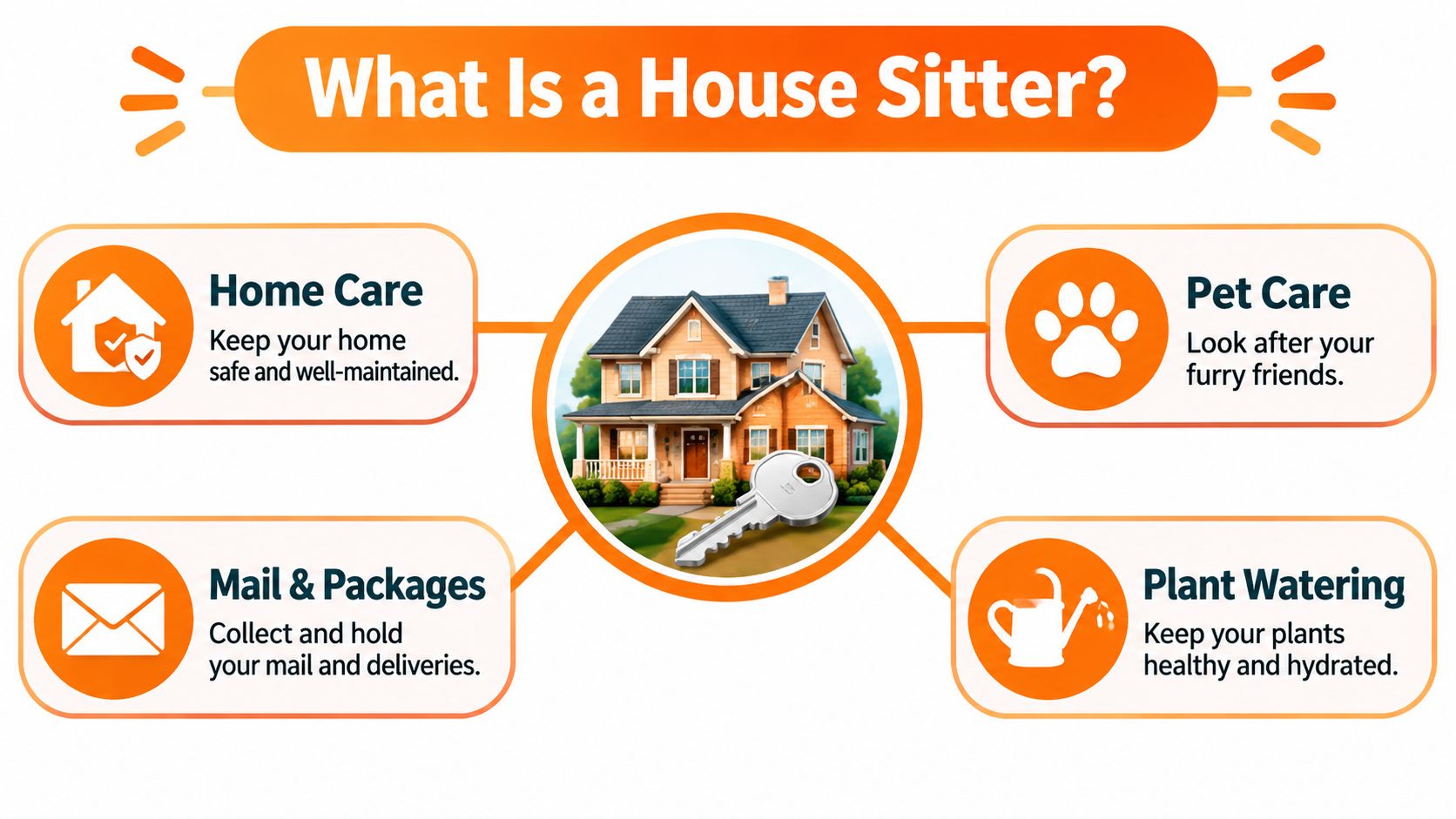
What the definition doesn't promise
The word sitter doesn't tell you whether someone can maintain a pool, handle an anxious dog, or manage a complicated alarm. Those capabilities need a separate conversation.
Practical distinction: Staying in a home describes the arrangement. The agreed duties describe the job.
A friend can be a house sitter, and an arrangement can remain friendly while still being documented. Conversely, someone who waters plants during brief visits may be providing useful property checks without providing the residential presence you expected.
For owners, the first decision is therefore straightforward: Do you need someone to stay, or someone to visit? For sitters, it's equally important to establish what the owner means before accepting.
Core Responsibilities of a House Sitter
A house sitter's working day depends on the property, not just the job title. Looking after an apartment with houseplants requires a different routine from caring for a rural home with animals and outdoor maintenance.
Indeed's guide to becoming a house sitter describes responsibilities that can include securing the home, collecting mail, checking utilities, caring for plants or animals, and coordinating authorized maintenance access. Treat these as possible duties to discuss, not an automatic package.
The main categories provide a useful starting point.
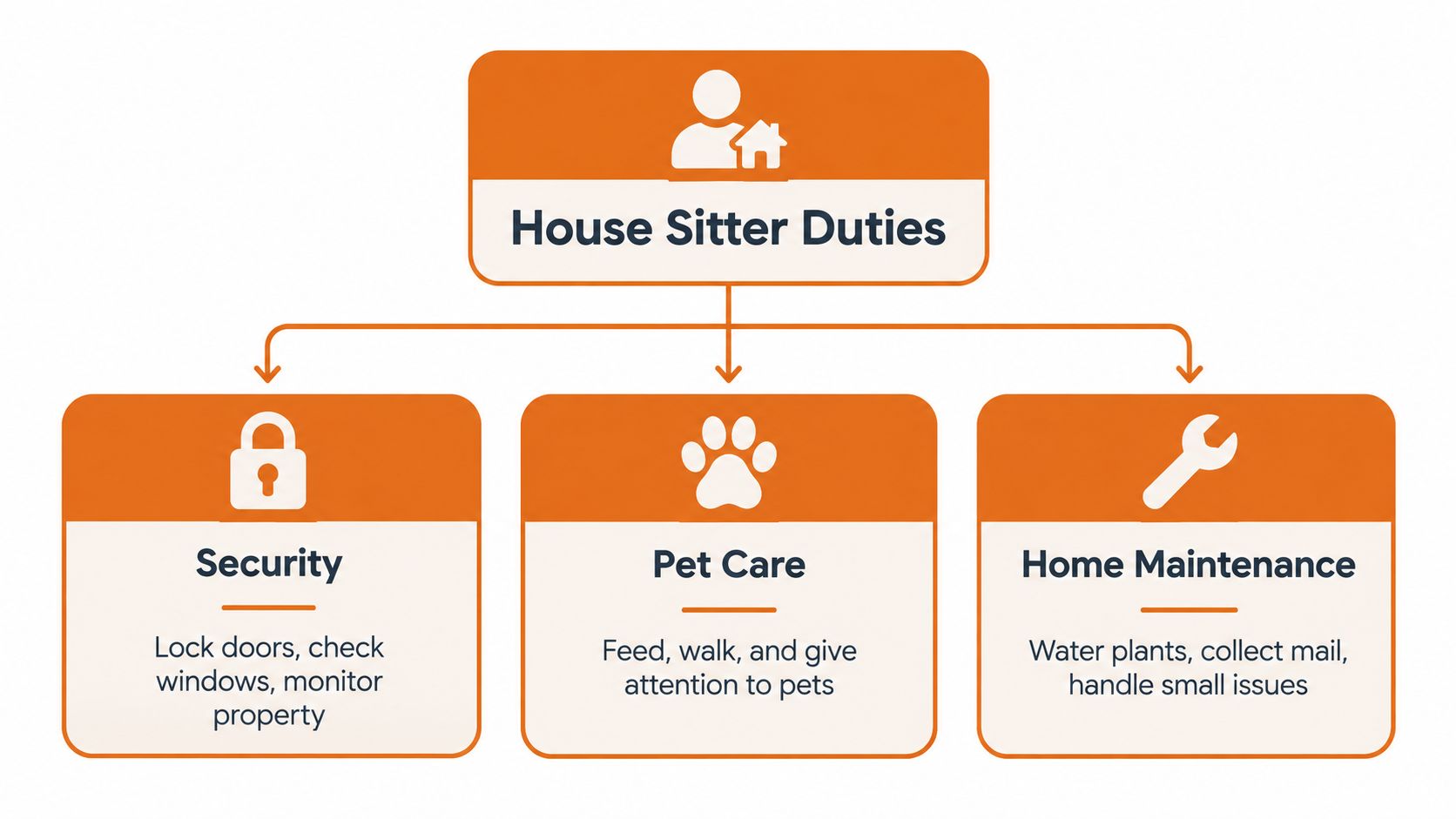
Translate duties into actions
- Presence: Agree when the sitter will stay and what absences are compatible with the home's needs. Overnight occupancy doesn't automatically mean uninterrupted supervision.
- Security: Demonstrate the door locks, window fastenings, and alarm procedure. Explain what counts as unusual activity and whom to contact.
- Property care: Identify the plants, bins, mail, and routine utility checks that need attention. Separate straightforward upkeep from work requiring a tradesperson.
- Pet care: Write down feeding, water, exercise, and medication instructions. Confirm that the sitter is comfortable and capable before assigning specialized care.
A house-sitting checklist can help turn these categories into a usable handover document. Write observable instructions rather than broad requests such as keeping everything in good order.
Observation isn't technical inspection
For example, asking a sitter to report water beneath the kitchen sink is different from expecting them to diagnose concealed plumbing defects. The former is a clear observation task; the latter requires expertise that shouldn't be assumed.
Give the sitter a reporting threshold: what they can handle routinely, what requires permission, and what requires urgent help. Don't ask them to attempt repairs beyond their competence.
For an additional visual introduction to the topic, you can watch the following video.
House Sitter vs Pet Sitter vs House Manager
Choose the role by the work you need done, not by whichever label sounds familiar. Someone can provide house sitting and pet sitting together, but neither label automatically includes the other's responsibilities.
A useful practical distinction is that house sitting centers on temporary home care, pet sitting centers on animals, and house management involves a broader oversight brief. These are working comparisons, not universal legal classifications.
| Role | Primary Focus | Typical Duration | Authority Level |
|---|---|---|---|
| House sitter | Temporary home presence and agreed household care | The owner's agreed period away | Limited to the instructions and permissions given |
| Pet sitter | Animal care and established routines | Agreed visits or a residential stay | Pet-related authority expressly agreed with the owner |
| House manager | Coordinating property operations and ongoing needs | An ongoing or separately defined engagement | A broader delegated brief, depending on the contract |
Where the roles overlap
Pets feature prominently in house sitting. The Wikipedia overview of housesitting reports that 82% of arrangements involve pets, while also describing household responsibilities beyond animal care.
That overlap can make the terminology confusing. A pet sitter might stay overnight, while a house sitter might look after a property without any animals.
Ask about the actual service: Will the person sleep there? Which animals will they care for? Will they coordinate contractors, or let an authorized contractor inside?
When you need broader oversight
If your main concern is coordinating recurring maintenance, supervising service providers, or making continuing property decisions, write that requirement separately. Don't quietly add managerial responsibility to a temporary sitting arrangement.
For context on the broader property-management role, Royal LePage Brookside Realty's Maple Ridge property management guide is a relevant companion resource. Use it to help frame your questions, rather than assuming that property management and house sitting are interchangeable.
The clearest job description names the tasks and decision-making limits, even when the person performing them wears more than one hat.
What to Expect From a House-Sitting Arrangement
A useful handover should leave neither person guessing how the stay will work. The owner should be able to explain the arrangement, and the sitter should have enough information to decide whether it's manageable.
Begin with a written agreement, then walk through the home together where possible. A house-sitting agreement template can provide a starting structure, but the finished document needs to reflect the actual property and responsibilities.
These are the main parts of a well-prepared arrangement.
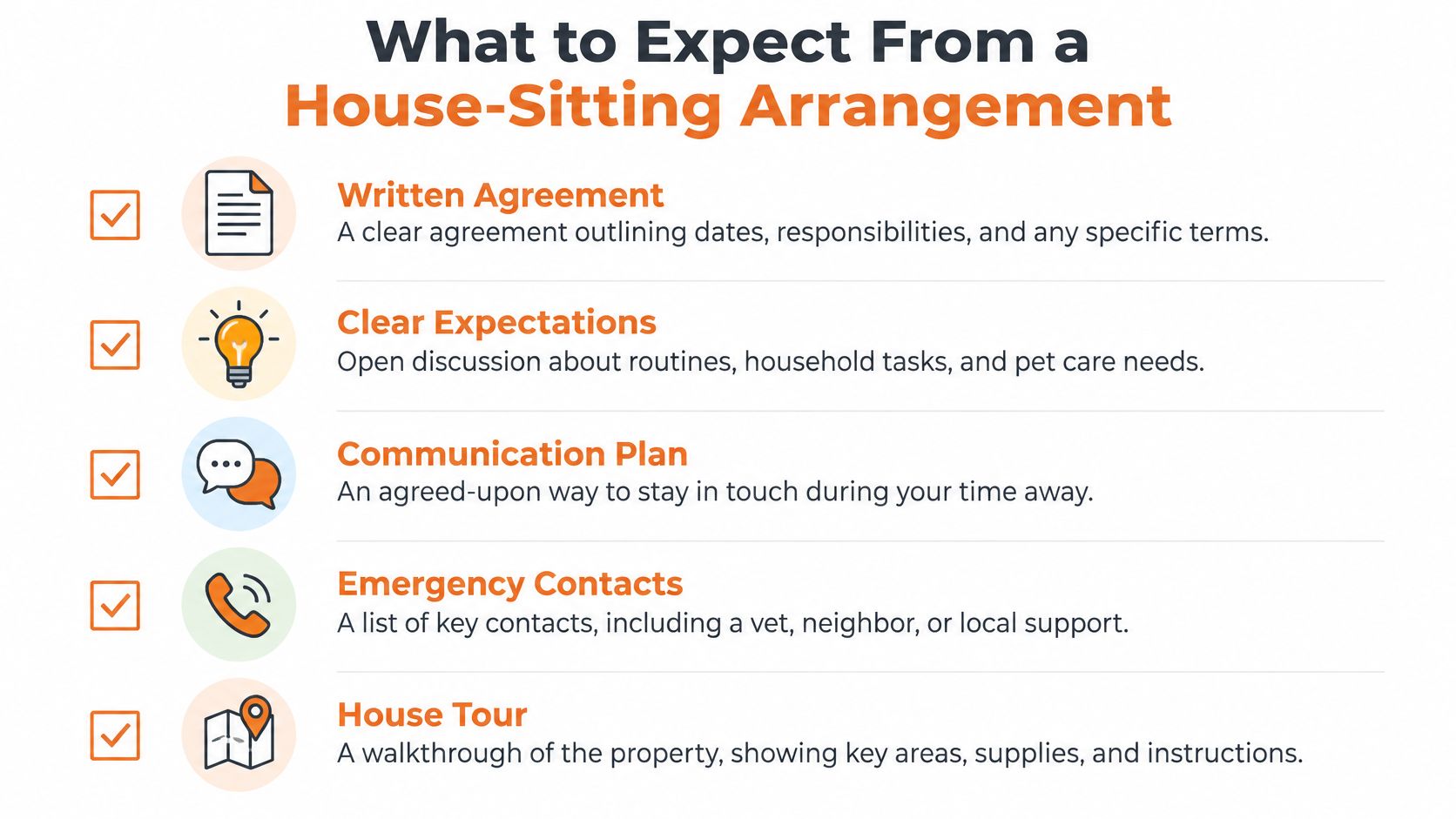
Agree on the stay before the handover
- Dates and occupants: Record arrival, departure, and who is permitted to stay. Discuss what happens if travel plans change.
- Practical arrangements: Clarify sleeping space, Wi-Fi, supplies, household expenses, and any payment or accommodation exchange. Don't leave either party to infer the financial terms.
- Care instructions: Make routines accessible and explain anything that requires a demonstration.
- Communication: Choose a contact method, an update rhythm, and an alternative contact if the owner is unreachable.
An arrangement can involve accommodation without cash changing hands, but that doesn't make the responsibilities optional. Both sides should understand what they're exchanging and what they're committing to.
Rehearse an unexpected situation
During the walkthrough, ask the sitter to explain what they'd do if they lost a key or discovered a significant leak. This isn't a test of ingenuity; it's a way to find missing information.
The owner might realize that the emergency contact doesn't have access, or that the water shutoff is hidden behind stored belongings. Resolve those obstacles before departure rather than relying on a hurried message later.
End the handover by inviting questions. A sitter who asks how something works is helping establish a workable arrangement, not demonstrating that they're unsuitable.
Real-World Examples of House Sitting
The following hypothetical examples show how the same role can look different across homes. They aren't case studies or claims about particular owners or sitters.
The important detail in each example is how the person's presence connects to a defined responsibility.
A neighbor staying in a suburban home
A family asks a neighbor to stay while they visit relatives. The neighbor brings in mail, follows the bin schedule, and waters the indoor plants.
There are no pets, but the arrangement still fits house sitting because the neighbor occupies and cares for the property. If they only stopped by to water the plants, the service would be better described as property visits.
A home with animals introduces another layer of responsibility.

A traveler caring for a rural property
A traveler agrees to stay in a rural house with a dog and a garden. Before accepting, they ask about transport, the dog's exercise needs, and which garden tasks are essential.
The owner wants someone who can follow the existing routine, not redesign the garden or train the dog. The traveler declines equipment-based maintenance they haven't learned to perform, and the owner arranges separate help.
That's a useful match because both sides acknowledge the limits.
A remote worker in a city apartment
A remote worker stays in an apartment while the owner is overseas. They collect deliveries and care for plants, with permission to use the desk and internet connection.
Their work schedule suits the agreed tasks, but it wouldn't automatically suit an animal needing frequent daytime attention. Working from home doesn't mean being available for every care requirement.
Across these examples, location and lifestyle change. The practical test remains whether the sitter can meet the particular household's needs without assuming responsibilities they haven't accepted.
Security and Privacy in House Sitting
Giving someone access is necessary for a sit. Leaving that access undefined isn't.
A 2025 survey of 1,000 U.S. smart-lock and keypad users reported by Durin found that 78% expected to share access codes during holiday travel, while many users didn't change codes afterward. The practical lesson is to plan how access will end before handing it over.
Grant only the access needed
Use temporary credentials where your equipment supports them. Separate codes for different authorized people can make access easier to track, while a simple key log can record physical handovers.
- Rooms and belongings: Specify private areas, storage restrictions, and which household items the sitter may use.
- Mail and deliveries: Distinguish collecting an envelope from permission to open it. Agree whether the sitter may receive personal deliveries.
- Guests and vehicles: Set explicit visitor rules and obtain separate agreement for vehicle use.
- Digital access: Share the Wi-Fi details needed for the stay without casually sharing unrelated accounts or permanent security credentials.
Permission to occupy the home isn't permission to access everything inside it. The sitter should also know how to obtain help if a lock or alarm fails.
Make surveillance transparent
Disclose recording devices before the sitter commits, and discuss their locations and operation. Privacy expectations shouldn't first become clear after arrival.
If you're reviewing the technical setup, DigiDevice's How to Set Up Security Cameras is a relevant installation resource. Technical guidance doesn't replace agreement about recording or checking applicable privacy requirements.
Departure check: Confirm returned keys, revoke temporary digital access, and record that the handover is complete.
This gives both people a clear endpoint. The owner knows who can still enter, and the sitter isn't left associated with access they no longer need.
Insurance and Liability Considerations
An agreement explains what someone has promised to do. Insurance addresses specified risks under the wording of a policy. You need to examine both, because neither substitutes for the other.
Pet Sitters International's standards provide a relevant professional framework for care arrangements and coverage. General liability commonly addresses third-party bodily injury or property damage, while animals in a sitter's care may need care, custody, and control coverage, also called animal-bailee coverage, because ordinary commercial liability policies can exclude animal injury, illness, or death.
Ask about the actual arrangement
Tell the insurer or broker what will happen, rather than asking whether house sitting is covered in the abstract. Explain who will occupy the property, whether animals are involved, and what services the sitter will perform.
- Property and people: Ask about temporary occupants, accidental damage, sitter injury, and lost keys.
- Animals: Confirm whether the relevant policy addresses animals entrusted to the sitter, including the intended care activities.
- Policy conditions: Request clarification of exclusions, limits, and any requirements that apply to the stay.
Use this guide to verifying insurance coverage to organize those questions. Coverage varies by jurisdiction and policy wording, so don't assume an unpaid favor removes the need to check.
For owners also considering rental arrangements, see Global's landlord coverage guide. Treat rental coverage as a separate topic, not evidence that a house-sitting arrangement is insured.
Keep an incident record
Document visible pre-existing damage at arrival, preferably with agreed timestamped photographs or checklists. Record who can authorize veterinary treatment or repairs, along with spending limits and reimbursement arrangements.
If an incident occurs, prioritize safety and appropriate professional help, then communicate promptly and preserve the relevant records. Don't assume that naming someone responsible in an agreement guarantees that an insurer will pay.
The Bottom Line on House Sitting
A useful definition should help you decide whether an arrangement fits, not merely give you a label. House sitting is temporary residential care with an agreed purpose, rather than unrestricted use of someone else's accommodation.
For an owner, the strongest starting point is a description of your household's needs. For a sitter, it's an honest assessment of whether you can meet them alongside your other commitments.
Choose for capability, not just availability
A person may be free on your travel dates but uncomfortable administering medication. Another may love animals but lack the transport your property requires.
Neither mismatch is a character judgment. Identifying it before the stay gives you a chance to adjust the duties or find someone better suited.
Use these questions before committing:
- Can we describe the work clearly? Both people should understand the essential tasks and what falls outside the role.
- Can this person perform it? Discuss relevant experience and verify identity or references rather than treating the title as proof.
- Are the arrangements workable? Check that the schedule, living conditions, and responsibilities make sense together.
- Have we resolved uncertainty? Don't leave important questions unanswered because the conversation feels friendly.
Treat trust as mutual
Owners need dependable care, but sitters also need accurate information about the property, animals, and workload. Honest disclosure lets each person make an informed choice.
The most useful next step is to write your proposed arrangement in plain language and ask the other person to explain how they understand it. Any difference you discover is something you can resolve before departure.
That's how a broad promise to look after the house becomes a commitment both people can confidently keep.
Global Pet Sitter is a community-driven marketplace connecting owners with house and pet sitters worldwide, with profiles, messaging, and verification to support informed introductions. Visit to post your dates and pet-care needs or create a sitter profile, then discuss the duties, access arrangements, and expectations before agreeing to a stay.
Please sign in to leave a comment
