The suitcase is open on the bed, and your dog is watching every move. They follow you from room to room, get underfoot while you pack, then seem unable to settle once the house grows quiet. A short, structured game can give them a useful outlet and help bring the energy down. It won't replace a walk or fix every anxious moment, but the right activity can make a tense day feel more manageable for both of you.
The best games to play with dogs depend on the dog in front of you: their age, health, confidence, play style, and ability to pause when asked. Fetch may suit a dog who loves to chase, while a simple scent search can work better for a dog who gets overexcited by fast movement. For a dog settling into an unfamiliar home, a gentle game with a familiar person may be more useful than a complicated puzzle.
Toys are often used to address boredom. In a survey of cat and dog owners, 88% said they used toys for that purpose, while owners also associated toys with exercise and mental stimulation, according to Global Pet Industry's coverage of consumer toy habits. Those are owner-reported perceptions, not proof that a particular toy or game will work for every dog. Think of play as a routine you adapt, not a guaranteed solution.
These ideas are organized around the moment your dog may need them most. Each one includes how to start, what to watch for, who should skip it, and a practical way to adjust it. If your dog's excitement spills onto the furniture, you can also shop water-resistant sofa protection.
1. Fetch
Best for a high-energy break when your dog can chase and return without losing control.
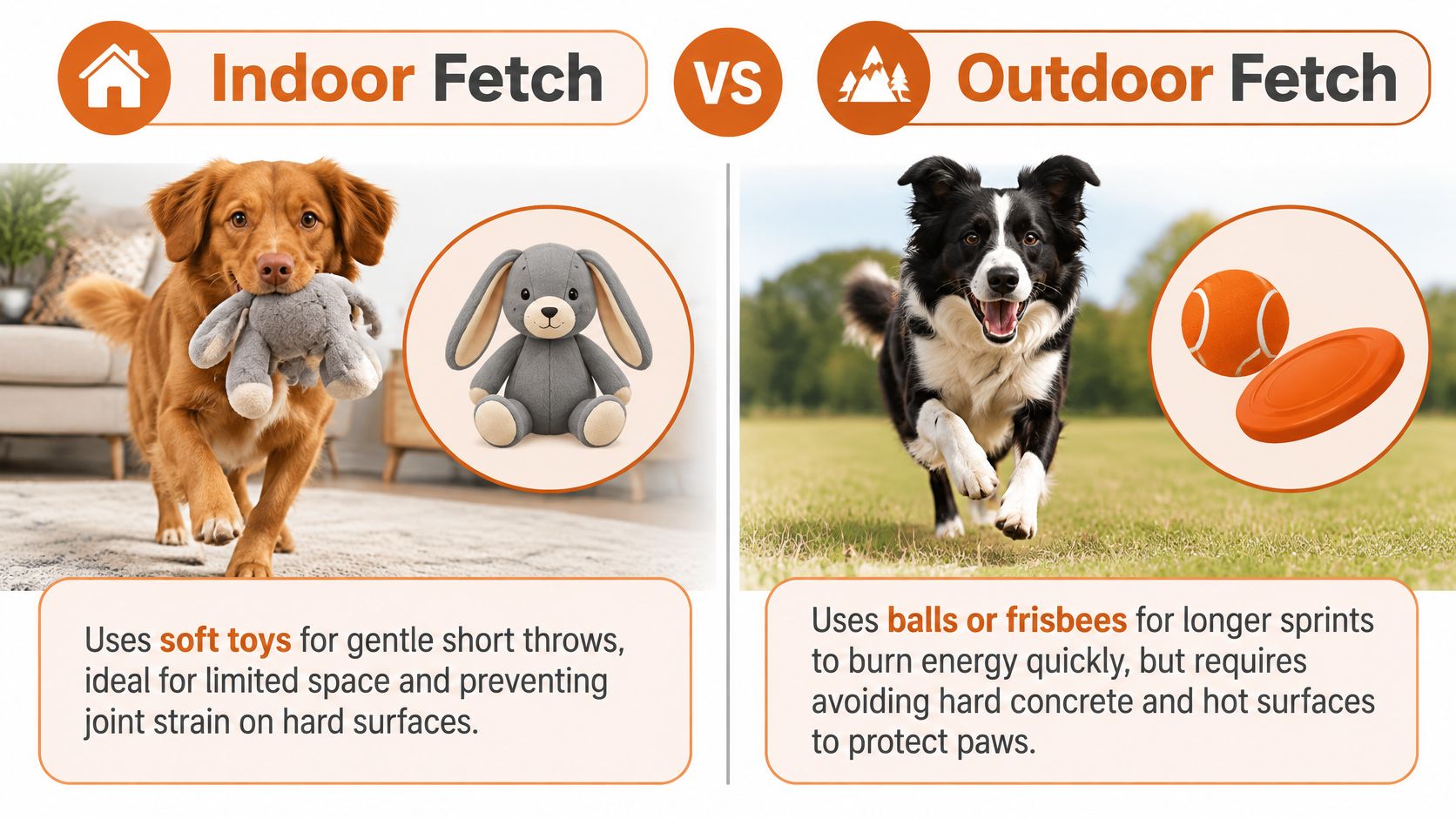
Fetch is easy to start, easy to stop, and useful when you have a short window for active play. Choose a ball or soft toy your dog can comfortably carry. Start with a short throw on grass or another forgiving surface, then praise the return and reward the release. The game is more useful when your dog learns to bring the toy back and let go than when they only sprint after it.
Try two toys if your dog guards the first or won't release it. Show the second toy only after your dog drops the first, then throw it as the reward. Keep throws low and straight, and avoid hard stops, sharp turns, stairs, roads, and crowded spaces. A dog that repeatedly skids or twists to catch a toy can put unnecessary strain on their body.
Practical rule: Stop while your dog can still respond to their name and take a break calmly. If they're panting hard, barking persistently, or grabbing at clothing, switch to a slower activity.
For a dog with joint pain, limited mobility, or a history of injury, choose a gentle scent search instead. Even a healthy dog may not enjoy chasing a moving toy. A 2023 study found slight, non-significant differences in some positive-welfare measures between dogs given more complex toys and those given simpler toys or none, with no meaningful changes in overall activity or eating rate, as described in the peer-reviewed study on toy access and dog welfare. Watch your dog's response rather than assuming that a faster or fancier game is better.
Say a sitter has only a few minutes before a meeting. A handful of controlled throws in a safe yard can provide a brief burst of activity, followed by water and a quiet rest. For an older dog, see these senior dog care tips before choosing a higher-impact game.
2. Tug-of-War
Best for a dog who wants to pull and can pause or release when asked.
Tug can be a cooperative game, not a contest to overpower your dog. Use a rope or tug toy long enough to keep your hands away from their mouth, and move the toy from side to side at a low height. Avoid jerking upward or twisting the dog's neck. Let your dog catch the toy, then ask for a release. When they let go, praise them and restart the game or trade for a treat.
If your dog doesn't yet understand “drop,” teach the cue outside the game first. Offer a treat near their nose, say the cue as they release the toy, and return the toy once they've settled. That teaches them that letting go doesn't always mean play is over.
Tug is a poor choice for a dog who stiffens, guards the toy, grabs at hands, or can't disengage. Stop immediately if teeth touch skin, the dog's body becomes rigid, or their growling comes with escalating intensity. Playful vocalizing alone can be hard to interpret, so judge the whole picture: loose movement and easy pauses are different from stiff posture and fixation. Veterinary guidance advises ending or changing play when signs such as persistent barking, nipping, or inability to disengage appear, and cautions against rough wrestling and rapid changes of direction in VCA's guidance on play and exercise.
Try tug after a quiet indoor stretch when an adolescent dog needs an outlet but a chase game would send them into overdrive. Keep the session brief, build in release breaks, and finish with a calm cue such as “all done.” If your dog repeatedly ignores the release cue, put the toy away and practise the skill separately before trying again.
3. Hide and Seek
Best for a first day in an unfamiliar home, when your dog needs a gentle reason to connect with you.
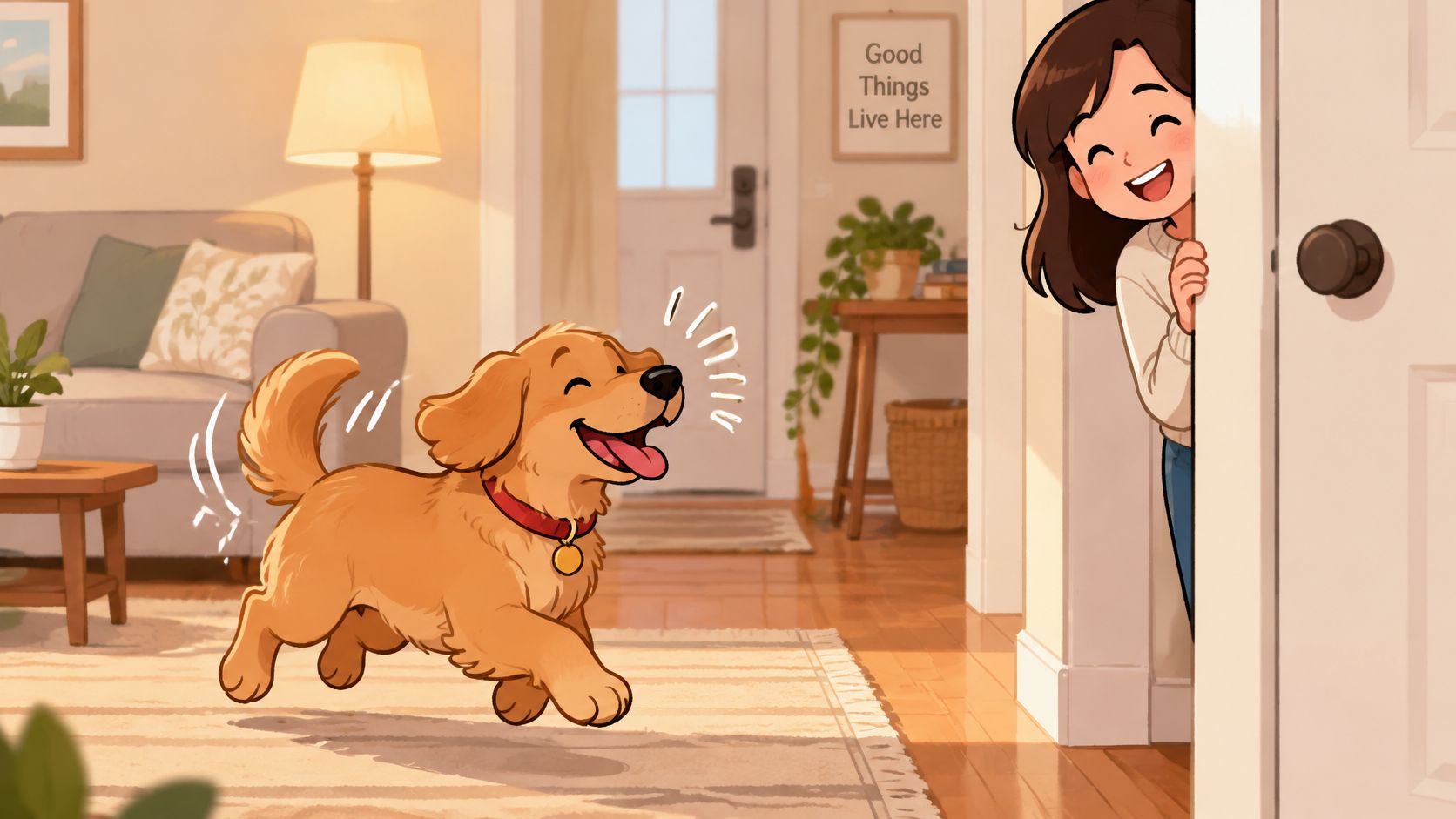
Start in one room. Ask another person to keep the dog nearby, or toss a treat in the opposite direction while you step behind a doorway. Call the dog in a cheerful voice, then reward them as soon as they find you. Use easy hiding spots at first, such as standing behind an open door. Once your dog understands the game, hide in the next room or let a familiar family member take a turn.
Keep the route open. Don't hide behind unstable furniture, in a cramped closet, or anywhere your dog might leap over objects or squeeze into a tight space. If your dog seems worried, don't insist that they search. Sit down, call them gently, and make the reward easy to reach.
This game gives a new sitter a low-pressure way to play without handling unfamiliar toys or pushing a nervous dog into physical contact. Say the dog has been watching their owner leave and is hovering near the entryway. The sitter can wait until the dog is ready, hide just around a nearby corner, and reward them for approaching. The point isn't to distract the dog at any cost. It's to build a small, positive interaction at the dog's pace.
Skip hide and seek if the dog has a history of bolting through doors or becomes distressed when they can't see you. Keep exterior doors shut and use a baby gate where needed. If your dog doesn't come when called, don't scold them or repeat the cue in frustration. Make the next hiding place easier, use a more rewarding treat, and celebrate the search.
4. Scent Work
Best for a rainy afternoon or a dog who gets frantic during chase games.
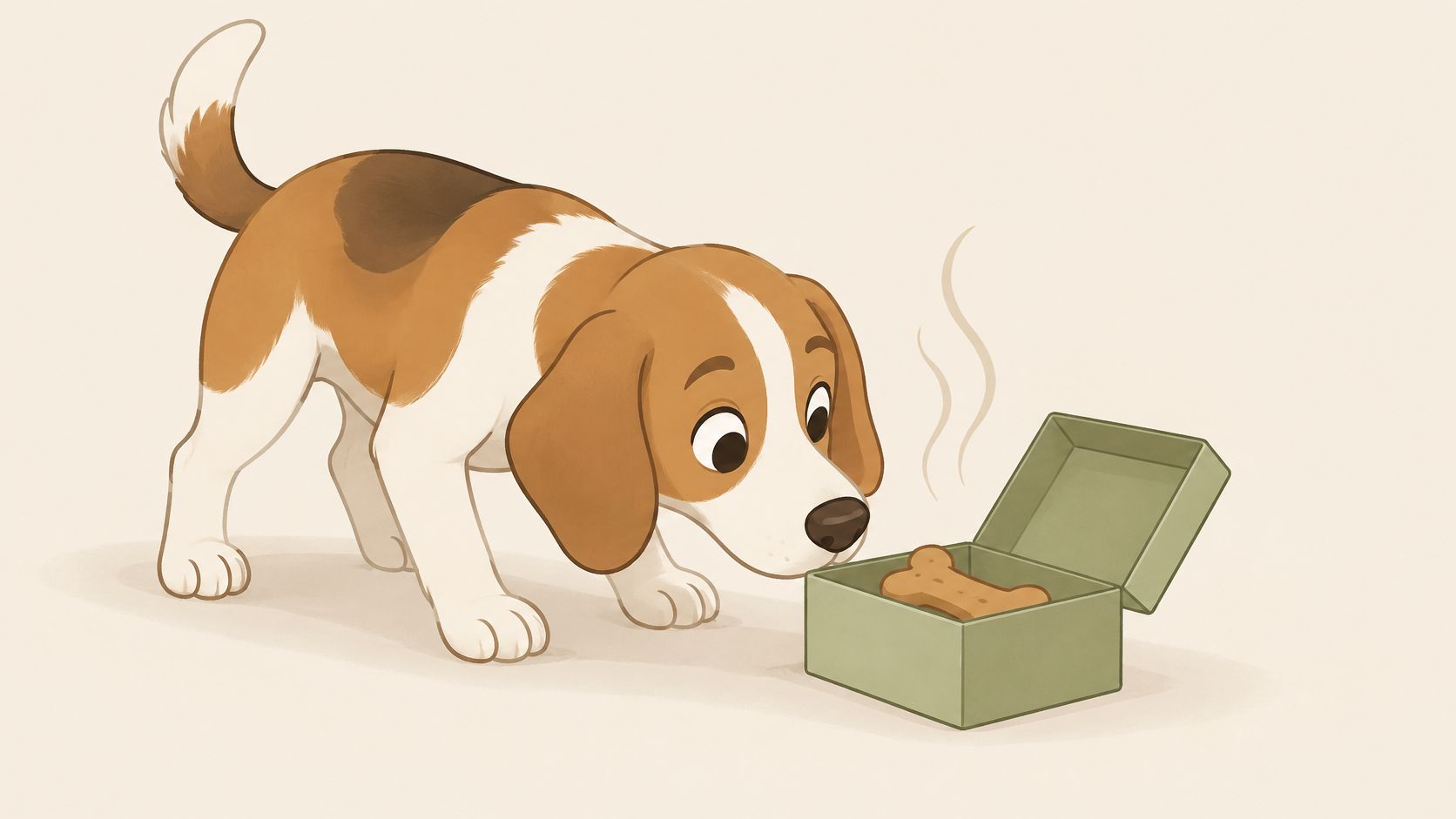
Scent work asks your dog to find a treat using their nose. For a beginner, place a treat inside one open cardboard box among several empty boxes. Point to the setup and say “search.” When your dog finds the treat, let them eat it, then reset with the treat in a different box. Keep the boxes stable and leave enough room for the dog to sniff without climbing or getting trapped.
You don't need essential oils or a formal scent kit to begin. A familiar food reward is a safer, simpler target for a household game. Never use a scent product unless you've confirmed it's safe for dogs and your veterinarian has no concerns. Keep the search area clear of cleaning products, medications, and food the dog shouldn't eat.
Say your dog has been indoors during a wet evening and is restless but not suited to vigorous exercise. A small box search gives them a task without encouraging sprinting on a slippery floor. If they struggle, make the treat visible and reduce the number of boxes. If they catch on quickly, place the treat in a box while they're looking away, then release them to search.
Scent games aren't automatically calming for every dog. Some will paw, bark, or knock containers over in their excitement. Use sturdy boxes, supervise closely, and pause if the dog gets frustrated. A short, successful search is better than making the puzzle so difficult that the dog gives up.
Watch a demonstration before setting up your own search:
5. Find It
Best for helping a dog settle when you arrive at a new house or need a quiet indoor activity.
Find It is the simplest way to introduce a dog to searching. Ask them to wait behind a gate or have a helper hold them calmly. Place a few pieces of kibble where they're easy to see, then say “find it” and let the dog search. As the dog understands the cue, hide pieces beside a table leg or near the edge of a mat. Keep them in places the dog can reach safely.
Use part of the dog's usual meal rather than adding a large number of extra treats. That keeps the game familiar and helps avoid overfeeding. Choose pieces that are small enough to eat quickly, and check the room first for anything the dog might swallow by mistake. If you're playing outdoors, use an enclosed area and avoid scattering food near litter, plants, or other animals.
A good search should keep the dog interested without making them frantic. If they start sweeping the room wildly, reduce the number of hiding places and make the next round easier.
This is a useful choice for a sitter meeting a dog who doesn't yet want to play tug or fetch. Begin with food on a clear floor area, let the dog sniff at their own pace, and stop once they've found the pieces. Dogs who guard food or become tense around other pets shouldn't do a shared scatter search. Give each dog a separate space, or choose a different activity.
6. Flirt Pole Play
Best for an athletic dog who needs a controlled chase, not an open-ended sprint.
A flirt pole is a long handle with a cord and toy attached. Drag the toy along the ground in a wide curve, let the dog chase it, and allow them to catch it regularly. Keep the toy low and movement smooth. The dog should be able to follow without leaping high, skidding, or whipping their body around to change direction.
Check the handle, cord, knot, and toy before every session. Stop if anything is frayed or loose. Use the pole in a clear, non-slip area well away from roads, furniture, other dogs, and children. Don't swing the toy over the dog's head or use the pole to provoke them after they've become too excited.
This game is not for dogs with mobility concerns, recovering injuries, or limited ability to stop safely. It's also a poor fit for a dog who fixates on moving objects and can't release or settle afterwards. Veterinary guidance cautions against play involving rapid stops and sharp changes of direction, which can increase injury risk. If your dog lunges or snaps once the toy moves, switch to a stationary treat search.
For a healthy dog who enjoys chasing, use a few controlled passes as a planned evening activity. Let them catch the toy, ask for a pause, and reward a calm response before restarting. End before the dog is exhausted. A flirt pole can be an intense game, and more movement doesn't always mean better play.
7. Puzzle Feeders and Interactive Toys
Best for slowing down mealtime or keeping a dog occupied while you're nearby.
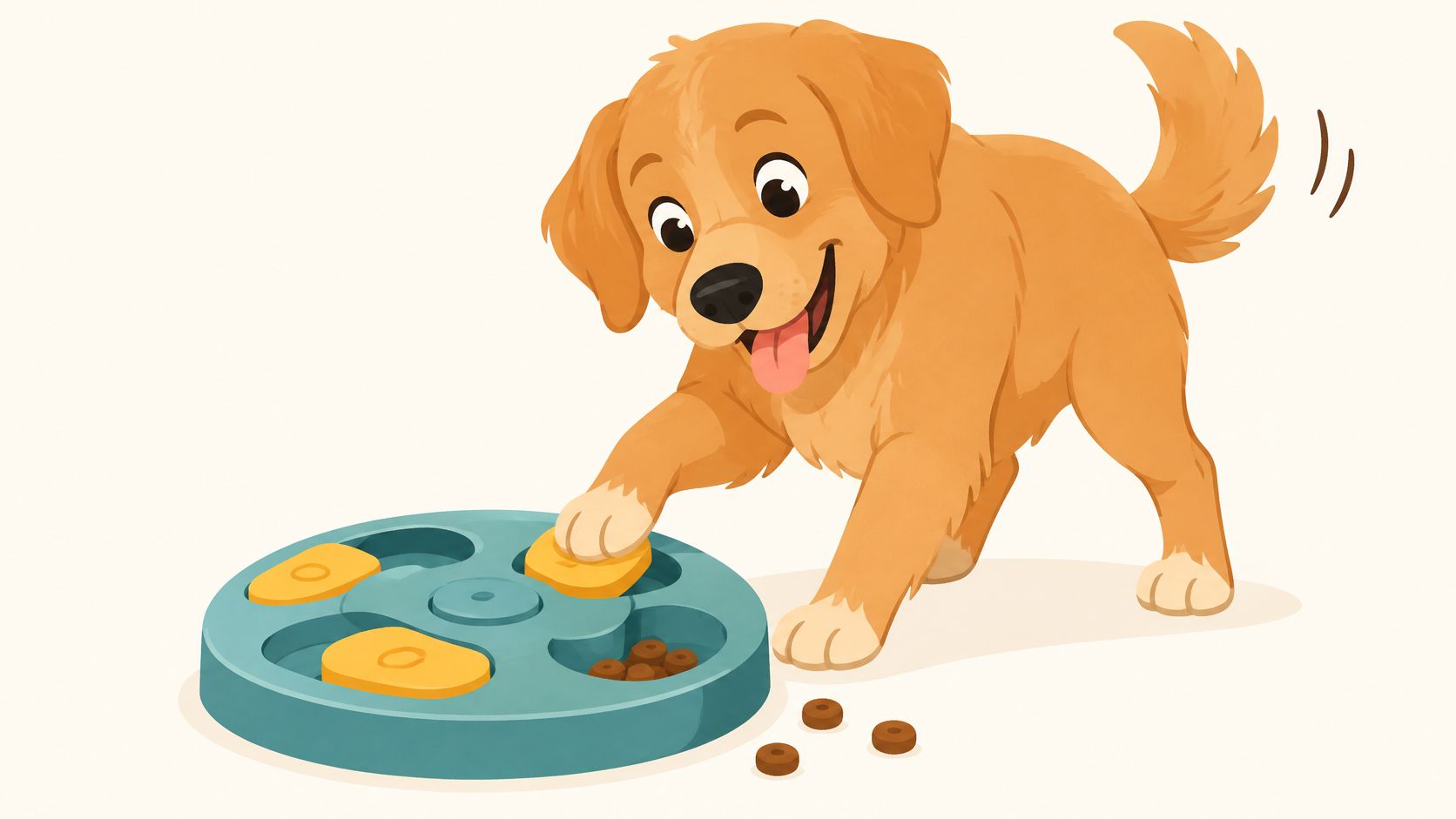
Put a portion of your dog's normal food into a simple puzzle feeder with parts that move easily. Show them how to find the food by leaving one compartment open or nudging a slider. If they understand the basic idea, make the next round slightly harder. Food puzzles can turn a meal into a problem-solving activity, but the dog should be able to access the food without chewing or forcing the toy.
Supervise the first use. Some dogs paw at a puzzle; others chew it aggressively or try to break it open. Remove the toy if pieces crack, loosen, or come off. Wash it after use, especially if you've added moist food, and count the contents as part of the dog's meal. If the puzzle makes your dog frustrated, use a simpler feeder rather than letting them struggle.
A puzzle is not a substitute for checking on a dog who's alone. Before making plans around solo time, read these practical notes on whether dogs can be left alone. The dog's needs, temperament, and care routine matter more than the toy.
A familiar use case is a dog who eats too quickly. Serve part of their meal in an easy feeder while you remain in the room, then watch whether they work calmly or try to dismantle it. Don't leave a dog unattended with a new toy, a strong chewer with a breakable puzzle, or a dog who guards food around other animals.
8. Snuffle Mat Foraging
Best for a dog who needs quiet, supervised foraging after an active game.
A snuffle mat hides kibble or small treats between fabric strips. Sprinkle a small amount of the dog's regular food across the mat and let them sniff it out. For a beginner, leave some pieces visible on top of the fleece. As the dog gets the idea, tuck a few pieces deeper into the fabric, but don't pack the mat so tightly that the dog has to tug hard to get food.
Stay nearby the first few times. A dog who sniffs carefully can use the mat as a quiet activity, while a dog who chews fabric may pull out strips or swallow them. Put the mat away when the food is gone, and wash it regularly. Check its seams and backing for loose threads before each use.
Stop if your dog starts eating the mat. Foraging is only useful when the dog can safely search the fabric without chewing it apart.
This can work well after a short walk when a dog still wants something to do but would benefit from a slower pace. It isn't the best choice for a dog who guards food from other pets, or for a dog who tears up bedding and fabric. In either case, use a food scatter in a clear, separate area or offer a supervised puzzle made from sturdier material.
9. Cup Game
Best for a short, indoor focus break with a dog who can wait briefly for a reward.
Set two sturdy cups upside down on the floor, with a treat under one. Let your dog watch you place it, then say “find it” and encourage them to indicate the right cup with a nose touch. Lift the cup and give them the treat. Once they're finding it reliably, add another cup or move the cups slowly while the dog watches.
Choose cups that won't shatter or tip easily. Avoid glass, sharp-edged containers, and cups small enough for the dog to get stuck on their muzzle. Keep your hands clear if your dog tends to paw hard or grab at containers. If they knock the cups over, don't make a fuss. Reset with heavier containers or place them farther apart.
The game can become frustrating if the dog can't tell which cup holds the food. Keep the treat visible during early rounds and reward a reasonable choice rather than insisting on perfect performance. Dogs who snatch, chew, or guard objects shouldn't play with household cups; use open cardboard boxes or a treat scatter instead.
Say a sitter has a few quiet minutes between a dog's regular activities. A brief cup game can offer a low-impact challenge without filling the room with toys. Finish after a successful find, then put the cups away. Don't keep shuffling if the dog is losing interest or beginning to paw at you for help.
10. Name That Toy
Best for a dog who enjoys learning and already likes carrying familiar toys.
Choose two toys that look and feel different, such as a soft plush duck and a rubber ball. Hold one toy, say its name, and play with it briefly. Then place it on the floor and reward the dog for touching or bringing it to you. Keep the same name for the same toy each time. When the dog understands the first one, introduce the second and practise each name separately before asking them to choose.
Keep the first attempts easy. Put one named toy among familiar, unnamed toys, then reward any progress towards the right object. Don't correct a wrong choice. Move the toys farther apart or return to practising one at a time if the dog starts guessing without listening.
A short session is enough, especially when a sitter is learning what the dog enjoys. Say the dog brings you the rubber ball when asked for the duck. Calmly show the duck, repeat the name, and reward the dog for investigating it. The game is about building a shared cue, not testing the dog.
Skip object-name practice if the dog guards toys, shreds them, or becomes upset when you handle them. Store loose or damaged toys out of reach. If your dog likes learning other cues, try these dog tricks to teach at home and keep practice short, clear, and reward-based.
Quick comparison of the 10 dog games by setting, equipment, best use, and difficulty
| Game | Setting | Equipment Needed | Best For | Difficulty |
|---|---|---|---|---|
| Fetch | Indoors or outdoors | Ball, soft toy, or frisbee | Active exercise and recall practice | Easy |
| Tug-of-War | Indoors or outdoors | Rope or tug toy | Engagement, confidence, and release training | Easy |
| Hide and Seek (Find Me) | Indoors or in a safe outdoor area | Treat or toy | Recall, bonding, and confidence | Easy |
| Scent Work (Nose Work) | Indoors or outdoors | Target scent and containers | Mental enrichment and low-impact activity | Moderate |
| Find It (Treat Scatter Search) | Indoors or outdoors | Treats or kibble | Beginner scent games and settling | Easy |
| Flirt Pole Play | Safe, open area | Flirt pole with attached toy | High-energy exercise and chase play | Moderate |
| Puzzle Feeders and Interactive Toys | Indoors | Food-filled puzzle toy | Mental stimulation and slower eating | Easy to moderate |
| Snuffle Mat Foraging | Indoors or outdoors | Snuffle mat and treats or kibble | Calm foraging and enrichment | Easy |
| Cup Game (Shell Game) | Indoors | Cups and a treat | Focus and impulse control | Easy to moderate |
| Name That Toy (Object Recall Learning) | Quiet indoor area | A few distinct toys and treats | Mental challenge and communication | Moderate |
Pick One Game Tonight and Build a Routine That Lasts
Choose one game that matches your dog's energy, experience, and physical ability, then repeat it for a week before adding another. Repetition helps you see whether your dog actually enjoys the activity, how quickly they settle afterwards, and whether the game is becoming too easy or too intense. You don't need to make every session longer or more complicated. A short game that ends calmly is often more useful than a demanding one that leaves the dog overexcited.
Keep the setup predictable. Use the same cue to start a search, the same release word for tug, or the same quiet routine after fetch. If your dog turns away, stops engaging, or becomes frustrated, simplify the activity or choose another one. Rotate between movement, sniffing, food puzzles, and rest rather than relying on a single favourite toy. Purdue's Canine Welfare Science guidance on enrichment recommends rotating activities and introducing safe, interesting options, while making sure enrichment doesn't become frightening. A dog's willingness to participate matters more than novelty for its own sake.
Keep a brief note of what worked. Record the game, the dog's interest, any signs of stress, and how long it took them to settle. This is especially helpful when you're travelling or handing care over to someone who doesn't know the dog's routines. The 2024 National Dog Survey, published by Dogs Trust in 2025, reported that 36% of dogs were said to love playing with toys, a reminder that toy-based play isn't every dog's preference. You can still offer enrichment through calm searches, familiar food routines, or simple companionship.
Before a sitter tries any game, complete the mandatory handover in person or by video call. Leave written care instructions alongside veterinary details, emergency contacts, and authorisation for emergency care. Explain which toys are safe, which cues the dog knows, what play looks like when they're enjoying it, and what signs mean it's time to stop. Share any mobility limits, food restrictions, guarding concerns, or history of chewing and swallowing toy parts.
Members of Global Pet Sitter can include favourite games in those written instructions so a dog's routine stays familiar while the owner is away. A sitter who knows the dog's “find it” cue, preferred reward, and all-done routine can make better choices than one left to guess. Keep the first session gentle, supervise unfamiliar activities, and make sure the dog has a quiet place to rest afterwards.
Global Pet Sitter connects pet owners with sitters for in-home care, helping pets keep familiar routines while their people travel. Owners can post dates and pet details, message candidates, and share care instructions, while experienced sitters can bring reviews from other platforms to their profiles. Visit Global Pet Sitter to find a sitter or explore sits that fit your plans.
Please sign in to leave a comment
