A structured screening process is the right way to hire a pet sitter, and it starts with defining your pet's routine, shortlisting candidates, interviewing them, checking references, and doing an introductory session before you leave. The reason is simple, pet owners spent approximately $158 billion on pets in 2024, including $14.3 billion in non-veterinary services that include pet sitting, pet walking, boarding, grooming, insurance, and training, so this is already a serious market, not a casual favor (American Pet Products Association).
You're usually making this decision while packing a suitcase, checking flight times, and wondering whether your dog will pace by the door or your cat will hide under the bed. That's when a quick search feels tempting, but a rushed choice is how people end up with missed visits, vague updates, or someone who looks good on a profile and freezes when the pet needs medication or a key handoff goes wrong. A better process keeps the pet's routine intact and protects your own peace of mind.
Why Hiring a Pet Sitter Requires More Than a Quick Search
The hardest part of leaving a pet isn't the logistics, it's the emotional drag that starts before you even lock the door. Many owners feel anxious or sad when they travel, and that feeling gets worse when they don't know who's walking into their home or how often they'll hear from them. A profile with nice photos doesn't answer the underlying questions, like whether the person can handle your pet's quirks, keep the house secure, or stay calm when something unexpected happens.

Routine matters more than convenience
A good sitter protects your pet's normal day. That means feeding when you usually feed, walking when your pet expects a walk, and keeping the same cues your animal already trusts. When those rhythms change too much, the pet may not settle, and the owner ends up checking the phone instead of enjoying the trip.
Practical rule: hire for continuity first, convenience second.
That's why a document workflow can be so useful even for one-person firms. A tidy handoff, clear notes, and written responsibilities reduce confusion before it starts, which is why resources like document workflow for one-person firms can be surprisingly relevant when you're organizing care, not just scheduling a visit.
The same logic applies to reputation. Reviews help, but they're only one signal, and they're most useful when you compare them with how a sitter communicates, what they ask you, and whether they seem comfortable with your pet's actual needs. A reputation page like Global Pet Sitter's guide to reviews is useful only if you still treat the hiring process as a real screening, not a popularity contest.
Defining Needs and Sourcing Candidates
Before you browse candidates, write down what your pet needs on an ordinary day. Feed times, walk length, litter or yard routines, medication, crate habits, separation triggers, and any behavior that tends to escalate under stress all belong on that list. If you skip this step, you end up judging sitters by how friendly they sound instead of how well they match the care the pet needs.
Build the care profile first
The best shortlist starts with species fit and experience fit. A sitter who is comfortable with a mellow adult dog may not be right for a cat that hides, a senior pet on medication, or an animal that reacts badly to strangers at the door. Search for people who've handled the same type of care you need, not just people who say they “love animals.”
A useful shortcut is to divide your notes into three parts:
- Daily routine: feeding windows, exercise, sleep habits, and where the pet likes to rest.
- Medical and behavior needs: medication timing, injections, fear triggers, escape risk, guarding behavior, and any emergency instructions.
- Access and visit frequency: whether the pet needs drop-ins, overnight presence, or extra walks to stay settled.
This is also where a community-driven marketplace can help, because you're not limited to whoever lives nearest to you. With a platform like Global Pet Sitter, owners can post dates and pet details, then review and contact sitters who already match the job. That's more useful than scrolling generic listings because the match starts with the pet's actual needs, not with whoever is most visible.
Practical rule: if the sitter's experience doesn't line up with the pet's risk profile, keep looking.
That includes the boring stuff too. Someone with no experience managing medication, anxious behavior, or multi-pet households may still be pleasant, but pleasant isn't the same as prepared. The shortlist should reflect competence, not just availability.
Vetting Candidates Through Interviews and Checks
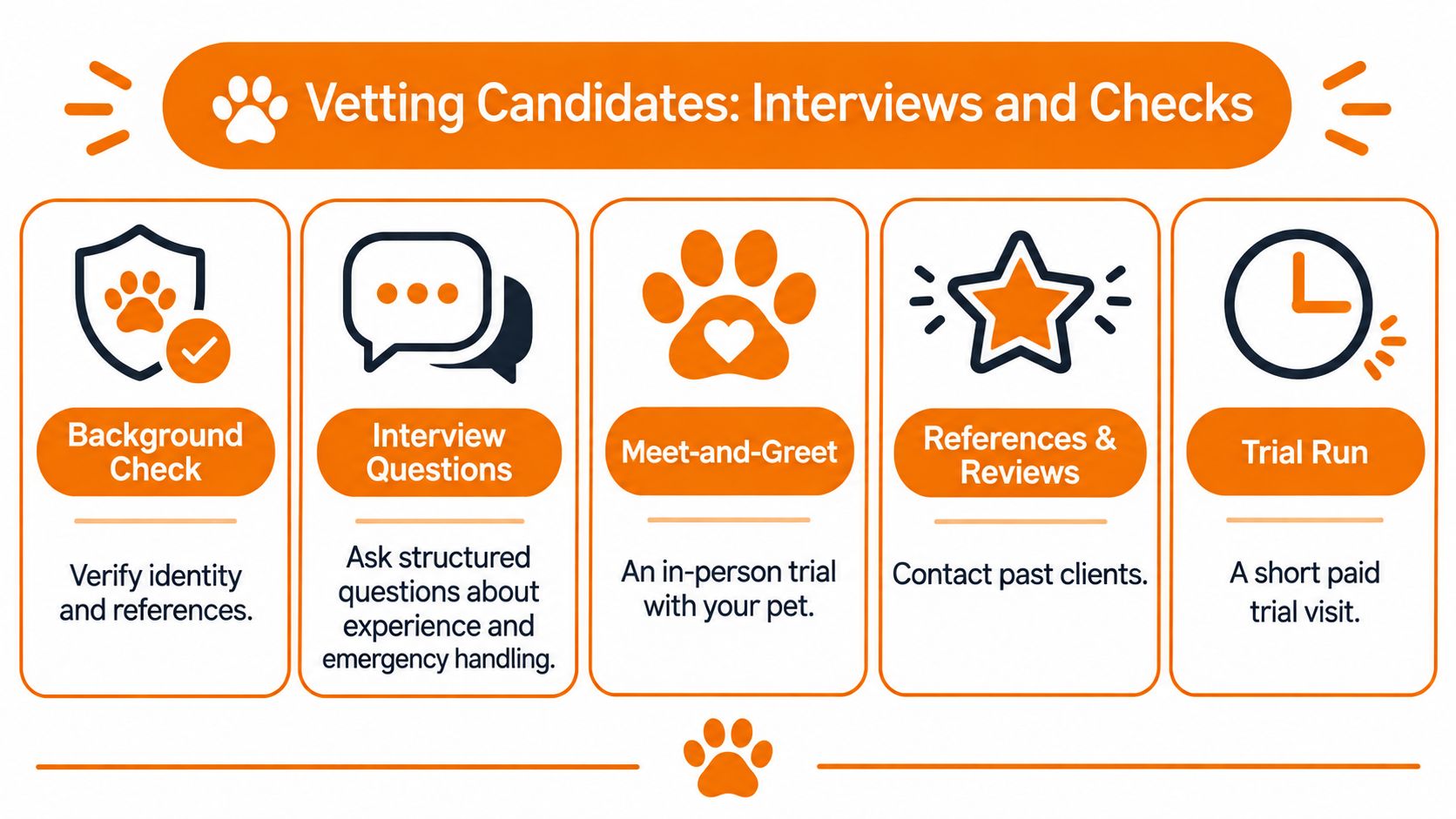
A profile can tell you that a sitter is available. It can't tell you how they think when a meal is missed, a lock jams, or a pet gets sick. The interview is where the decision gets real, because you're no longer judging personality alone, you're checking whether the person can handle responsibility when the day stops going smoothly.
Ask about real situations, not vague comfort
Start with scenario questions. Ask what they would do after a missed meal, if the pet vomits, if they're locked out, or if the animal slips past the door. Those questions reveal more than “Do you like dogs?” ever will, because they show whether the sitter can make decisions without panicking.
A strong interview also checks whether the sitter asks you the right things. A person who wants the veterinarian's contact details, feeding schedule, medication instructions, home access rules, and backup contact information is already thinking like a caregiver. Someone who skips those basics is asking you to trust them without building any real foundation.
For help shaping those questions into a proper conversation, Global Pet Sitter's interview guide is a useful reference point, especially if you're trying to compare candidates on the same criteria.
Verify the parts that protect your home and pet
The RSPCA recommends meeting the sitter, checking references, confirming insurance, and using an introductory session so the pet and carer can become familiar with one another (RSPCA). That's the right order, because a warm conversation is not proof of competence.
Use a simple risk-control checklist:
- Identity and references: verify who they are and speak to past clients, not just online comments.
- Insurance: ask for proof of pet-care insurance where it's legally available.
- Experience match: confirm relevant species, medication, or behavior experience.
- Trial session: book a short introductory visit before you commit to travel.
If you're comparing vendors for background checks, a resource like choosing background check vendors can help you think through the difference between a surface-level search and a process that actually protects you.
A good sitter doesn't resist questions. They answer them clearly, because they've already thought through the answers.
Arranging Meet-and-Greets and Setting Expectations
The meet-and-greet is where you find out whether the relationship will feel easy or strained. You're watching three things at once, the sitter, the pet, and your own gut reaction to how the conversation flows. If the sitter rushes the visit, ignores the pet's body language, or seems overly casual about house rules, that matters more than a polished profile ever will.
Let the pet and sitter meet in the real setting
An in-person or video introduction gives you a chance to see how the sitter enters the space, how they talk to the animal, and whether the pet relaxes or tightens up around them. A pet that sniffs, circles, or settles after a few minutes is giving you useful information. A pet that hides, barks, or keeps distance may need a sitter with a quieter style or more experience.
This is also where you set the boundaries that keep everyone calm later. Agree on visit windows, feeding details, leash rules, where the pet sleeps, whether guests are allowed, and how updates should be sent. If you want a sitter to text after every visit, say that now. If you prefer one clear update instead of constant check-ins, say that too.
For practical home-access planning, PeakFriend Security's smart lock pricing guide is a useful reminder that access systems matter, because key handoff and entry rules are part of the care plan, not an afterthought.
Put the expectations in writing
The handoff should leave nothing important to memory. Written instructions prevent the “I thought you meant…” problems that show up once you're already at the airport. Keep the agreement simple and specific, especially around timing, food, medication, and emergencies.
Use short written notes for:
- House rules: rooms off-limits, alarm use, key return, and visitor restrictions.
- Visit structure: arrival window, walk length, feeding order, and cleanup expectations.
- Communication preferences: when you want updates, what counts as urgent, and what should stay in text versus a call.
The goal is not to micromanage every minute. It's to remove guesswork so the sitter can do the job without constantly asking you to clarify basic decisions.
Navigating Booking, Payment, and Legal Considerations
Once the sitter has passed the practical test, the last step is making the arrangement clear enough that nobody is guessing about money, liability, or authority. That matters even more for international sits or cross-border travel, where a simple question can become legal, medical, or insurance-related very quickly. Who authorizes treatment, who pays first, and what happens if the pet injures someone are not small details. They're the details that determine whether a trip stays calm or turns into a mess.
Treat the booking as a written agreement
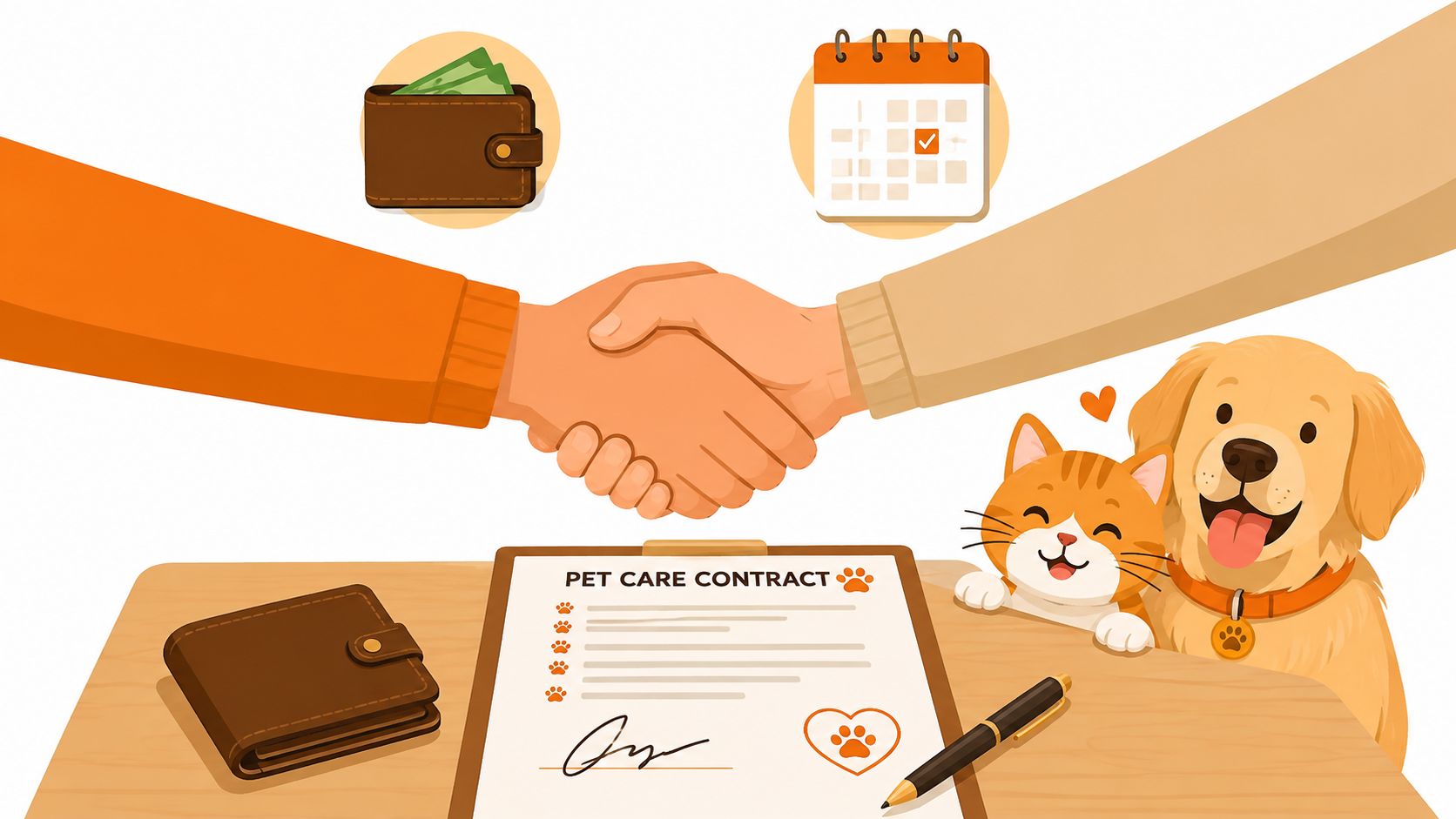
A booking message is not enough. You need a written record of the service, the timing, the fee, the access rules, the emergency contact, and the cancellation terms. That protects both sides and makes it much easier to resolve any dispute about what was promised.
A solid agreement usually includes:
- Veterinary authorization: who can approve treatment if you're unreachable.
- Emergency spending limit: the maximum the sitter can authorize before contacting you.
- Medication log: what gets given, when, and how it should be recorded.
- Home access rules: keys, lock codes, who may enter, and how access ends after the sit.
If you want a starting point, Global Pet Sitter's contract template is a useful reference because it reinforces the idea that a sit should be documented, not improvised.
Payment should match the seriousness of the arrangement
Direct booking, fee splitting, and platform-based payments can all work, but only if they're clear from the start. The problem isn't the method, it's ambiguity. If one person thinks payment happens after the sit and the other expects it upfront, that tension can bleed into the whole arrangement.
The best payment setup is the one that leaves a paper trail, matches the service dates, and doesn't force anyone to negotiate after the pet has already been handed over. If the sitter operates through a platform, confirm whether the platform handles messages, payment, and any protections, or whether those details stay between you and the sitter.
Cross-border care needs extra clarity
International sits make the normal questions more urgent. Jurisdiction changes, local insurance rules may differ, and the line between a casual arrangement and commercial activity can shift depending on where the sit happens. That's why a simple “the platform covers it” assumption is risky. It may not cover the sitter's personal liability, and it may not answer who is responsible if a vet visit, injury, or home issue comes up.
A written pre-sit checklist is the safest way to handle that uncertainty. Include the backup contact, the vet's details, the emergency spending limit, the medication list, the property rules, and the cancellation plan before anyone travels. The more distance involved, the more valuable it becomes to make the arrangement explicit.
When you're ready to make the process easier, use a platform that keeps the conversation, profile, and sit details together, then visit Global Pet Sitter to post your dates, compare sitters, and set up care that keeps your pet at home and your mind at ease.
Please sign in to leave a comment
