You've found a promising place, checked the dates, and then noticed the small print: a pet fee, a cleaning charge, strict arrival rules, and a warning that your dog can't be left alone. The room may look fine in photos, but your cat or dog still has to sleep in an unfamiliar space while you spend the trip managing their anxiety.
That's the problem with treating holiday accommodation services as a simple bed-finding exercise. Your lodging choice shapes your costs, privacy, daily routine, destination experience, and the welfare of any animal traveling with you or staying behind. Hotels, vacation rentals, home exchanges, and house and pet sitting all solve different travel problems. The right choice depends less on the listing's headline price than on the kind of trip you're trying to have.
Rethinking How We Book Our Trips
Most travelers begin with the same tiring routine. They filter by location, compare nightly rates, scan photos, and look for the words “pet-friendly.” Then they open the rules and discover that “pet-friendly” may mean a small dog is accepted for an added fee, an animal can't use the furniture, or nobody may remain in the room while housekeeping visits.
A hotel is built around convenience and standardized service. You get a reception desk, defined check-in procedures, and predictable access to amenities. That can be ideal for a short city break, a business trip, or a late arrival when you don't want to coordinate with a private host.
A vacation rental follows a different philosophy. You trade some hotel-style service for a kitchen, more living space, and a stronger sense of having a temporary home. That arrangement can work well for families, remote workers, and travelers who plan to cook, but quality, support, and house rules vary widely between properties.
Home exchanges focus on reciprocity. You offer access to your own home, either directly or through an exchange network, and receive the chance to stay in someone else's. The financial model matters, but so does the relationship. You're entering a lived-in space, often with local instructions, neighborhood knowledge, and a responsibility to leave the home as you found it.
House and pet sitting goes further by making care the central exchange. A sitter stays in the owner's home while looking after pets and maintaining agreed routines. For an animal that becomes distressed in kennels or unfamiliar rooms, this isn't merely a cheaper lodging arrangement. It can preserve familiar smells, feeding times, walks, medication routines, and the comfort of home.
| Accommodation type | What you're mainly buying | Pet experience | Strongest use case |
|---|---|---|---|
| Hotel | Convenience and service | Varies by policy and room rules | Short, simple stays |
| Vacation rental | Space and independence | Often better space, but inconsistent rules | Families and self-catering |
| Home exchange | Reciprocal access and local living | Depends on the arrangement | Flexible, community-minded travel |
| House and pet sitting | Accommodation exchanged for care | Usually the most home-centered option | Pet owners and slow travelers |
The best booking decision starts with a blunt question: what needs to work every day of this trip? If the answer is “fast check-in,” choose accordingly. If it's “my elderly dog needs his own sofa and normal walk route,” a standard room may be the wrong tool regardless of its reviews.
The True Cost of Hotels and Vacation Rentals
Hotels and short-term vacation rentals dominate holiday accommodation services because they're easy to search and easy to understand at first glance. You select dates, pay a price, and receive a reservation. The friction appears later, when the advertised rate meets taxes, service charges, cleaning fees, deposits, parking costs, pet supplements, and cancellation restrictions.
The short-term vacation rental market illustrates the scale of this category. It's estimated at USD 145.73 billion in 2026 and projected to reach USD 244.13 billion by 2031, representing nearly 68% growth over five years at a 10.86% CAGR, according to Mordor Intelligence's short-term vacation rental market analysis. Vacation rentals aren't a niche substitute for hotels anymore. They're a major lodging segment shaped by international leisure travel and longer stays.
The U.S. provides another useful benchmark. A congressional report citing AirDNA identified 2.4 million total short-term rentals in 2023, producing about USD 64 billion in annual revenue, while around 1.5 million were actively available on average at a given time because seasonality and demand affect availability. The report also placed these properties at roughly 1.6% of U.S. housing stock, using 147 million housing units in 2024 Q3, as summarized by Global Growth Insights' short-term rentals market report. Those figures show why short-term accommodation affects both travel supply and residential neighborhoods.
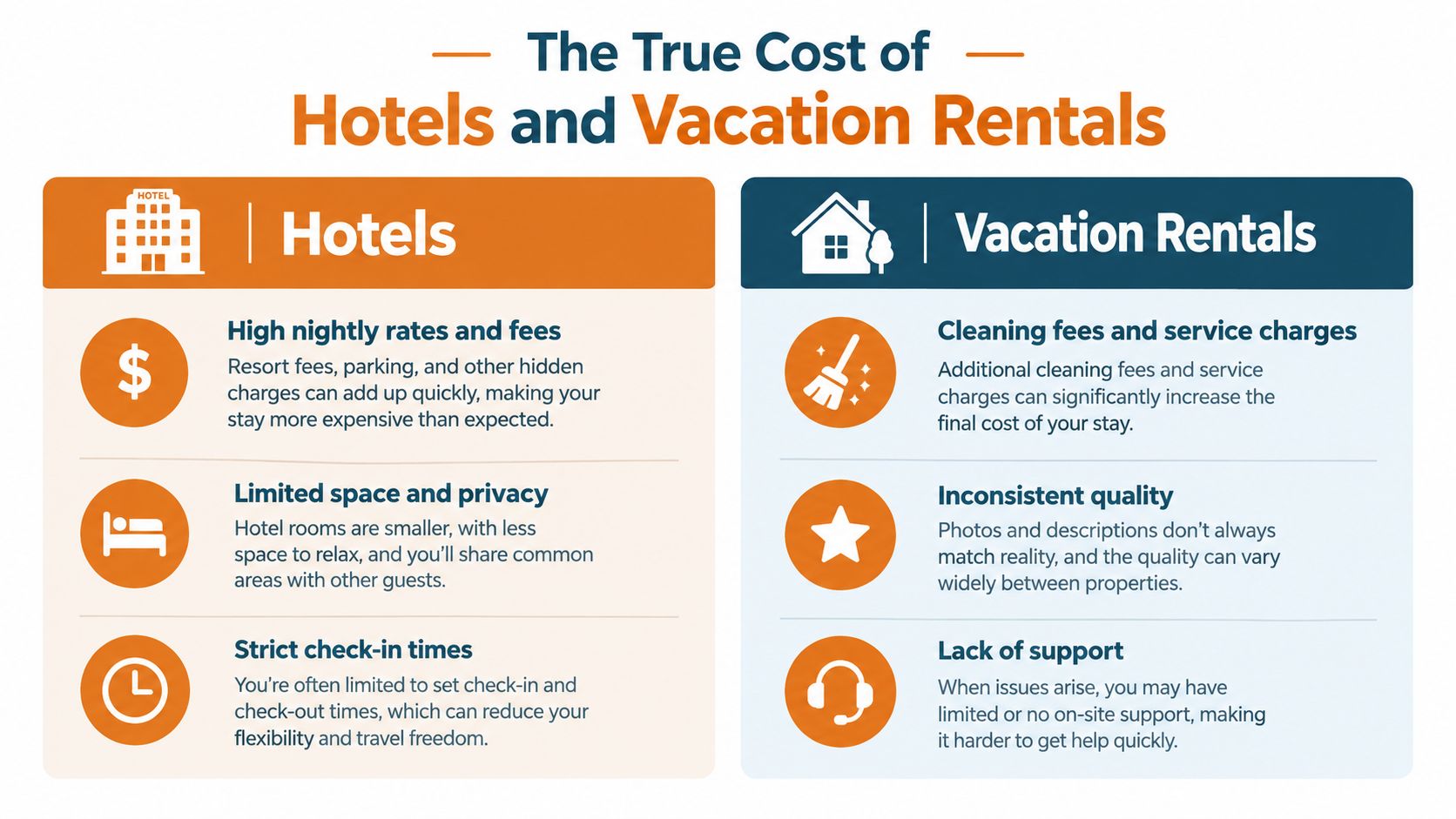
Where hotels still earn their keep
Hotels win when you value operational simplicity. Staff can handle maintenance, provide local recommendations, and sometimes store luggage or arrange transport. You don't need to interpret a complicated arrival guide or wonder whether the heating system works.
Pet owners, however, need to read beyond the filter. Ask whether your animal can remain alone, whether there are size or breed restrictions, where walks are permitted, and whether the room has direct outdoor access. A dog that panics when left alone may force you to cancel dinner plans or pay for additional care. A “pet-friendly” label doesn't automatically describe a humane or practical setup.
Why rentals need a full-cost review
Vacation rentals usually provide more usable space, which helps pets settle and gives longer-stay travelers room to work, cook, and decompress. But the total price can be difficult to compare until the final booking screen, and a private property may not offer immediate support when a lock fails or an appliance stops working.
For business travelers assessing regional options, a guide to Norwich holiday lettings for business travelers can help clarify the practical questions that matter, including location, workspace, and suitability for longer visits. Pet owners should apply the same discipline: confirm the rules in writing, request current photos, and ask who responds if something goes wrong.
Before choosing, review pet and house sitting prices alongside the complete cost of a rental or hotel. The comparison isn't only financial. It's also about whether your pet gets a stable routine and whether you can enjoy the destination without negotiating accommodation rules every day.
Practical rule: Treat the displayed nightly rate as an opening figure, not the final cost. Compare the complete stay, the care requirements, and the restrictions your pet will actually face.
House Sitting and Home Exchanges Explained
House sitting and home exchanges remove the commercial lodging transaction and replace it with an agreement between people. That changes what each party must contribute. The host offers access to a home, while the guest either provides care or contributes a comparable home through the exchange system.
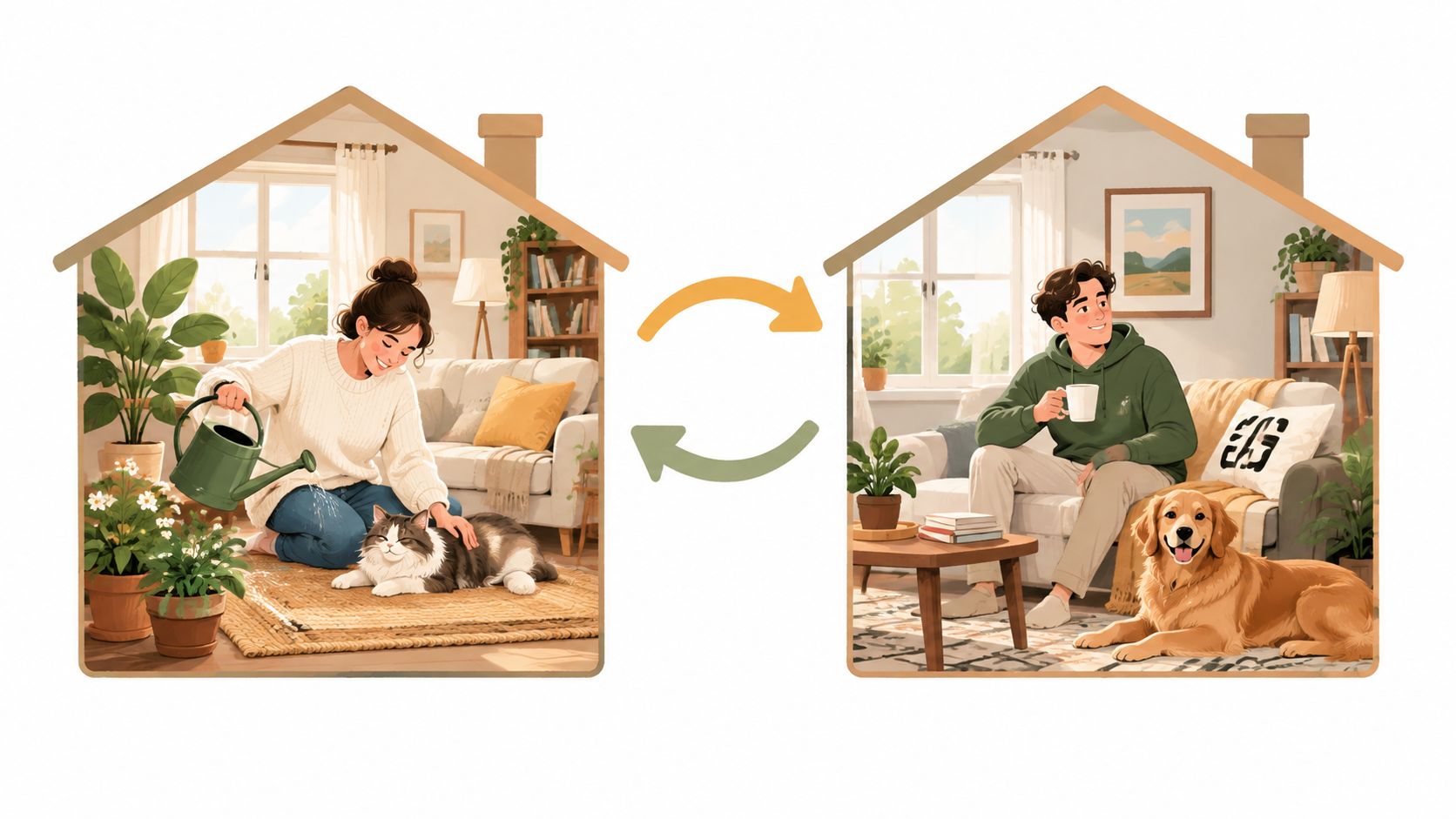
Two arrangements with different responsibilities
A home exchange works best when both households want flexibility and can agree on practical boundaries. You'll need clarity about cleaning, valuables, guests, mail, parking, plants, and whether pets are included. Some exchanges are direct, while others use credits or a wider member network, so the exact mechanics depend on the service.
A house sit has a more defined care obligation. The sitter may feed pets, provide walks, administer medication, water plants, collect mail, and keep the home occupied. The host should provide an honest care profile, emergency contacts, veterinary details, alarm instructions, and clear expectations about work schedules and visitors.
For a first-time user, what house sitting is is worth understanding before applying. The arrangement isn't free hotel accommodation with an animal added on. It's a commitment to follow a household routine responsibly.
| Question | Home exchange | House and pet sitting |
|---|---|---|
| Main exchange | Home access for home access | Home access for agreed care |
| Pet responsibility | Optional and arrangement-specific | Central when pets are present |
| Best advantage | Local living without a conventional booking | Familiar care and accommodation together |
| Main risk | Misaligned expectations about property use | Underestimating care, routine, or availability |
Trust has to be designed
Strangers trust each other through several practical safeguards, not optimism. Profiles, identity checks, references, reviews, detailed messages, video calls, and written care notes all help replace assumptions with evidence. A strong community also gives members a way to report problems, ask questions, and recognize reliable behavior.
Hosts should interview sitters as carefully as sitters assess homes. Ask about experience with similar animals, medication, separation anxiety, and emergencies. Sitters should ask for the pet's normal day, exercise needs, house rules, internet reliability, and what happens if the owner's return is delayed.
The strongest arrangement feels personal without becoming vague. You know who is arriving, what they'll do, and how both sides will communicate when plans change.
A short video call often reveals more than a polished profile. You can see whether the sitter listens, whether the owner explains care clearly, and whether the proposed routine fits the sitter's travel plans.
For pets, the welfare advantage is straightforward. Staying at home avoids the disruption of transport, unfamiliar smells, strange feeding arrangements, and long periods alone in a hotel room. It won't suit every animal or every owner, but when the match is responsible, the pet's ordinary environment becomes the holiday's foundation.
Navigating Trust and Modern Travel Trends
Travelers increasingly want accommodation that supports a purpose, not just an overnight stop. That purpose might be writing in a quiet rural setting, caring for animals, exploring a neighborhood slowly, or working remotely from a home with the basic routines of daily life. A house sit can serve those goals better than a room designed for short occupancy.
The market context supports that shift. Independent 2026 market coverage projects the vacation rental market at USD 106.5 billion in 2026, with a 3.7% CAGR through 2033, and reports that more than 35% of travelers prefer vacation rentals over hotels for affordability, privacy, and a local feel, according to The Host Report's 2026 travel trends coverage. The same coverage describes later booking behavior, stronger value sensitivity, and interest in niche stays such as farm visits and reading retreats. Travelers want distinctive experiences, but they still need clear terms and dependable support.
Experience needs practical infrastructure
An experience-led stay can fail if the basics are unclear. A remote worker needs reliable internet and a workable desk. A pet sitter needs accurate veterinary information, secure key access, and a realistic care schedule. A host needs confidence that the person entering the home has a traceable identity and a meaningful reputation.
Independent operators face a particular trust challenge. European accommodation data reports that 94% of large properties feel prepared for cybersecurity risks, compared with 60% of properties with fewer than ten staff. It also reports that 21% of smaller businesses rank cybersecurity as a top future concern, compared with 9% of large properties, as detailed in the 2026 European Accommodation Barometer. The gap matters to hosts handling guest details, payment information, access codes, and in-stay messages.
What a responsible baseline looks like
Small hosts and community platforms shouldn't imitate a hotel chain's entire technology stack. They should establish a clear baseline:
- Identity and reputation: Use verified profiles, references, reviews, and consistent account information.
- Private communication: Keep sensitive details inside a controlled platform until both parties are comfortable proceeding.
- Key security: Avoid leaving access instructions publicly visible, and change codes when appropriate.
- Data restraint: Share only the information needed for the stay and care arrangement.
- Emergency clarity: Record veterinary, medical, property, and local contact details before arrival.
Trust isn't a friendly feeling. It's a process that makes responsibilities visible before the stay begins.
The best community-driven holiday accommodation services combine local warmth with disciplined boundaries. Authenticity should never require guests or hosts to abandon basic privacy, security, or accountability.
Choosing the Right Option for Your Travel Style
Start by identifying the trip's main job. A luxury seeker wants service and recovery time. A backpacker wants flexibility and low overhead. A digital nomad needs a dependable place to work. A pet owner wants the animal to remain calm, safe, and properly supervised.
Use the matrix below as a filter, not a verdict.
Accommodation Services Decision Matrix
| Accommodation Type | Cost Profile | Pet Welfare Impact | Best For |
|---|---|---|---|
| Hotels | Usually simple to book, but added charges and pet rules can raise the full cost | Convenient for some pets, stressful for animals that can't settle alone | Short stays, service-focused travelers, late arrivals |
| Vacation rentals | Full pricing requires checking cleaning, service, deposit, and cancellation terms | More room and home facilities, but pet policies and quality vary | Families, self-catering, remote work, longer visits |
| Home exchanges | Built around reciprocal value rather than a conventional nightly transaction | Depends on whether pets and care duties are included | Local living, flexible travelers, community-minded households |
| House and pet sitting | Accommodation is exchanged for agreed care, so money may not change hands | Strongest fit for pets that thrive in familiar surroundings | Pet owners, slow travelers, animal-loving digital nomads |
Match the service to the traveler
For luxury seekers, choose a hotel when staff support, housekeeping, dining, and predictable service matter more than domestic space. Choose a high-quality rental when privacy and a private kitchen matter more than a reception desk.
For budget-conscious travelers, compare the entire trip rather than just the room. A home exchange or house sit can remove accommodation cost, but you're contributing time, responsibility, or access to your own home. That's a trade, not a loophole.
For digital nomads, verify the workspace before committing. Ask for the internet setup, desk location, noise conditions, heating or cooling arrangements, and backup plan. A beautiful rural listing isn't useful if you can't take a video call or maintain your working routine.
For pet owners, rank welfare before convenience. If your dog needs frequent walks, your cat requires medication, or your animal becomes distressed away from home, in-home care deserves first consideration. If you're taking a pet with you, confirm transport, outdoor access, nearby veterinary support, and whether the property's rules fit the animal.
Hosts can also use practical preparation resources, including this peak season appliance checklist, to reduce avoidable problems for guests and sitters. Working appliances, clear instructions, and honest listing details improve any accommodation model.
Choose the option that removes your biggest risk. If the risk is wasted time, select convenience. If it's cost, explore reciprocal models. If it's pet distress, choose continuity of care.
Why Global Pet Sitter Stands Out
House sitting works only when trust and value are visible on both sides. Global Pet Sitter is one community-driven option that connects pet owners with sitters who stay in the owner's home while caring for the animals. The arrangement supports owners who want pets to remain at home and travelers who prefer accommodation tied to a meaningful daily responsibility.
Its approach addresses a common problem for experienced sitters: reputation gets scattered across platforms. Global Pet Sitter allows sitters to import 5-star reviews from other platforms through screenshots, helping them preserve established credibility instead of starting with an empty profile. That doesn't replace references or a good conversation, but it gives hosts more context when comparing applicants.
The platform also emphasizes transparent pricing and early access. Early adopters can use it free, with lifetime-favored rates planned when paid plans launch. Because plans and conditions can change, users should read the current terms before relying on any future pricing arrangement.
Community governance matters
A marketplace becomes more useful when members can influence how it develops. Global Pet Sitter invites users to vote on features, share feedback, and participate in an active Facebook group. Visible responses to that feedback can help members understand whether the service is listening to practical concerns from both hosts and sitters.
That matters in house sitting because the difficult questions are often operational. How should a host describe medication? What information should a sitter receive before arrival? How can members handle a cancellation, delayed return, or change in pet behavior? A responsive community can surface those issues earlier than a purely transactional listing site.
Cost transparency in pet sitting also matters because free accommodation doesn't mean zero responsibility. Sitters contribute time, reliability, and care. Owners contribute access to their home and confidence in another person. Both sides should understand what is included, what isn't, and how support works.
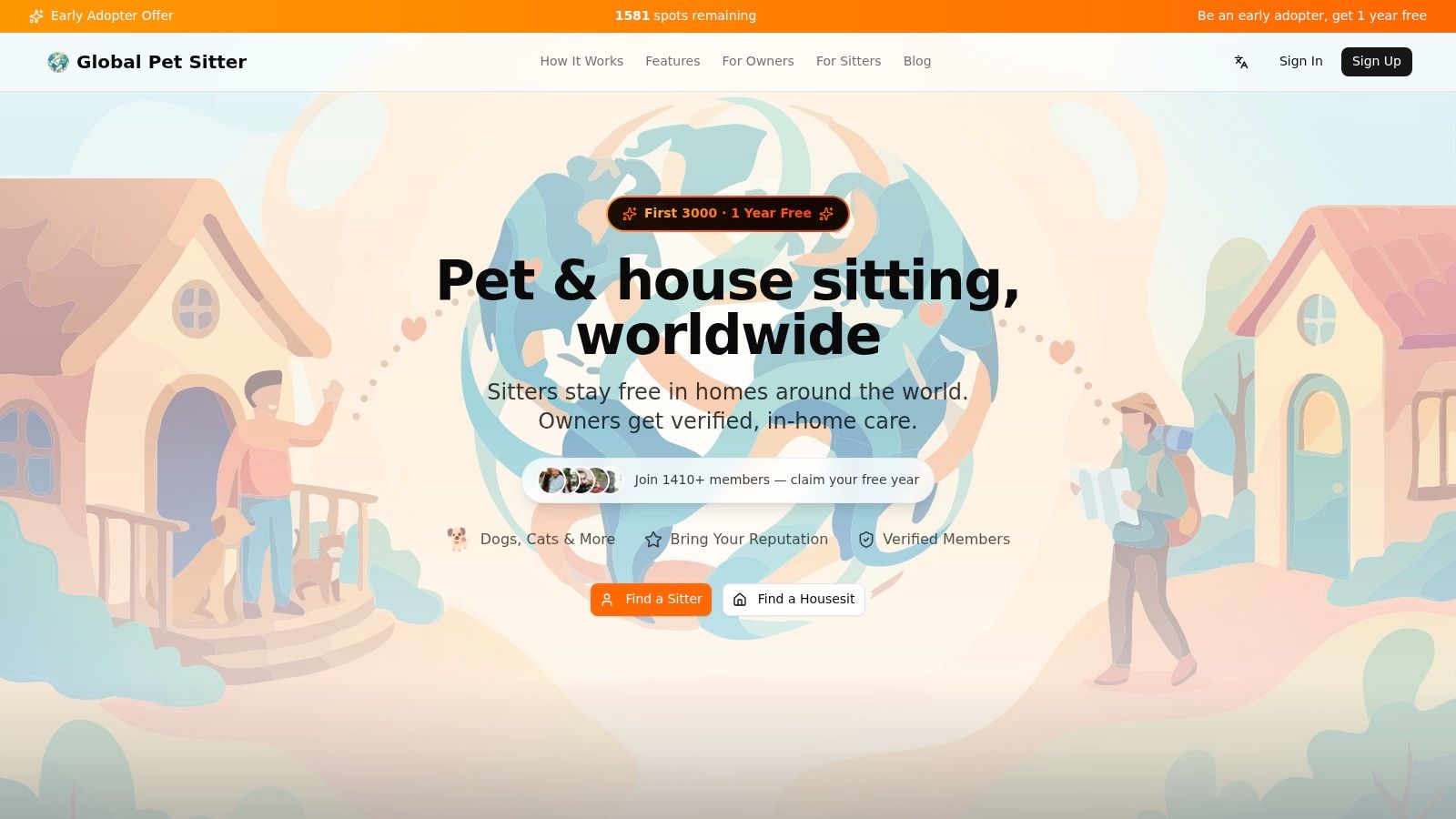
Global Pet Sitter's practical flow is simple: create a profile, find a match, then connect and care. GPS tools help sitters discover opportunities across continents, while owners can post dates, pet details, and household expectations. The model suits people who see travel as participation in a place, not just consumption of a room.
Getting Started with Your First House Sit
Your first sit should be treated like a careful introduction, not an impulsive booking. A strong match protects the animal, the home, and your travel plans.
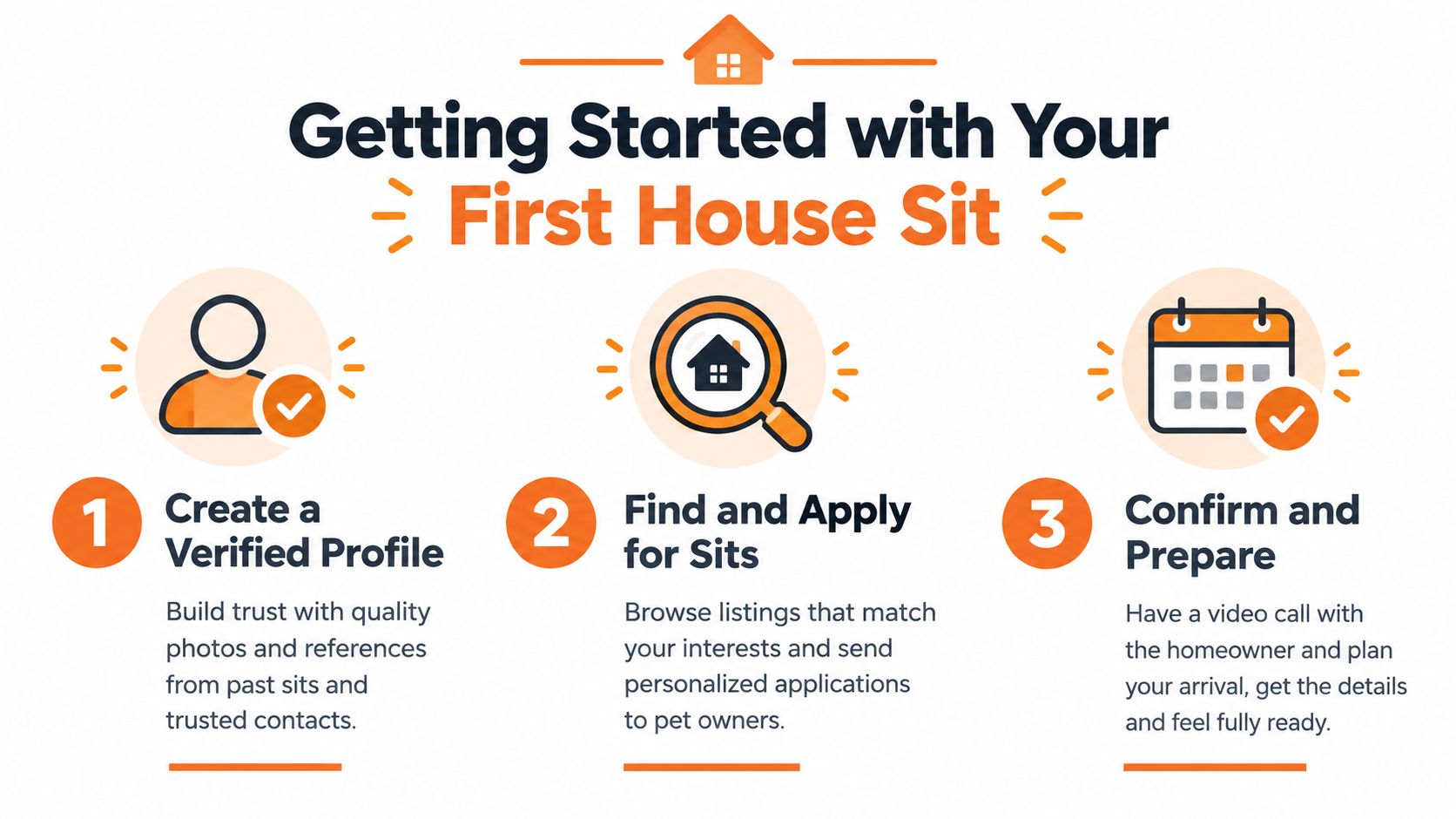
1. Create a verified profile
Use recent photos, explain your experience, and describe the animals you can handle. Include references, relevant skills, work patterns, driving details, and whether you're comfortable with medication or high-energy dogs. Sitters who already have reviews can use the platform's screenshot import option to show prior feedback.
Owners should provide equally clear information. List each pet's routine, temperament, feeding instructions, medical needs, exercise expectations, household rules, and emergency contacts. A vague profile creates uncertainty for everyone.
2. Find and apply for suitable sits
Search by destination, dates, and practical fit. Don't apply to every attractive listing. Choose homes where the care schedule matches your availability, then write a personal application that mentions the specific pets and responsibilities.
Ask questions before accepting. Confirm arrival and departure times, internet access, transport needs, cleaning expectations, visitors, and what happens if plans change.
3. Confirm and prepare
Arrange a video call before finalizing the sit. Use it to meet the animals, inspect the working environment, discuss routines, and test whether communication feels easy. Put the agreed responsibilities in writing, including keys, alarms, vet contacts, food, medication, and emergency decisions.
Arrive with enough time for a proper handover. Take notes, save essential contacts, and ask the owner to demonstrate anything that could cause trouble, from the heating controls to the pet's preferred harness.
A successful first sit begins before arrival. Clear questions are a form of care.
Global Pet Sitter connects pet owners with trusted sitters for in-home care and helps travelers find accommodation through responsible house sitting. Visit Global Pet Sitter to create your profile, explore available sits, and start planning a trip that works for both you and the animals you care about.
Please sign in to leave a comment
