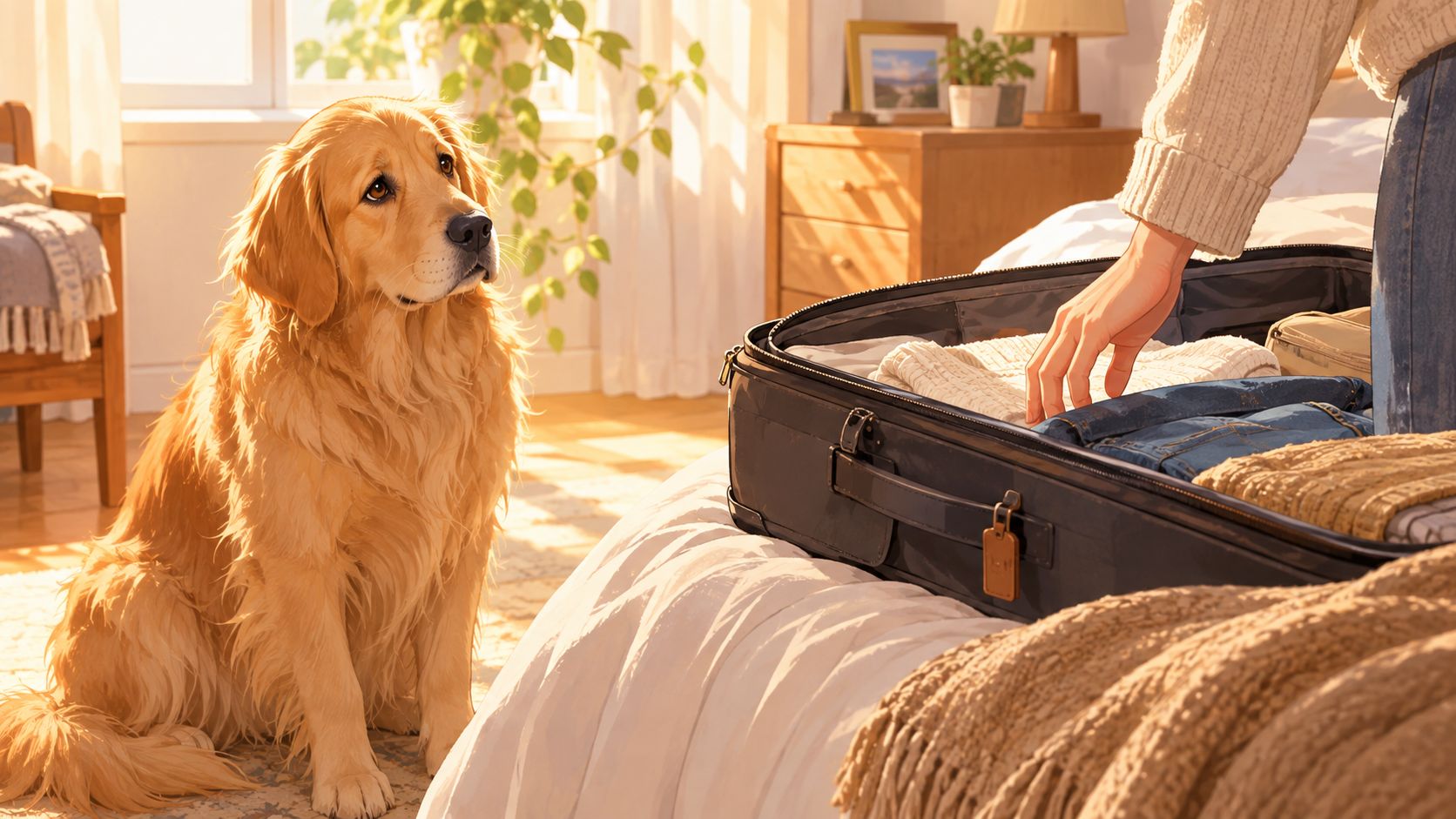
You're packing a suitcase, checking travel dates, and trying not to look too worried while your dog follows you from room to room. They notice the changed routine before you've even left. Their bed, bowls, and favourite smells are still at home, but the atmosphere feels different, and you're already wondering whether a kennel will leave them unsettled.
That guilt is familiar to many owners. You want to travel, yet you also want your dog to feel safe, sleep well, eat normally, and receive care from someone who understands their habits. Home from home dog sitting offers a middle path. Your dog stays in a sitter's home, rather than a busy kennel, and continues life with familiar routines, personal attention, and a domestic atmosphere.
The arrangement still needs careful planning. You'll need to understand exactly what the service includes, find a sitter you can trust, share useful information, and decide whether the cost represents good value for your dog. You'll also need to consider your dog's age, health, temperament, comfort around other animals, and ability to adapt.
This guide explains the model in plain language. It focuses on the central benefit, familiarity can reduce the strain of change, rather than treating dog sitting as a simple convenience. You'll learn what a typical stay looks like, how it differs from kennelling and drop-in care, and how to create a smooth first experience for everyone involved.
What Home From Home Dog Sitting Really Means
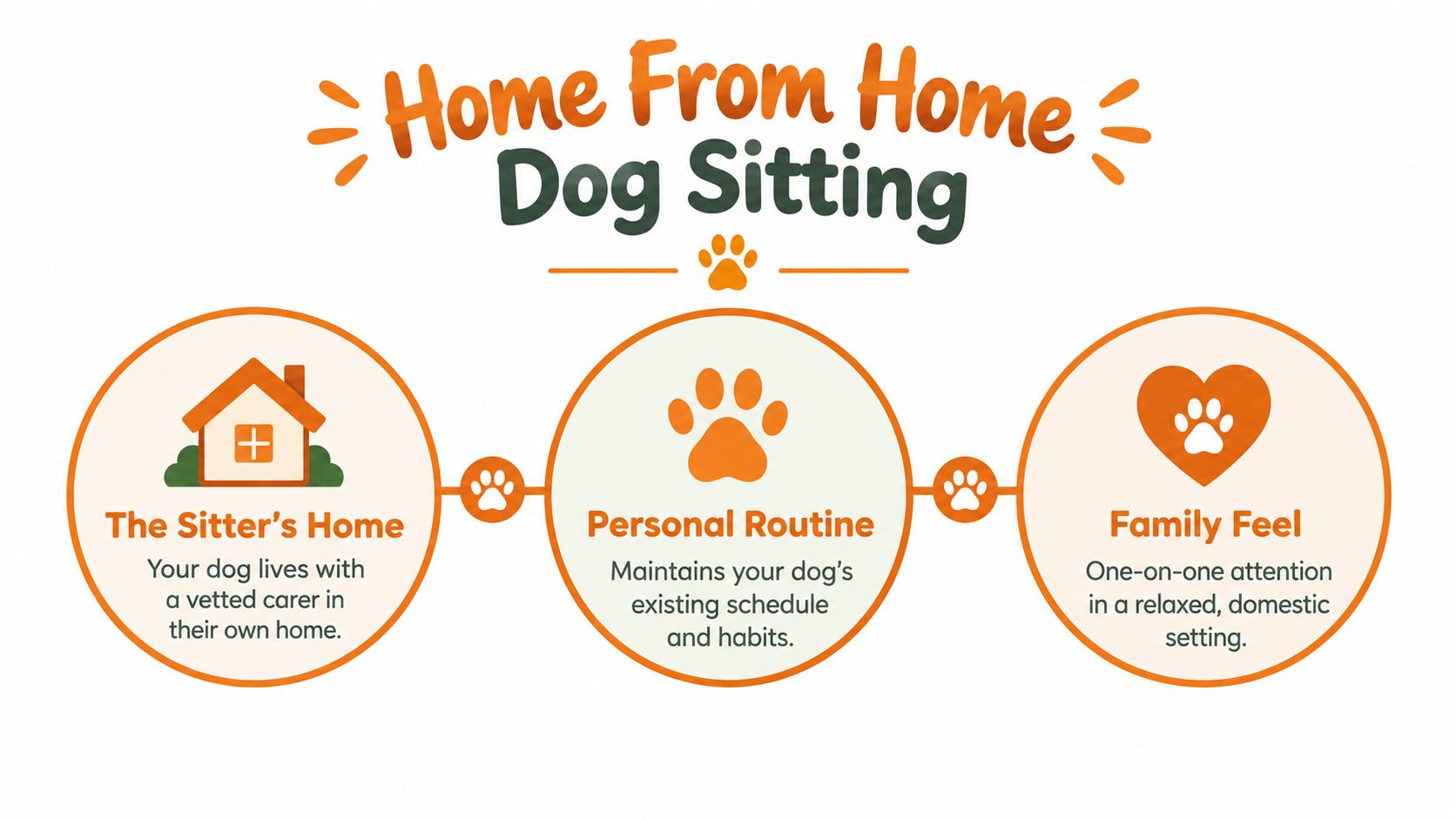
Home from home dog sitting means your dog stays in a trusted sitter's own house while you're away. Instead of spending the night in a kennel run or remaining alone with occasional visits, your dog becomes part of a household for the agreed period.
A useful comparison is a child staying with a close family friend. The child isn't in their own bedroom, but they're in a relaxed home with an adult who understands their habits, provides meals, and keeps the day recognisable. Your dog still has a different address, yet the experience can feel more like ordinary family life than institutional boarding.
The familiar details matter
A good sitter doesn't provide a sofa and a food bowl. They learn when your dog eats, how long they comfortably walk, where they settle, and what usually signals tiredness, excitement, fear, or illness. Your dog may bring a bed, blanket, toy, food, harness, and an item carrying your scent.
Those details act like small landmarks in an unfamiliar place. The sitter's home supplies the setting, while your dog's belongings and routine provide continuity. This matters particularly for dogs that are cautious with new people, reactive in busy environments, or strongly attached to predictable habits.
What a normal day can look like
Every arrangement is different, but a typical day may include:
- Morning routine: The sitter provides breakfast at the usual time, gives prescribed medication if agreed, and takes your dog out according to their normal walking pattern.
- Daytime companionship: Your dog may relax in the house, play in the garden, accompany the sitter on a walk, or receive attention between the sitter's other responsibilities.
- Meals and rest: Food, treats, water, and quiet time follow your instructions rather than changing without warning.
- Evening wind-down: A final walk, familiar sleeping arrangement, and calm household rhythm help your dog settle overnight.
Home from home sitting isn't the same as a drop-in visit. With drop-ins, your dog remains in your property and a sitter visits for agreed periods. It also differs from house sitting, where the carer lives in your home and your dog stays on their own territory. In this model, your dog travels to the sitter's home and lives there temporarily.
Practical rule: The closer the sitter can keep the daily pattern to your dog's ordinary life, the less your dog has to solve at once.
The arrangement may suit a sociable dog that enjoys household company, but it isn't automatically right for every animal. A dog that guards food, struggles around children, dislikes other pets, or needs intensive medical supervision may require a specialist plan. Honest information before booking protects your dog and the sitter.
Why Dogs Often Thrive Better Than in Kennels
The strongest argument for home from home dog sitting is not that kennels are automatically harmful. A within-subjects study of 29 privately owned dogs found higher urinary cortisol/creatinine and vanillylmandelic acid/creatinine ratios in the kennel environment than at home, with reported significance levels of P = 0.003 and P = 0.01. Surface temperature was also lower in kennels, reported at P = 0.001, although the authors concluded that short-term kennelling didn't clearly demonstrate negative stress. Read the study on physiological, physical, and behavioural responses in kennelled dogs.
That careful conclusion matters. A kennel can be competently run, and some dogs settle well there. However, a home environment may preserve more of the cues your dog already understands, including household sounds, familiar handling patterns, predictable rest, and one-to-one contact.
What your dog experiences
Dogs don't evaluate care through price or appearance. They experience the number of unfamiliar people, changes in noise, altered sleep, new smells, different feeding arrangements, and the availability of quiet space. A home-based sitter can often reduce those changes, especially when one consistent person handles most of the care.
Reviews of canine stress research and experimental handling work indicate that familiarity with both the setting and handler can improve adaptation. Across repeated handling sessions, heart rate and stress index decreased while heart-rate variability, including RMSSD, increased. Explore the review and experimental evidence on canine stress and handling.
| Feature | Home From Home Sitting | Traditional Kennels |
|---|---|---|
| Setting | A domestic home with household sounds and furniture | A purpose-built boarding environment |
| Daily rhythm | Usually shaped around the dog's established schedule | Often follows the facility's operating routine |
| Attention | More personalised, depending on the sitter's capacity | Shared among the dogs in care |
| Social exposure | Can be limited to selected people and animals | May involve more unfamiliar dogs, sounds, and movement |
| Best fit | Dogs that benefit from calm handling and a home atmosphere | Dogs comfortable with structured group or facility care |
In-home sitting can also make it easier to notice subtle changes in appetite, movement, toileting, or mood. That doesn't replace veterinary care, and no sitter should diagnose a medical problem. It does mean a carer who knows the dog's normal behaviour may spot a deviation sooner.
For a broader comparison of care arrangements, see this guide to pet sitting versus boarding. The right choice depends on your dog, the quality of the provider, and the safeguards in place.
How to Find and Vet a Trusted Sitter You Can Rely On
A friendly profile photo is a starting point, not proof of suitability. You're trusting someone with a living animal, so assess their experience, environment, communication style, and response to difficult questions.
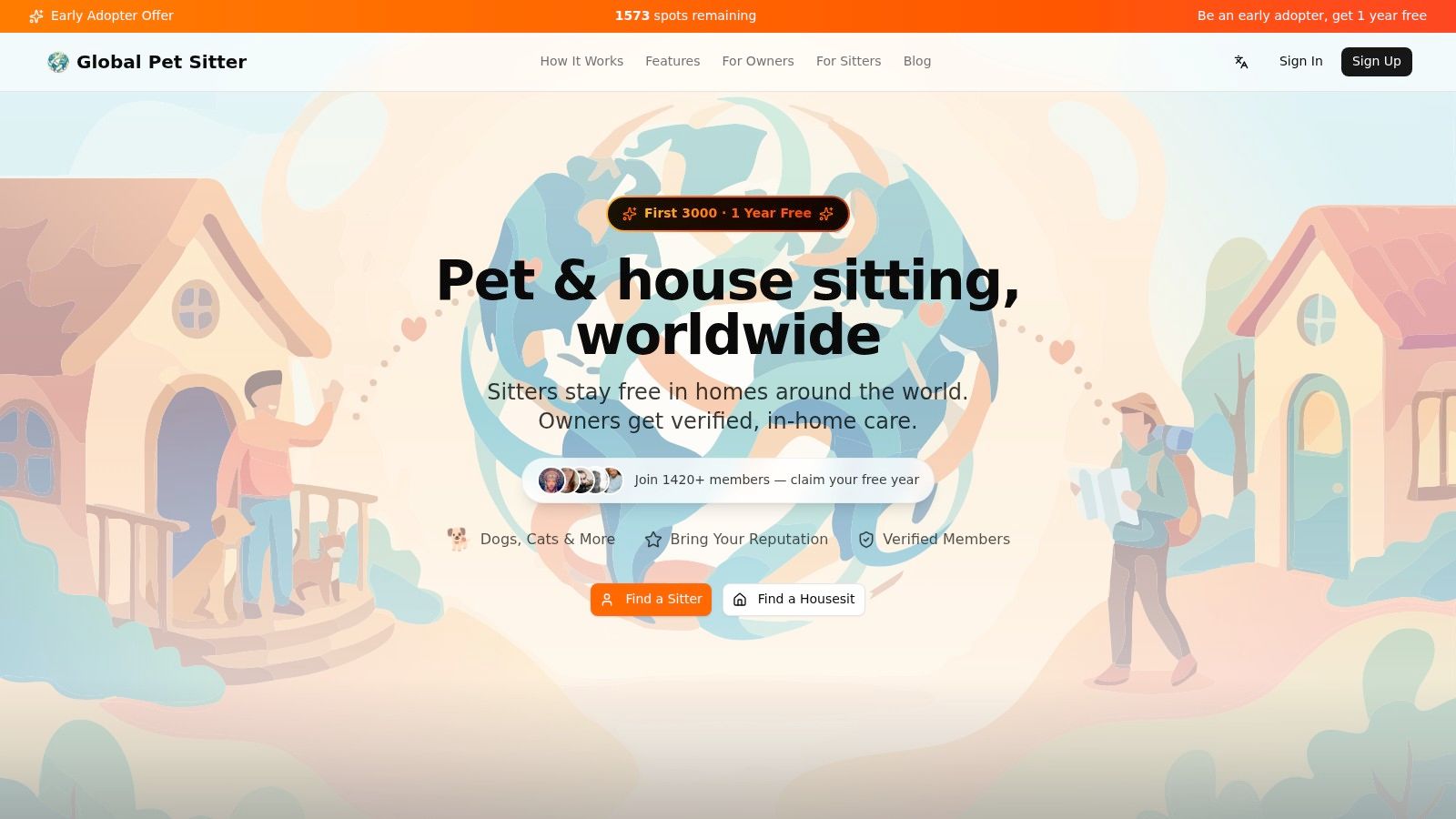
Start by searching in places where profiles, references, reviews, and messaging are visible. Global Pet Sitter is one community-driven marketplace where owners can post dates and pet details, contact potential sitters, and review available information about members. You can also use local recommendations, veterinary practices, training groups, or established pet-care directories.
Use a repeatable screening process
First, check whether the sitter has cared for dogs with similar needs. Experience with puppies doesn't automatically mean experience with elderly dogs, anxious dogs, medication, reactivity, or separation difficulties. Look for specific descriptions of what they've handled, not only general statements about loving animals.
Then arrange a video call or phone conversation. Ask:
- What would a normal day look like in your home?
- Are there resident pets, children, stairs, open gardens, or other features I should know about?
- How would you manage medication, refusal to eat, vomiting, escape attempts, or sudden lameness?
- How much time would my dog spend alone?
- Where would my dog sleep?
- How often would you send updates?
- What would happen if you became ill or couldn't complete the stay?
The best answers sound practical. A reliable sitter won't promise that nothing can go wrong. They'll explain how they reduce risks, who they'd contact, and when they'd call you or a vet.
Arrange a meet-and-greet before confirming the booking. Watch how the sitter approaches your dog, whether they allow the dog to choose the pace, and whether they listen when you describe an unusual habit. Your dog doesn't need to perform instant affection. A calm, respectful introduction can tell you more than an enthusiastic greeting.
For a fuller screening framework, use this resource on how to find a pet sitter.
The video below can help you think through the practical side of arranging care.
Finally, confirm the written details. Agree on dates, fees or exchange terms, food arrangements, medication, emergency contacts, cancellation expectations, permitted walks, transport, and what happens if your return is delayed. A clear agreement prevents a warm conversation from turning into an ambiguous handover.
Creating a Comfortable Stay for Owners and Sitters
A smooth stay begins before the dog arrives. Owners provide the information that makes care predictable, while sitters prepare a space where the dog can retreat, rest, and observe without constant pressure.
Build a handover pack that answers real questions
Write a care sheet in ordinary language. Include meal times, portion guidance, treats, walking preferences, recall reliability, sleep habits, triggers, fears, favourite games, and signs that your dog needs space. Add your vet's details, your emergency contact, medication instructions, insurance information where relevant, and permission arrangements for urgent veterinary treatment.
Pack enough of your dog's usual food and treats for the entire agreed stay, with a little allowance for travel disruption. Sudden food changes can create avoidable digestive problems, and a sitter shouldn't have to guess which brand or quantity you use.
A useful handover pack may contain:
- Routine notes: The sequence your dog recognises from waking through bedtime.
- Health information: Medication, allergies, mobility concerns, and what counts as unusual behaviour.
- Home rules: Furniture access, rooms that are off limits, lead requirements, and garden boundaries.
- Comfort items: Bed, blanket, toy, food bowl, harness, and an item carrying your scent.
- Contact plan: Your preferred messaging method and the point at which the sitter should call rather than wait.
You can use a structured sitter information sheet to keep those details in one place.
Make the first separation small
A trial visit or short stay can reveal practical issues before a longer booking. Your dog may appear comfortable during a meet-and-greet but struggle with bedtime, eating, stairs, other pets, or being left alone in the sitter's home. A short test gives everyone useful information without turning the main trip into an experiment.
The sitter should copy the established routine where it's safe and realistic. They should offer a dedicated resting area, avoid overwhelming introductions, supervise interactions with other animals, and send updates at the agreed frequency. Photos can reassure owners, but the sitter shouldn't spend so much time documenting the stay that the dog loses attention.
Familiar objects help, but the sitter's behaviour matters just as much. Calm handling, predictable boundaries, and patient observation give those objects meaning.
Owners should also explain what not to do. If your dog mustn't visit dog parks, jump from furniture, eat unfamiliar treats, or walk off lead, write it down plainly. A sitter can only protect boundaries they know exist.
Understanding Costs and Value Compared to Other Care
The price of home from home dog sitting varies with location, stay length, dog numbers, medication, transport, peak demand, and the amount of supervision required. A short daytime arrangement isn't equivalent to overnight care, and a dog needing constant company shouldn't be compared with an independent adult dog that rests comfortably alone.
Market context shows why owners increasingly encounter professional pet-care options. One 2026 industry estimate values the pet sitting services market at USD 2.1 billion in 2026 and projects USD 4.7 billion by 2036, representing more than 120% expansion over that decade. Broader research places the global pet sitting market around USD 2.7 to 3.5 billion during 2024 to 2026, with forecasts above USD 5 billion by 2030 and beyond. These are market estimates and projections, not a quote for an individual booking. Review the pet sitting services market estimate.
Rate benchmarks also differ by country. Recent tracking reports average in-home pet sitting rates of £16.59 in the UK, AU$33.89 in Australia, and $34.19 in the United States during 2025. A separate market analysis estimates the global market at roughly USD 2.9 billion in 2025, with a projection of around USD 5.5 billion by 2030. Compare the market and regional pricing context.
Compare the whole value, not only the headline rate
Ask what the quoted amount includes. Does it cover walks, medication, transport, additional dogs, late collection, holiday dates, or extended supervision? A lower nightly price may become less economical if you need to buy extra daycare, arrange multiple drop-offs, or accept a routine that doesn't suit your dog.
Home from home sitting can offer value through individual attention, a quieter domestic setting, and reduced disruption to feeding and sleep. Boarding may offer trained staff, controlled facilities, and established procedures. Daycare may suit a dog that enjoys active social contact but won't necessarily provide overnight companionship.
Your budget matters, but so does your dog's likely response. Choose the arrangement that balances transparent pricing, capable care, practical logistics, and the environment in which your dog can settle.
Your Next Steps to a Happy Home From Home Stay
The decision becomes easier when you reduce it to three actions. First, decide whether your dog is likely to benefit from a sitter's household, considering temperament, health, social needs, and tolerance for change. Second, vet the person and environment carefully, rather than booking from a profile alone. Third, create a handover that gives the sitter enough information to preserve the rhythm your dog already knows.
The central idea is simple. Home from home dog sitting uses familiarity as a form of support. Your dog still experiences a new house and a temporary separation, but consistent handling, recognisable belongings, familiar food, and a steady schedule can make the transition gentler.
You don't need to begin with a long trip. Create a shortlist, ask practical questions, arrange a meet-and-greet, and consider a short trial arrangement. Pay attention to your dog's behaviour after the visit. A relaxed return to eating, sleeping, walking, and ordinary interaction is more useful than expecting an instant bond.
Keep communication specific. Agree when updates will arrive, what changes require a call, and who has authority to contact the vet. When both sides understand the plan, the sitter can focus on the dog, and you can travel with evidence that care is organised rather than relying on hope.
The best home from home stays don't try to recreate every detail perfectly. They preserve the essentials, offer a calm place to land, and give the dog a carer who notices what's normal for them. That's what turns a temporary move into a manageable, reassuring experience.
Global Pet Sitter lets owners post dog-sitting dates and care details, connect with sitters, and arrange in-home pet care through a community-focused marketplace. Visit Global Pet Sitter to create a profile, find potential matches, and take the first step toward a calmer stay for your dog.
Please sign in to leave a comment
