You've found a sitter who looks promising, agreed on the dates, and then discovered that your co-op requires written authorization before the doorman will allow them upstairs. Or you're an experienced sitter applying for NYC stays, only to lose out to someone who replied faster and presented a cleaner record of reviews, references, and building experience. In New York, the difficult part often isn't finding a listing. It's making the arrangement work inside a tightly managed residential system.
House sitting in New York City is a trust business shaped by apartment rules, crowded buildings, fast decisions, and pets that are more comfortable at home. Owners need more than overnight presence, while sitters need more than an attractive profile. A successful stay depends on clear care instructions, credible history, documented access, and communication that works before anyone exchanges keys.
Understanding How House Sitting Works in New York City
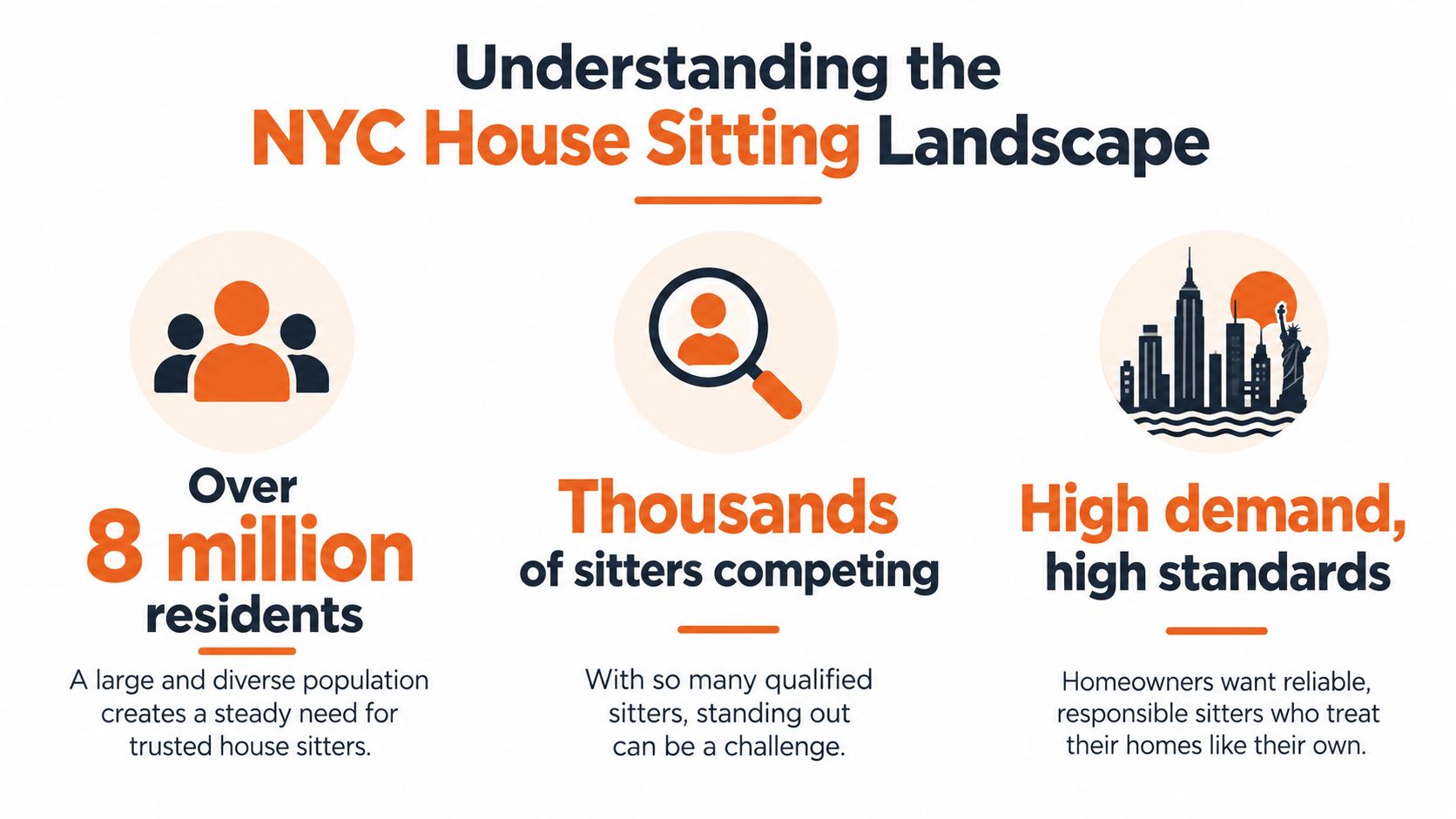
New York City has strong demand for in-home pet care, but sitters face substantial competition. A major marketplace listed 18,033 house sitters in the city as of March 2026, with 83% responding in under an hour. Sitters averaged 13 years of experience, while those with returning customers averaged about three repeat clients, according to the same New York City pet-sitting marketplace data.
Availability alone will not carry a profile when owners can contact many alternatives quickly. Prompt replies, relevant experience, a clear routine, and a documented handoff plan reduce the owner's uncertainty. That matters more than showing an open calendar.
Why density raises the standard
Short distances put many potential clients within reach, but dense buildings create more access points to manage. A stay may involve a doorman desk, key fob, elevator restriction, package room, pet elevator policy, or building manager who was not part of the original conversation. Co-ops and managed rentals may also require an authorization letter, advance notice, or proof of insurance. Confirming those requirements before the handoff prevents a sitter from being stopped in the lobby or denied access after arrival.
The residential market reinforces the need for reliable in-home care. Depending on the platform and listing method, NYC showed roughly 2,689 to 11,517 pet-friendly rentals in early October 2026, while one listing service reported average apartment rent of $4,213 per month. These figures appear in New York City rental listings, and they reflect a city where pets are part of rental life and keeping them at home can be practical.
Premium buildings extend that service expectation. A CityRealty report described a building with over 27,000 square feet of amenities, including dog walking, pet sitting, grooming, and veterinary services. House sitting therefore requires coordination with an established residential service system, not only competent animal care.
Practical rule: In NYC, credibility supports every part of the stay, from the first reply to building access and emergency decisions.
Owners should also distinguish house sitting from unauthorized occupancy. This guide to legal subletting in NYC provides useful context for that boundary. Sitters can review New York City pet-sitting listings to study local expectations and build a reputation-focused presence, while confirming the owner's building rules, authorization process, and insurance requirements before accepting a stay.
Building a Profile That Gets Accepted
A profile is a digital handoff before the handoff begins. It should answer the questions an owner would ask during a first meeting: Who are you, what animals have you handled, how do you communicate, and what will you do if the plan changes?
Sitter profiles need concrete detail. State whether you work from home, how you handle walks, whether you're comfortable with medication, and what kind of apartment access you've managed. “I love animals” is pleasant but weak evidence. “I follow written feeding instructions, keep a medication log, and send updates at agreed times” tells an owner how you behave.
What owners look for first
Use clear photos that show your face and your normal relationship with animals. Avoid a gallery made entirely of group shots, distant travel photos, or pets whose connection to you isn't explained. The owner isn't judging professional photography. They're checking whether the person behind the account appears identifiable, stable, and comfortable around animals.
Reviews carry more weight when they describe behavior rather than praise. A useful review might mention punctuality, medication, communication, cleanliness, or an unexpected issue that you handled responsibly. Experienced sitters moving from other services can preserve credibility by importing verified five-star reviews through screenshots where the platform supports that process. Make sure the screenshots show enough context to establish that the review belongs to your account, and don't edit the wording.
Verification also deserves careful attention. Complete identity checks, keep your contact details current, and answer messages from owners with enough information to support a decision. A fast reply that says only “I'm available” forces the owner to do more work. A better reply confirms the dates, names the pets, identifies any questions, and proposes a call or meet-and-greet.
Owners should optimize their listing with the same discipline. Include:
- Pet routine: Feeding times, walk preferences, sleep arrangements, triggers, and comfort signals.
- Medical information: Medication instructions, veterinarian details, allergies, and emergency authority.
- Home responsibilities: Mail, plants, bins, security checks, deliveries, and rooms that are off limits.
- Building facts: Entry method, front-desk procedure, elevator restrictions, and guest registration.
- Selection criteria: Whether you require prior NYC experience, a meet-and-greet, references, or a specific work schedule.
Don't hide difficult details to attract more applications. A sitter who knows about separation anxiety, a reactive dog, a fragile cat, or a strict building policy can decide whether the stay fits. That honesty saves both sides from a cancellation after the relationship has already started.
Navigating Rates and Market Expectations
A New York City overnight booking can look simple until the owner lists the work attached to it. The sitter may need to remain in the apartment, handle several walks, give medication, receive packages, manage mail, and respond to building or pet emergencies. Quote the stay around those obligations, not around the word “overnight.”
A major platform places the median NYC house-sitting price at about $59 per night. Treat that figure as a market reference, not a fixed tariff. The NYC house-sitting pricing benchmark is useful for setting an initial range, but the final quote should reflect the apartment, the pets, and the access conditions.
Compare the work, not just the number
| Arrangement | What to clarify before agreeing |
|---|---|
| Overnight presence | Whether the sitter must sleep at the apartment and how long they may be away |
| Daily exercise | Number and length of walks, outdoor access, and weather expectations |
| Medication support | Medication type, timing, storage, and the plan for a missed dose |
| Household upkeep | Mail, plants, deliveries, bins, cleaning, and security checks |
| Extra transport | Grooming, daycare, veterinary visits, or trips requiring a car or taxi |
| Building requirements | Registration, authorization paperwork, key or fob handling, and any access-related cost |
A concrete example is a two-pet stay in a doorman building. The owner may expect overnight presence, multiple walks, medication, package collection, and daily communication. If the sitter must also pay for transport, complete extra cleaning, or remain available during restricted hours, those conditions belong in the quote before the booking is accepted.
Building friction can change the workload even when the pet routine stays the same. A sitter may spend time coordinating with the front desk, carrying identification, completing registration, or waiting for access. Ask whether the owner will cover transport, supplies, building-related charges, and emergency expenses. Clarify whether insurance applies to the arrangement and what happens if a building refuses entry.
Owners should send one complete brief with the dates, pets, required presence, apartment rules, duties, and likely contingencies. Ask each applicant to price the same scope and identify exclusions. Sitters should state what their rate includes, what triggers an additional charge, and whether they can meet the required schedule.
The guide to what to pay for a house sitter offers a useful framework for that discussion. Global Pet Sitter also fits the trust-led side of this market, where clear expectations, references, and a documented agreement matter as much as the headline rate. Put cancellations, extensions, transport, supplies, and emergency decisions in writing before the stay begins.
Handling Building Rules and Access Logistics
The most common NYC mistake is treating apartment access as a minor detail. It isn't. In a walk-up, a key exchange may be simple. In a co-op, condo, or doorman building, the sitter may need written authorization, identification, registration, a temporary key fob, and instructions that match the building's security policy.
A house-sitting guide notes that NYC stays can be difficult in co-ops and doorman buildings, where a letter of authorization is often needed for smooth access. Read the relevant New York City house-sitting access guidance before assuming that a platform message is enough.
The owner's preparation list
The owner should contact the managing agent, front desk, or board administrator before departure. Ask exactly what the building requires for a non-resident to stay with the pet. Some buildings may distinguish between a guest, a caregiver, a dog walker, and a temporary occupant. Your lease, proprietary lease, house rules, or landlord agreement may also impose limits.
Prepare one written access packet containing:
- Authorization letter: Include the sitter's legal name, the apartment, the dates, and your contact details. Confirm whether the building wants a copy in advance.
- Identity requirements: Tell the sitter what identification to bring and whether the desk needs a photograph or additional registration.
- Keys and fobs: Label each item without exposing the full address. Explain which doors, elevators, amenity areas, and package rooms they operate.
- Emergency contacts: List the building manager, superintendent, trusted neighbor, veterinarian, and a person who can enter if the sitter is unavailable.
- Delivery protocol: Explain where packages go, whether the desk accepts them, and how temperature-sensitive deliveries should be handled.
Don't rely on a text sent while boarding a flight. Building staff need a process they can verify, and the sitter needs a backup route if the primary key fails.
The sitter's day-one check
Arrive with identification, the authorization letter if required, and the owner's contact information. Introduce yourself to the doorman or front-desk staff rather than walking past without a word. A short, professional introduction can prevent confusion later when you return with a dog, receive a delivery, or need help with a malfunctioning fob.
Access systems vary from physical keys to managed entry platforms. Owners evaluating apartment access control can use that topic as a prompt to discuss how residents, guests, and temporary caregivers are authenticated. The sitter still needs human instructions, even when a building uses digital access.
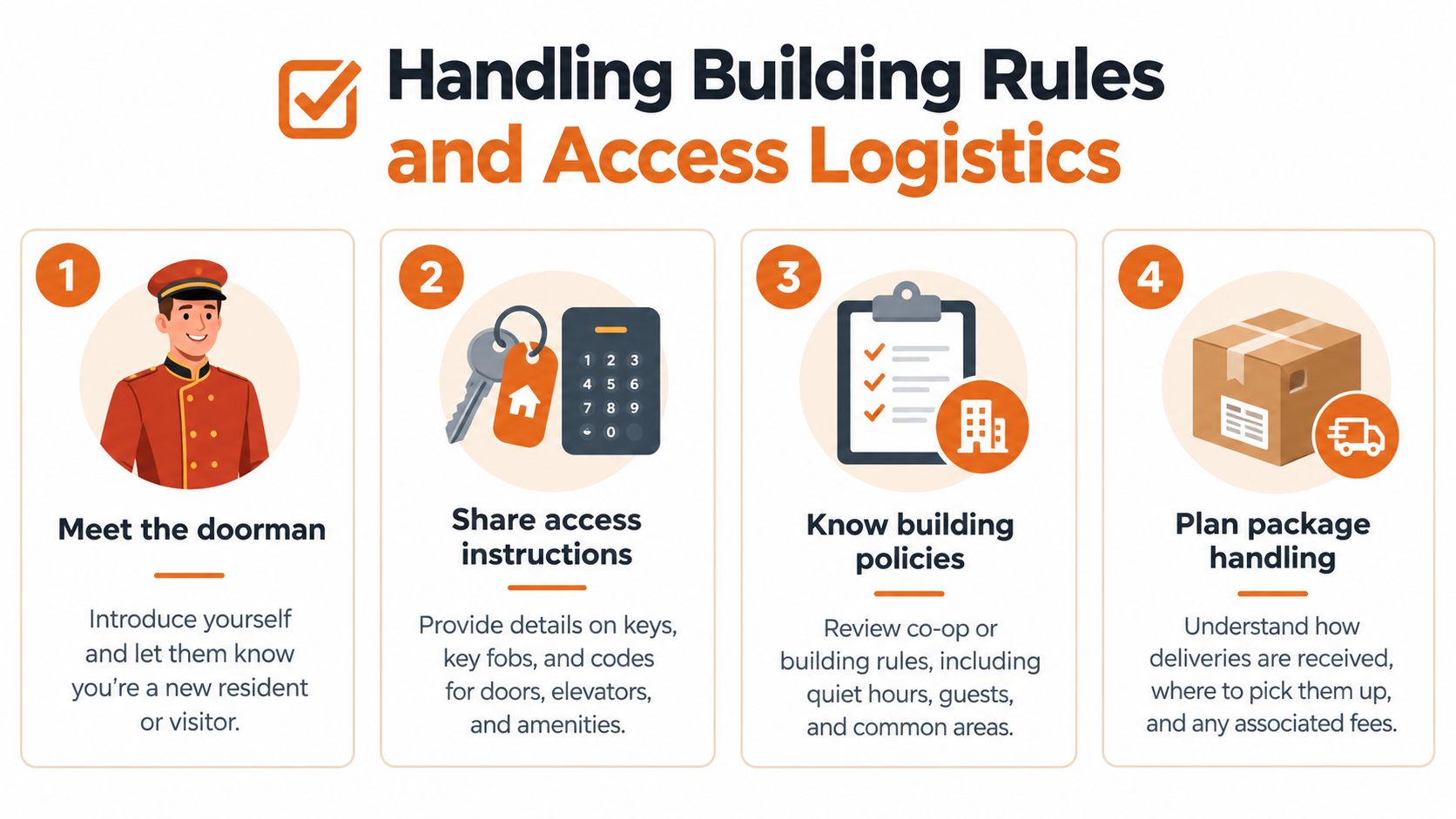
Access is part of the service. A sitter who can care for the pet but can't reliably enter the building isn't ready for the stay.
Insurance deserves the same attention. Ask whether the sitter carries relevant coverage, whether the building has requirements for contractors or caregivers, and who bears responsibility for damage, lost keys, or an injury. Don't make broad promises about insurance protection without checking the actual policy terms. Put agreed responsibilities in writing, and give the sitter permission limits for repairs, veterinary care, and emergency transport.
Executing a Smooth Check-In and Stay
A strong stay starts before the first night. The meet-and-greet should happen in the apartment when possible, because the sitter needs to see the feeding area, leash location, litter setup, medication storage, circuit breakers, shutoff points, and the route to the building exit. A video call can fill a gap, but it won't reveal a sticky door, a nervous dog near the elevator, or a cat that hides behind a particular appliance.
The handoff record
Use a written handoff rather than relying on memory. The sitter information sheet can provide a starting structure, but tailor it to the apartment and the animal.
Record:
- Daily routine: Food amounts, preferred walk routes, play cues, sleep arrangements, and normal bathroom habits.
- Health details: Medication, allergies, symptoms that require a call, and the treating veterinarian.
- Home instructions: Heating or cooling preferences, plants, mail, deliveries, rubbish, and restricted areas.
- Access details: Keys, fobs, door codes, front-desk expectations, and the backup contact.
- Communication plan: Update frequency, preferred channel, and the threshold for an urgent call.
The sitter should repeat the most important instructions back to the owner. That simple check catches misunderstandings about food portions, medication timing, and whether the pet can use a communal courtyard.
A dependable first day
On arrival, take a quiet tour before settling in. Confirm that the pet has food, water, medication, and a safe space. Send the owner a brief arrival message that confirms entry, the pet's condition, and any discrepancy from the handoff notes.
During the stay, follow the animal's established routine instead of introducing unnecessary changes. Keep a short log of meals, medication, walks, bowel movements if relevant, and unusual behavior. Photos are useful when they support a clear update, but a message saying “all normal, evening medication given, no building issues” is often more reassuring than a stream of disconnected images.
Emergencies require defined authority. The owner should state in advance which veterinary practice to use, who can approve treatment if they cannot be reached, and what spending threshold the sitter may handle without waiting. The sitter should never conceal a problem to avoid worrying the owner. Early communication gives the owner more options, particularly when a dense building, elevator failure, storm, or transit disruption changes the plan.
Before checkout, restore the apartment, dispose of rubbish according to building rules, return keys through the agreed method, and send a closing note. Mention food supplies, medication remaining, packages received, and anything the owner should inspect. Professionalism is visible in these small details.
Long-Term Success in the City
A successful stay creates an opportunity for repeat work, but only if the next booking is easier for the owner to arrange. Keep accurate notes on the pet's routine, building procedures, access method, and any issue that required a decision. After checkout, send a short follow-up within a few days. Mention what went well, ask whether anything should change, and confirm your availability for future dates.
Request feedback while the details are still fresh. Make the request specific: ask the owner to describe your communication, reliability, response to building rules, and care for the pet. Those details help a future owner assess risk more effectively than a vague compliment. If you receive a review from another platform, keep permission and the original wording clear before adding it to your profile.
As noted earlier, repeat relationships are relatively rare in the NYC sitter data, so a disciplined follow-up can matter more than broad visibility. A returning owner already understands your judgment, availability, and ability to work within a co-op, condo, or doorman building.
A practical readiness check
Before accepting another stay, confirm:
- The building is cleared: Guest, caregiver, authorization letter, insurance, and front-desk requirements are confirmed.
- The pet routine is written: Food, exercise, medication, behavior, and emergency instructions are specific.
- The access plan has a backup: Key failure, lockout, elevator disruption, and staff questions have clear answers.
- The expectations are priced clearly: Extra pets, transport, household tasks, and extensions are agreed in writing.
- The communication rhythm is agreed: Both sides know when updates arrive and when an urgent call is required.
- The reputation trail is current: Reviews, references, identity details, and availability match reality.
Protect your own capacity. Do not accept overlapping stays that rely on perfect transit, or promise constant presence when your work schedule cannot support it. Owners should judge value by fit, documentation, and judgment rather than price alone.
Global Pet Sitter supports profiles, owner-posted sits, direct messaging, reviewed members, and imported review evidence. That structure suits a reputation-focused approach to NYC house sitting. Verify the person, confirm the building rules, and document the handoff yourself.
For house sitting in New York City, use Global Pet Sitter to create a detailed profile, post dates and pet requirements, and connect through clear messaging. Visit Global Pet Sitter to start building a better-documented match for your next stay.
Please sign in to leave a comment
