You're standing by the front door with your keys in hand while your dog curls up on your suitcase, watching every movement. You want the trip, but you also want someone reliable to keep the familiar routine intact. In Paris, finding that person, or finding the right home to care for, takes more than opening one app and waiting.
House sitting in Paris sits at the intersection of pet care, temporary accommodation, crowded housing conditions, and apartment security. This guide approaches it as an operational problem: how to find a realistic match, respond quickly, clarify the service, and protect access to the home.
The Paris House Sitting Reality
Paris can make house sitting feel like a clever solution to two separate pressures. Owners want their animals to stay in familiar surroundings instead of moving through an unfamiliar boarding environment. Sitters want to experience the city as residents, with a kitchen, a neighborhood bakery, and a daily route that isn't built around hotel check-in.
That appeal exists within a difficult housing market. A 2025 analysis of Airbnb's effect on Paris housing reported about 60,000 active listings in the capital. Researcher Jeanne Richon estimated that around one-third had been removed from the permanent housing market, while roughly 16,000 listings in February 2023 were apartments not occupied year-round, about 28% of all listings. Including monthly rentals could raise that estimate to 21,000.

Those figures don't mean every sitter is competing directly with a holiday rental. They do explain why home-based arrangements are attractive in Paris, and why owners and travelers often look beyond conventional accommodation. House sitting can offer a more personal exchange, but it requires stronger coordination than a standard booking.
The owner's side of the arrangement
A Paris owner isn't just handing over keys. They're choosing someone to manage feeding routines, medication, litter, walks, mail, building access, and the small decisions that arise when a boiler warning appears or a pet refuses food.
A sitter, meanwhile, isn't receiving an empty apartment. They're accepting responsibility for an animal and a private home, often in a building where neighbors, intercoms, shared entrances, and narrow staircases affect daily life. The arrangement works when both sides discuss those realities before either person treats the sit as confirmed.
For a starting point, owners and sitters can review pet sitting opportunities in Paris, then compare the actual care requirements rather than choosing based only on arrondissement or dates.
Practical rule: A convenient location doesn't compensate for vague expectations. If the care plan can't be explained clearly before arrival, the sit isn't ready.
Navigating Platform Availability and Seasonality
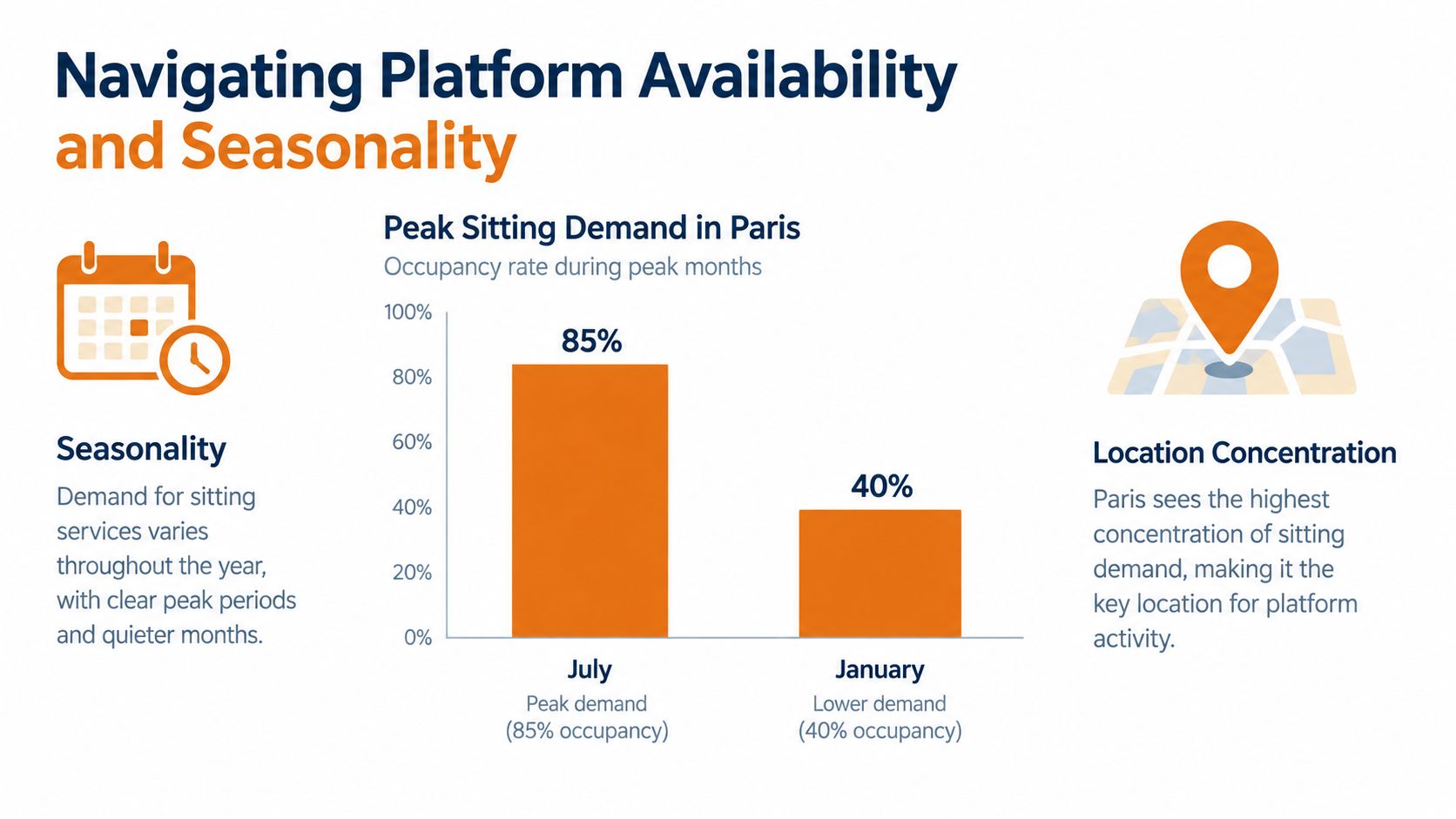
Paris has meaningful house-sitting supply, but it isn't evenly distributed. Independent 2026 market snapshots counted around 770 house sits in France on Nomador versus roughly 115 on TrustedHouseSitters in one comparison. Another breakdown placed France at more than 1,000 Nomador listings and roughly 76 TrustedHouseSitters listings. These counts differ because platforms change their inventories and researchers inspect them at different moments, but the practical lesson is consistent: platform choice changes what you can see.
Paris-specific availability is thinner still. One independent review counted 21 live Paris sits on MindMyHouse, 19 on Nomador, and zero on TrustedHouseSitters at the moment checked, while another count found roughly 40 total Paris sits across the platforms inspected. The France house-sitting market overview also notes that availability fluctuates with seasonal travel patterns.
What scarcity changes
A single-platform search creates a false impression. If nothing appears on one network, that doesn't prove there are no suitable sits. It may mean the owners prefer another service, the listing has just closed, or the dates haven't been posted yet.
Use a wider search routine:
- Check several networks: Compare Nomador, MindMyHouse, TrustedHouseSitters, and local or community listings.
- Turn on alerts: Paris listings can disappear while you're still drafting an application.
- Prepare before searching: A complete profile lets you apply immediately instead of assembling references after finding a match.
- Search beyond one neighborhood: A sit near a reliable Metro connection may work better than a central address with difficult access and limited pet-care flexibility.
Seasonality matters just as much. Independent reporting identifies August, the December holiday period, and May bank-holiday bridges as important demand windows in France, with Paris dominating national booking volume. The same reporting describes Paris rates as roughly 30% to 50% above national averages for 2025-2026, depending on the service and assignment. Those figures come from France-focused pet-sitting guidance, and they should be treated as market guidance rather than a guaranteed quote.
Apply early for school holidays and long weekends. Owners should publish detailed dates and care requirements before the rush, while sitters should keep alternate dates available instead of waiting for one perfect listing.
Building a Winning Profile and Finding Your Match
A strong Paris profile answers the owner's first private question: “Can I trust this person inside my home when I'm far away?” A smiling photo helps, but it isn't enough. Your text should show how you behave when plans change, what animals you've handled, and how you communicate during a stay.
Build evidence before you need it
Write the profile for a cautious owner, not for an algorithm. Mention relevant experience with cats, dogs, medication, separation anxiety, older animals, apartment living, and remote work if those details apply. Explain your daily rhythm plainly. A sitter who works from home shouldn't imply constant availability for a dog that needs frequent outings.
If you've used another network, preserve the reputation you've already earned. Experienced sitters can add screenshots of genuine five-star reviews where the platform allows it, then explain who wrote each review and what responsibility it covered. References should be reachable and prepared to describe reliability, cleanliness, communication, and animal care.
Owners need the same discipline. A good listing names the pet's routine, sleeping arrangements, transport constraints, access process, and any household tasks. “Loves walks” is not enough. State whether the dog needs a short route near home, a long daily outing, or someone present overnight.
Use a simple matching sequence
- Create a verified profile. Complete identity and reference fields, use recent photos, and write in clear English or French where possible.
- Search by care fit. Filter by dates, pet type, overnight expectations, and location. Don't choose a sit solely because it offers a central address.
- Connect safely. Exchange messages, arrange a video call, and ask to see the entrance, keys, alarm, pet equipment, and sleeping area before accepting.
A useful application is short but specific. Mention the pet by name, repeat the dates, identify one relevant experience, and ask one practical question. Generic enthusiasm gets lost when owners receive several applications for a scarce listing.
For broader guidance on finding suitable assignments, use these house-sitting job search practices as a supplement to your Paris-specific checks.
The matching process should feel like a conversation, not a sales pitch. Both parties need room to decline if the schedule, pet needs, or apartment rules don't fit.
Before confirming, ask for written answers to the questions that matter most: Who holds the backup key? Can the sitter invite anyone into the apartment? What happens if a return flight is delayed? Which costs, if any, belong to the owner or sitter? Clear answers prevent a friendly first call from turning into a difficult arrival.
Security Protocols and Legal Distinctions in Paris
A Paris house sit is also an access-control arrangement. Dense apartment buildings create a particular challenge because a stranger at the entrance may look like an ordinary visitor, delivery worker, or neighbor's guest. The OSAC France security report states that criminals increasingly target short-term rentals by ringing doorbells or calling first to check whether someone is home. It also describes attempts to enter apartment buildings and use plausible excuses when residents answer.
That makes procedure more important than bravado. Don't announce an empty apartment publicly, don't post live travel details that reveal the home is unattended, and don't lend keys to people who haven't been approved by the owner.
Establish the access chain
Before arrival, confirm the following in writing:
- Building access: Record the entrance code, intercom instructions, lift or stairwell details, mailbox location, and the procedure for lost keys.
- Emergency contacts: Keep the owner's number, a local contact, the veterinarian, insurance details, and the preferred emergency clinic together.
- Neighbor awareness: Ask whether a trusted neighbor knows the sitter is coming and what information that person may share.
- Arrival privacy: Agree on a discreet handover time and avoid leaving bags or keys visible in shared areas.
OSAC's advice concerns short-term accommodation generally, but the logic applies directly to house sitting. A sitter should verify every access point during the handover, test the door, and understand what to do if the intercom fails. Owners should provide only the access information required for the stay and explain how to report suspicious behavior.
Define the service, not just the label
“House sitting,” “home sitting,” and “pet sitting” are often used as if they mean the same thing. They don't necessarily describe the same commitment. House sitting usually means living in the home while the owner is away. Pet sitting may involve drop-in visits without an overnight stay, while a home-sitting arrangement may focus more on property presence and basic household care.
There may be no automatic rule requiring a sitter to remain overnight unless the parties agree to it. Independent Paris-focused guidance distinguishes overnight home care from a 30-minute pet visit, which is a separate service with a different scope. Read Paris home-sitting explanations alongside the actual agreement, then write down the arrangement in plain language.
Include:
- overnight presence and permitted absences;
- feeding, walking, medication, and cleaning duties;
- visitor and key-sharing rules;
- responsibility for damage, illness, and emergency decisions;
- payment, expenses, cancellation, and delayed-return arrangements.
Access is a responsibility, not a convenience. Treat codes, keys, and building routines as sensitive information from the first message to the final handover.
Communication Templates and Essential Checklists
Good communication reduces the number of decisions people have to make during a stressful moment. A sitter should know exactly what to do when a pet skips a meal. An owner should know whether the sitter has arrived, whether the door locked, and whether the animal has settled.
Use a short first message rather than a biography:
Hello, I'm available for your Paris dates and I've read the care details carefully. I've looked after apartment pets and can follow your feeding, walk, and medication routine. Could we arrange a video call to discuss the home, access, and your return plans?
Owners can reply with a matching structure:
Thanks for your application. The sit includes overnight care, two walks, feeding at the stated times, and medication. Before we decide, please confirm your arrival time, planned absences, emergency contact details, and whether you're comfortable with the building access procedure.
For polished outreach language, these templates for vet client outreach can help you adapt a professional tone without making the message sound scripted.
Keep one shared handover sheet
Create a single document that both parties can update. A practical sitter information sheet can hold the details below:
- Pet routine: Meals, walks, litter, sleep, triggers, commands, and comfort habits.
- Health plan: Medication instructions, warning signs, veterinary authorization, and emergency transport.
- Home operations: Heating, water shutoff, fuse box, appliances, waste disposal, and plant care.
- Access record: Keys provided, codes explained, building contacts, and backup arrangements.
- Communication plan: Daily update preference, urgent-call threshold, and photo expectations.
- Departure process: Cleaning standard, linen, rubbish, key return, and final message.
Paris adds local practicalities. Ask about the closest Metro entrance with step-free access if the pet carrier is heavy, the local rules for waste separation, and whether quiet hours affect late-night arrivals or dog walks. The answer can differ by building and neighborhood, so don't assume that a general Paris habit applies to a particular apartment.
Making the Most of Your Paris Stay
The best sitters don't treat Paris as a free hotel. They learn the pet's rhythm first, then build exploration around it. A morning walk can become a neighborhood loop, while an afternoon at a museum may work if the animal is comfortable alone and the agreed absence window allows it.
Local living rewards restraint. Shop near home, learn the building's routines, and greet neighbors instead of treating the apartment as a private base disconnected from the street. If your French is limited, keep essential care phrases ready and use offline travel translation apps when mobile service is unreliable.
The exchange also creates a small community. Owners can share trusted veterinarians, repair contacts, and transport advice. Sitters can leave better instructions for the next person, report what worked, and contribute to the reliability that makes future arrangements easier.
A successful stay ends with more than a clean apartment and a fed pet. The owner returns to a familiar home, the animal avoids unnecessary disruption, and the sitter leaves with a grounded connection to Paris that a short hotel visit rarely provides.
If you're planning a Paris trip or need dependable in-home care for your pets, Global Pet Sitter lets owners post dates and pet details while sitters create profiles, connect with matches, and share relevant reputation. Visit the platform to start a clear, security-conscious arrangement built around the animal's routine and the home's real requirements.
Please sign in to leave a comment
