Three days before her flight, a dog owner sits on the floor with her laptop, scrolling through sitter profiles that all begin to sound alike. Every person looks kind, reliable, and animal-obsessed. None of the profiles tells her whether the sitter will notice early signs of illness, follow a medication schedule, or remember to lock the backyard gate.
The decision isn't really about filling ten days on a calendar. It's about handing a stranger the keys to her home, a medical history, and the routine her pet depends on. That's why a pet sitting community has to do more than display availability. A marketplace can help people find one another. A functioning community adds shared norms, repeat relationships, reputation, and accountability.
The distinction matters in a market that has grown well beyond occasional neighborhood favors. Independent estimates place the global pet sitting market at approximately USD 2.69 billion in 2024, with a projection of about USD 5.14 billion by 2030, representing an estimated 11.8% CAGR from 2025 to 2030 (Business Research Insights market report). The opportunity is large, but growth alone doesn't make care safer. The trust layer does.
The Moment Trust Becomes the Whole Problem
A sitter's profile can list experience with dogs, cats, medication, and overnight stays. It can include friendly photos and polished testimonials. Yet an owner still has to answer harder questions: Does this person communicate when something changes? Will they respect a nervous animal's boundaries? Can they distinguish a normal skipped meal from a sign that calls for the vet?
Those questions surface most sharply when travel is already booked. In a U.S. survey of 1,000 pet parents, 37% said they had canceled or changed travel because they couldn't find someone they trusted to watch their pet, while 29% reported a negative pet-care experience (MetLife Pet Insurance Trust Index). The obstacle isn't a lack of listings. It's the owner's inability to assess risk with confidence.
Practical rule: A profile should help an owner predict behavior, not merely admire a sitter's presentation.
That requires evidence gathered across interactions. A detailed review describing arrival times, medication handling, updates, and response to an unexpected problem tells an owner more than a string of generic praise. A video call reveals whether the sitter asks useful questions. A documented community standard tells both parties what happens if someone cancels, misrepresents experience, or mishandles a dispute.
The most reassuring signal is often continuity. A repeat sitter knows the pet's habits, the location of supplies, the quirks of the front door, and the owner's preferred update rhythm. A new sitter can still be an excellent match, but the platform must provide enough structure for the owner to evaluate that person without relying on instinct alone.
That's the role of community. Members create references, reinforce expectations, report problems, and return for future stays. The listing starts the conversation. Visible accountability is what makes the handoff possible.
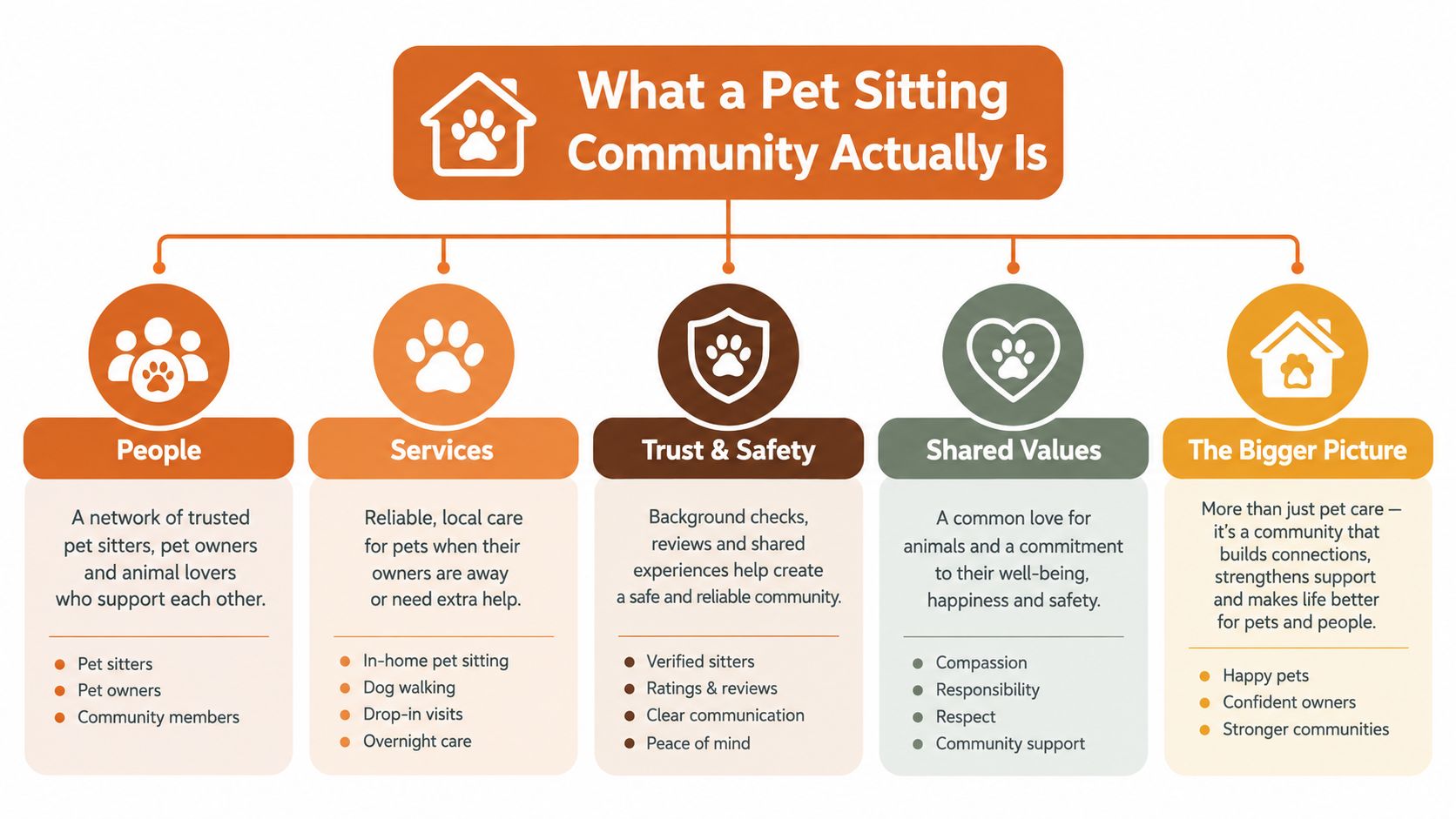
What a Pet Sitting Community Actually Is
Think of a pet sitting community as a neighborhood association built on top of a classifieds board. The board helps people discover available care. The association supplies the relationships, standards, and consequences that make those listings usable.
A real community has four connected layers.
The listing layer
At the base, owners publish dates, location, pet details, routines, and home expectations. Sitters describe their experience, availability, preferences, and relevant skills. This layer answers the basic matching questions, but it doesn't establish whether either person will behave responsibly.
The assurance layer
The next layer confirms identity and experience. Depending on the service, that can include email and phone confirmation, government identification, references, address information, or background screening. These checks reduce impersonation and make accountability possible, but they can't prove that a sitter will handle every real-life situation well.
The social layer
Members then interact outside individual bookings. Local groups, advice threads, meetups, and member recommendations help people exchange practical knowledge that a search filter can't capture. Someone may know which apartment buildings have difficult key-access rules, how local sitters handle anxious cats, or which questions new owners routinely forget to ask.
The governance layer
At the top, the community explains its rules and enforces them. A code of conduct, reporting process, cancellation policy, dispute path, and clear moderation decisions turn values into operating behavior. Without governance, social activity can become noise, and popular members can receive protection that less-established members don't get.
These layers must interact. Reviews should reflect completed stays, verification should be visible without being overstated, and member feedback should influence product rules. A community isn't defined by having a forum tab. It exists when members help maintain standards that an algorithm can't fully encode.
The Three Main Community Models Compared
Not every pet sitting community serves the same kind of arrangement. The right model depends on whether you value financial simplicity, booking convenience, long stays, or the opportunity to build relationships over time.
Peer communities
A peer community centers on reciprocity. Members exchange care rather than treating every stay as a conventional paid service. The appeal is clear for owners who want in-home care without a standard sitter fee and for sitters who enjoy living with animals while traveling.
The trade-off is effort. Members have to read profiles carefully, communicate directly, and judge whether the exchange is fair. A peer model can feel personal and generous, but it needs firm rules around cancellations, home responsibilities, pet routines, and what happens when expectations diverge.
Vetted marketplaces
A vetted marketplace uses paid bookings and platform-mediated matching. Owners generally get a faster path from search to reservation, while sitters present their services as professional care. Reviews, identity checks, customer support, and payment processes can reduce friction.
Convenience can come at the cost of intimacy. The relationship may feel transactional, and a high rating can conceal details that matter to a particular pet. Owners still need to read the review content and hold a proper handoff call rather than treating verification as a substitute for judgment.
House-sitting networks
A house-sitting network combines pet care with responsibility for the home, often across regions or countries. These arrangements suit flexible travelers, remote workers, retirees, and owners who want pets to remain in familiar surroundings during longer absences.
The compromise is reduced spontaneity. A sitter has to organize travel around confirmed assignments, and an owner has to find someone comfortable with both animal care and household duties. The model can work beautifully for slow travel, but it's less suitable when an owner needs a short, last-minute visit or a sitter wants complete control over their itinerary.
| Feature | Peer Community | Vetted Marketplace | House-Sitting Network |
|---|---|---|---|
| Trust signals | Member references, repeat exchanges, community participation | Verification, booking history, reviews, platform policies | Reviews, references, identity checks, home-and-pet profiles |
| Cost structure | Reciprocity or membership-based participation | Paid service and platform fees | Often an exchange involving accommodation and care |
| Typical stay length | Flexible, depending on member agreement | Often short or scheduled paid visits | Frequently longer stays, though formats vary |
| Best suited to | Members who value mutual aid and personal relationships | Owners seeking convenience and structured bookings | Flexible travelers and owners needing home-based care |
| Main trade-off | More personal vetting and coordination | More transactional interactions | Less spontaneity and broader responsibilities |
How Trust, Reviews, and Governance Work Together
Trust systems fail when platforms ask one mechanism to do every job. Identity verification tells you who a person is. Reputation shows how they've behaved. Governance determines what happens when behavior falls short.
Identity establishes accountability
A platform may ask for an email address, phone number, government ID, references, or other checks. These steps help prevent obvious fake accounts and make it harder for someone to disappear after a serious problem. They don't demonstrate animal-handling skill, judgment, punctuality, or compatibility with a particular household.
Reviews turn experience into evidence
Reputation fills that gap through completed stays. The useful review isn't just "great sitter." It describes communication, care routines, cleanliness, medication, punctuality, and how the person responded when plans changed.
Owners should read the full history, looking for consistency across different households and types of pets. Sitters should also evaluate owners, because accurate instructions, reasonable expectations, and timely communication affect animal welfare just as much as sitter conduct. For teams building review prompts, these examples of testimonial content offer a useful way to move feedback from vague praise toward specific, credible detail.
Governance handles the uncomfortable moments
A sitter cancels just before arrival. An owner withholds a fair review because they disliked an unrelated house rule. A pet becomes ill during the stay. Verification won't resolve those situations, and reviews only help afterward. Governance supplies the process, including cancellation terms, dispute handling, refunds where applicable, insurance information, reporting channels, and consequences for misuse.
| Trust Layer | What It Covers | What It Does Not Cover |
|---|---|---|
| Identity verification | Whether an account is connected to a real, identifiable person | Care quality, judgment, or pet compatibility |
| Reputation | Patterns in communication, reliability, care, and household conduct | Future performance or every possible emergency |
| Governance | Rules, escalation, moderation, cancellations, and remedies | The personal fit between a specific owner and sitter |
A strong design also makes reviews difficult to manipulate. Both sides should have a fair opportunity to provide feedback, and moderation should remove abuse without erasing legitimate criticism. The practical principles behind reputation and reviews in pet sitting apply here: context matters, recent behavior matters, and a single score should never replace the underlying detail.
One signal can open the door. The combination of verification, earned history, and enforceable rules is what keeps the door safe.
Joining and Participating as an Owner or Sitter
A productive first stay starts before anyone accepts an application. Owners and sitters can prevent most avoidable friction by treating onboarding as a care plan, not a casual introduction.
Owners should make the pet easy to understand
Start with a complete profile. Include clear photos, feeding instructions, medication details, exercise needs, behavioral triggers, veterinary information, emergency contacts, and the normal daily rhythm. Explain what the pet does when stressed, not only what happens on a good day.
Then set practical filters. Add dates, location, stay type, sitter preferences, and whether the person must work remotely, drive, manage stairs, or handle other household requirements. Read the sitter's written reviews rather than relying only on the star rating, then arrange a video call or meet-and-greet before handing over access.
Use the conversation to confirm:
- Supplies: Who provides food, medication, litter, cleaning materials, and backup items?
- Communication: How often should the sitter send updates, and through which channel?
- Emergencies: Which vet, contact person, and spending authorization apply if the owner is unreachable?
- Access: Where are keys, alarm details, parking instructions, and building rules recorded?
- Boundaries: Are cameras present, can guests visit, and what areas of the home are private?
The pet sitter guide from Global Pet Sitter can help owners turn those questions into a more structured handoff.
Sitters should sell accuracy, not charm
Describe your actual experience, including animal types, medication, senior pets, reactive behavior, and overnight care. Add references and relevant certifications, upload requested identity documents, and keep the calendar honest. An empty date is better than accepting a stay you can't fulfill.
Your first reply should contain questions about the pet, the home, the schedule, and the owner's expectations. Ask about cameras and access before agreeing. During the stay, follow the routine, communicate before a small issue becomes a crisis, and leave the home in the condition you found it.
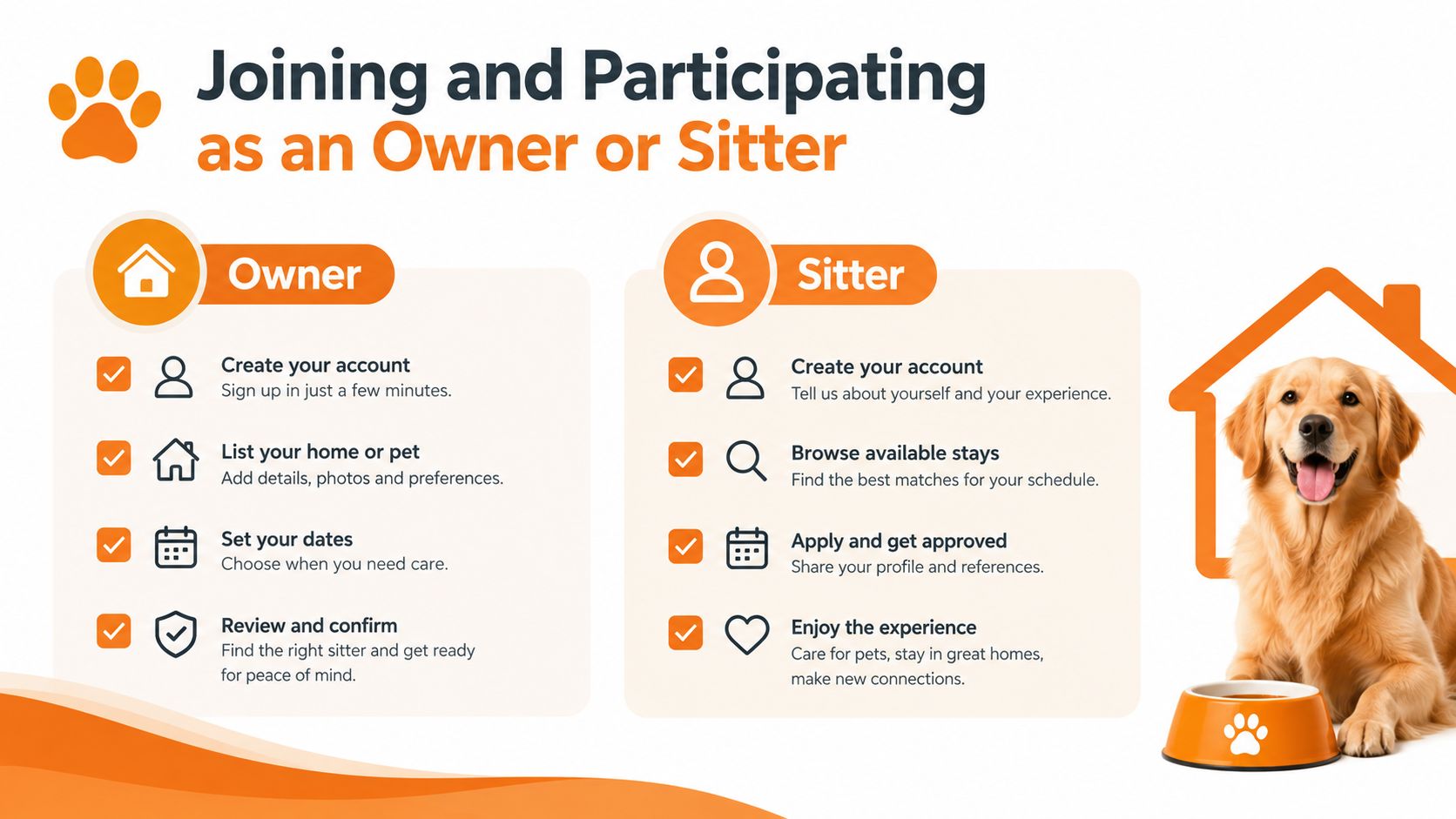
For a visual walkthrough of the joining process, use the guide above, then watch this practical overview before your first exchange.
Reputation grows through boring consistency. Accurate calendars, prompt replies, clear handoffs, and honest reviews build more durable trust than trying to win every inquiry.
Real Use Cases and Scenarios That Bring It to Life
A community becomes easier to evaluate when you look at the different lives it has to support.
A couple traveling abroad for a holiday needs full-time in-home care for two weeks. They aren't searching for the cheapest drop-in option. They want a sitter with detailed reviews, a calm approach, and enough availability to preserve the pet's routine. The platform must show stay expectations clearly and support a proper handoff before departure.
An experienced house sitter has completed many stays across different regions and works remotely. Their value lies in accumulated evidence, but that value disappears if reviews remain trapped on another service or if the calendar can't represent longer assignments. This member needs portable reputation, reliable messaging, and tools that distinguish a genuine commitment from a casual inquiry.
A first-time sitter may be a student, remote worker, or traveler who joined after a friend recommended the community. They have lived with pets but haven't yet earned platform reviews. A fair onboarding system gives them room to explain their experience, provide references, complete verification, and build trust without pretending that enthusiasm equals professional expertise.
A senior owner with a reactive cat faces a different problem. The cat may tolerate a familiar sitter but hide, scratch, or refuse food around a stranger. This owner uses the community as a vetting pipeline, identifying candidates, speaking with them carefully, and eventually returning to people who already understand the animal.
These cases expose missing features quickly. Without detailed pet profiles, the holiday booking hides its care burden. Without portable reviews, the experienced sitter starts from scratch. Without references and clear standards, the newcomer looks indistinguishable from an unsafe applicant. Without repeat-booking tools, the cat owner has to rebuild trust every time.
How Global Pet Sitter Fits Into the Landscape
Global Pet Sitter treats the community as part of the trust infrastructure rather than as decoration around a search tool. Its model connects owners and sitters through profiles, matching, messaging, reviews, and member participation, with information about the platform available on its about page.
The trust approach starts with sitter identity and references. Post-stay reviews from both sides create accountability, while dispute moderation gives members a route when a booking doesn't follow expectations. The platform also presents a transparent fee structure without surge pricing, which makes the cost model easier to understand before people commit.
Its membership structure separates a free basic profile from a verified sitter badge. Those levels can affect search visibility, messaging limits, and priority in owner requests, so sitters should treat verification as a way to present evidence, not as proof of universal suitability. Owners still need to compare care experience, read review detail, and conduct a handoff call.
Migration matters for experienced sitters. Global Pet Sitter supports importing past reviews through screenshots, allowing members to preserve hard-earned credibility when moving from another platform. Bulk message templates can reduce repetitive admin, but sitters should personalize applications where the pet's needs require careful questions. Newcomers and established sitters should not be treated identically, yet a new member needs a credible path to earn visibility rather than permanent disadvantage.
The practical fit varies by location and stay type. A community may have stronger geographic density in some regions than others. Long-term house sits require different matching details from weekend drop-ins, including home responsibilities, remote-work compatibility, transport, and how long a pet can be left alone. The platform's Facebook forum, advice threads, travel conversations, and member feedback add a layer that a pure marketplace usually lacks, because members can influence features and share operating knowledge outside a single transaction.
That structure addresses the problems raised throughout this guide. Profiles solve discovery. Verification supports accountability. Reviews preserve behavioral history. Governance handles conflict. Community participation helps members refine norms as new situations appear. The model works when those parts reinforce one another, not when a badge or rating is expected to carry the entire burden.
Global Pet Sitter offers owners a way to post detailed sits, compare reputation-rich profiles, and arrange in-home care, while sitters can build portable credibility and connect with hosts across regions. Visit Global Pet Sitter to create a profile, find a suitable match, and join a pet sitting community built around clearer expectations and shared trust.
Please sign in to leave a comment
