The suitcase is half packed, the trip out of Minneapolis is booked, and the worry is still the same. Who sleeps in your house, who feeds your dog, and who notices if your cat hides? A kennel means a new building and rotating staff. A favour from a friend covers one evening, not a full holiday. Pet sitting in Minneapolis works when the person matches the animal in front of you: the stiff hips, the tablets, the cat flap, and the alarm code. Sort the match and the paperwork before you hand over the keys.
In-Home Pet Care Options in Minneapolis Compared
Can your pet be left alone, or does the house need a person in it overnight? Answer that before you look at price.
Overnight house sitters live in your home and keep the routine from morning to night. That suits anxious, senior or medicated pets, and trips of several days. On our platform, sitters care for pets at your home in exchange for a free stay, and no money changes hands. Our guide to home pet care services sets out how a live-in stay differs from a short visit.
Drop-in visits put someone in the house at set times only. Nobody lives there, so your pet is alone between calls. That can work for dogs who cope for a few hours, and for cats on a short trip. You usually pay per visit.
Daily dog walkers take an active dog out while you are away for working days. The home stays empty between walks, and you usually pay per walk.
Boarding at a kennel or cattery moves your pet into an unfamiliar building with rotating staff. Nobody is in your home. It is a fair choice when your pet copes with new places and no sitter is free.
The table asks the same questions of each option, so you can match your pet to one row.
| Option | Who stays in the home | Pet's routine | Best for | Usual cost model |
|---|---|---|---|---|
| Overnight house sitter | Sitter lives in your home | Routine kept day and night, sitter present throughout | Anxious, senior or medicated pets; trips of several days or more | Often a free stay in exchange for care, or paid per night |
| Drop-in visits | Visitor at set times only; no one lives in the home | Pet alone between visits | Dogs who cope alone for a few hours; cats on short trips | Usually paid per visit |
| Daily dog walker | Nobody in the home between walks | Dog leaves home for an outing; home empty | Active dogs when owner is away for working days | Usually paid per walk |
| Boarding at kennel or cattery | Nobody in the home | Pet moves to an unfamiliar building with rotating staff | Pets who tolerate new places; no sitter available | Usually paid per night |
Practical rule: If your pet relies on constant company or a daily medication schedule, start with the overnight row and work down.
Matching a Sitter to Your Pet's Needs
A general rating does not tell you whether this person can handle your pet.
Say you have a 12-year-old spaniel with stiff hips. You want shorter walks, careful use of the stairs, and meals at the usual times. Ask the candidate to describe a typical day with that spaniel in their own words, then compare the answer with the routine you already run. A rescue cat who hides for the first week needs someone calm, patient, and happy to let her settle at her own pace. If their day starts with a houseful of visitors, they are planning the week they want, not the week she can manage.
Sitters are under no obligation to accept a pet they deem unsuitable. A clear no is sound judgement. It saves a poor arrangement.
What to confirm before you say yes
| Pet type or need | What the sitter must confirm | Warning sign in a candidate |
|---|---|---|
| Adult dog with regular walks | Daily exercise plan, lead handling, recall skills | Dismisses your walk routine as unnecessary |
| Senior dog | Mobility aids, stairs, meal timing, toileting frequency | Plans to shorten or skip the walks |
| Indoor-only cat | Litter care, feeding, play and daily check-ins | Wants to bring other pets without asking |
| Cat with outdoor access | Cat flap management, supervision, night security | Unsure how the cat flap should be locked |
| Anxious pet | Calm routine, comfort objects, experience of stress signs | Plans big changes to routine on day one |
| Medicated pet | Dose, timing, storage, missed-dose plan, competence with any injections | Cannot describe the dose or will not practise it with you |
| Small animal (rabbit, bird) | Diet, cage cleaning, heat and light needs | Little or no experience with that species |
For the spaniel, you set the shorter route in writing. A warning is a candidate who drops outings you still want, or who treats stairs and meal times as optional. For an adult dog with a set walk, lead handling and recall matter. Dismissing that route as fussy is a mismatch.
An indoor cat needs litter, feeding, play, and a daily check, not a surprise second animal. An outdoor cat needs a locked-flap plan at night. An anxious pet needs the same blanket, the same room, and no new rules on day one. A medicated pet needs the dose said back to you, then practised while you watch, including any injection. A rabbit or bird needs the right diet, a clean cage, and the heat or light that species needs.
A refusal shows the candidate knows their limit. That is safer than a polite yes.
Write down age, medication, temperament and known triggers before you compare answers. The match starts from those facts, not from a friendly photo.
Vetting a Sitter Before You Let Anyone In
A platform profile is not a background check. We only provide peer-to-peer online mediation, so members can find and connect with each other. We do not run background checks or vet members unless we explicitly say otherwise. These checks are yours.
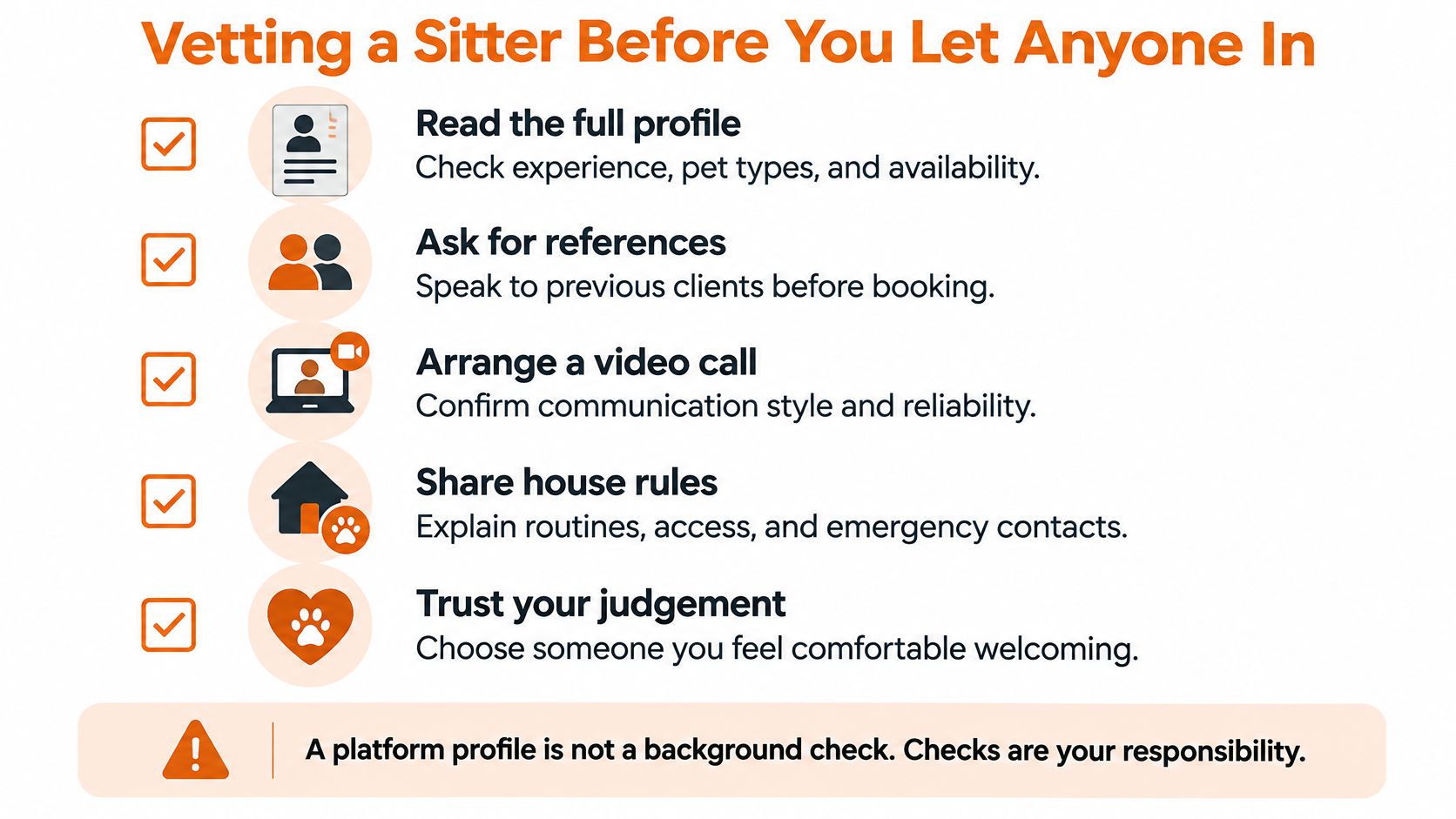
- Read the full profile: Check reviews and experience with your pet type, not just free dates.
- Hold a video call first: Ask how they would handle a missed walk or a sick pet. These pet sitter interview questions keep that call specific.
- Call two references: Ask for recent sits, and speak to both.
- See photo identification: On video or in person. Reluctance is a warning.
- Meet at home: Your pet and the sitter meet while you are there.
- Put it in writing: Dates, duties and house rules. Our pet sitting contract template covers the key points. The red flags guide helps when the profile and the person do not match.
A steady answer is easier to judge once you have heard one.
If a sitter is evasive, rushes the dates, or will not get on a call, walk away.
Securing Your Home, Keys and Valuables
You leave, and the sitter has sole occupancy of the home unless you agree otherwise in advance. That is the arrangement, so set the boundaries before you go.

Keys, rooms and visitors
One set of keys: Hand over a single set, note who holds any spare copies, and agree how the keys come back.
Closed rooms: Name the rooms that stay shut, where valuables and papers are kept, and whether the alarm code is shared.
Guests and parcels: Decide whether a friend may visit, and how deliveries are taken in. If a sitter asks to host someone overnight, the answer belongs in writing now, not in a text from the airport.
Evening checks: List the doors, windows, gates and cat flap they secure each night. Police.uk's leaving-your-home checklist also recommends timers on lights or a radio so the home looks occupied.
You remain responsible for any injury, damage or loss your pet causes during the sit. Read your home insurance before you travel.
Dog theft is a real risk around holiday care. Aviva's analysis of UK police data reported an estimated 1,626 dogs stolen during 2025, with a recovery rate of 21%. Agree that external doors and gates are checked before your dog goes outside, that the lead stays on in public, and that your dog is never left unattended in public or taken somewhere unfamiliar without your permission.
Cats need explicit rules too. North Yorkshire Police's animal-theft figures, from one force rather than the whole country, recorded 15 reported cat thefts across the stated years. State whether your cat stays indoors, whether windows may be opened, and how the flap is locked.
If the sitter must leave early, name who collects the keys, when the alarm code is changed, and who takes your pet.
Writing a Care Sheet and Running the Handover
A sitter can only follow what you write down. The written care sheet supplements the handover, and you must stay reachable during the sit for questions or emergencies.
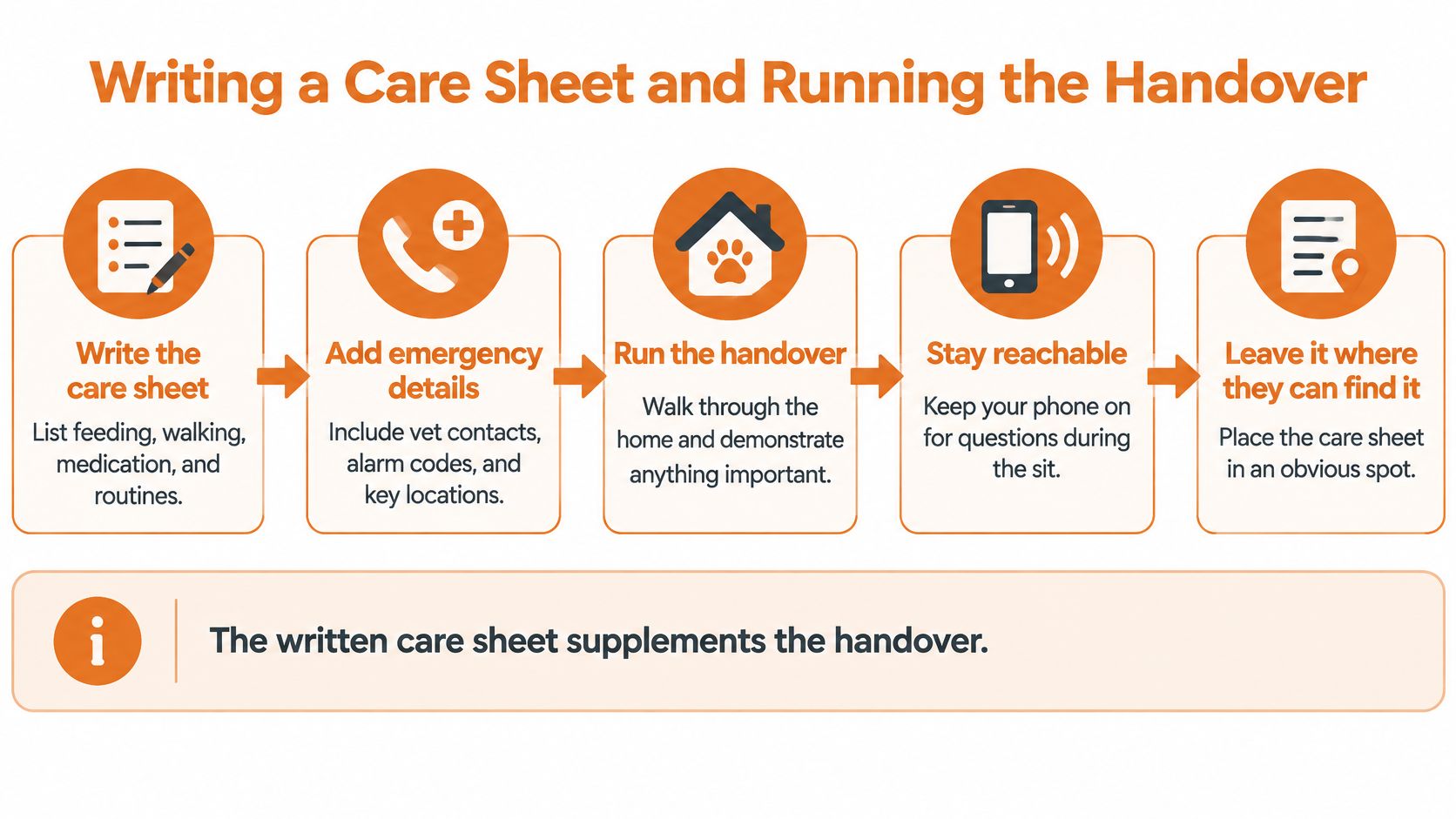
- Write the daily routine: Feeding amounts and times, walk routes and lengths, play, toilet habits and where your pet sleeps.
- Record every medicine: Name, dose, route, timing, storage and missed-dose instructions, plus a note for each dose given.
- List the clinical details: Veterinary practice, emergency vet, microchip number, insurance policy and vaccination records. Do not assume those dates are still current.
- Order the contacts: You first, then a trusted person who can decide if your phone is off.
- Authorise emergency care in writing: Name the clinic and set a spending limit.
- Hold the mandatory handover: In person or by video call before you leave. Demonstrate the feed, the medication and the walk while the sitter watches. A task done with you produces fewer mistakes than a task only read about.
- Agree the daily update: A short message and one photo each evening is enough to show the routine held.
Claws and muddy paws mark the chairs your pet already uses. These furniture protection tips for landlords from The Sofa Cover Crafter show simple covers and placement, so the sitter knows which seats are protected and which throws stay on the sofa.
Could a stranger give your pet a full day from the sheet alone? If a step is only in your head, add it before you go.
Handling Emergencies, Vet Care and Costs
Your dog stops eating on day two. The sitter's first move should already be written down.
| Situation | Sitter's first action | What you agree beforehand |
|---|---|---|
| Refuses food for a day | Contact you and monitor water intake and energy | Your vet's name and how long to wait before advice |
| Repeated vomiting or diarrhoea | Contact you at once and seek vet advice | Named clinic and spending limit |
| Breathing difficulty or collapse | Contact you and go to a vet immediately | Emergency vet authorisation and payment route |
| Sudden change in behaviour | Contact you and record what was seen | Who to call if you cannot be reached |
| Owner cannot be reached | Use best judgement to protect welfare, including vet care | Spending limit and insurance policy number |
| Missed medication dose | Follow the written missed-dose instructions; call the vet if unsure | Written missed-dose guidance on the care sheet |
You should give veterinary details and authorisation for emergency care before the sit begins. Sitters should contact you before spending on vet care where possible, and they must contact you immediately if your pet needs veterinary care. Our guide to pet emergencies is where those signs belong, next to the clinic name.
If you cannot be reached, the sitter should use their best judgement to protect your pet's welfare, including seeking veterinary care if necessary. We do not guarantee the safety of pets, property or members, so this plan sits with you.
In the UK, the PDSA pet health inequality report found that only 36% of pet owners could cover unexpected surgery. Check whether your policy covers emergency treatment, and write the policy number on the care sheet. A missed dose follows your written note. Collapse or breathing difficulty does not.
Collapse or breathing difficulty is a trip to the vet, not a message you answer in the morning.
Confirm Your Sitter Before You Leave Home
We are a peer-to-peer platform, not a care provider. We do not provide pet sitting or pet care directly, and we do not confirm that any sit will go ahead. You confirm the details yourself.
- Finish the care sheet: Note the checks that suit your pet, from mobility to medication.
- Post the dates: Add pet details so sitters can browse the map and apply.
- Shortlist and test: Keep applicants whose experience matches your pet, then run the video call and the reference calls.
- Agree it in writing: House rules and emergency limits go in with the dates and duties.
- Settle thanks separately: If you want to thank a sitter for excellent care, see how tipping works.
- Hold the handover: Confirm the first morning once they have watched the feed, the medicine and the walk.
Once they have met your pet and you have seen the sheet in use, the trip feels smaller. Find a trusted house sitter for free.
Global Pet Sitter connects you with house sitters who stay in your home and keep your pet's own routine while you travel. You post the dates, match someone to your pet's health and temperament, and agree the house rules before you leave. Visit Global Pet Sitter when you are ready to find a sitter you would hand the keys to.
Please sign in to leave a comment
