You're halfway through a walk, the dog has started panting harder than usual, and the water bowl you packed is useless because there's nowhere clean to tip it without spilling half of it onto the path. That's the moment travelers realize a travel pet water bottle isn't a cute accessory, it's a small piece of travel equipment that keeps a routine intact.
A good bottle does three jobs at once. It carries clean water, dispenses it without fuss, and helps the pet drink in a normal, low-stress way when the day is hot, long, or just inconvenient. For sitters, that matters even more, because a pet often relaxes when the drinking setup feels familiar.
What a Travel Pet Water Bottle Actually Does
I've seen the same scene play out in parks, airports, and trailheads. A sitter reaches for a bottle, the valve sticks, water leaks into the bag, and the dog walks away before drinking enough. That moment is a reminder that the product is really about controlled hydration, not just transport.
A travel pet water bottle is built to keep clean water with you and release only what the pet can drink right now. It's different from a home bowl, which stays in one place, and different from a fountain, which depends on electricity and a fixed location. It's also different from the bottle you'd hand to a human, because the pet version has to manage spill control, mouth shape, and quick one-handed use.
Practical rule: if the bottle only carries water but doesn't make drinking easy, it fails the job.
The best way to think about it is this. A regular bowl is a destination, a home dish is part of a routine, and a travel bottle is a portable drinking station. The value shows up in small repeats, a few sips at a rest stop, a little water after a warm block, a few more after the pet settles in the car.
For pets, hydration isn't a single event at the end of the outing. It's a pattern of small opportunities. That's why the bottle's shape, valve, and bowl matter so much. If the pet can't drink comfortably from it, the bottle's convenience stops mattering very quickly.
The Two Main Bottle Designs You Will See
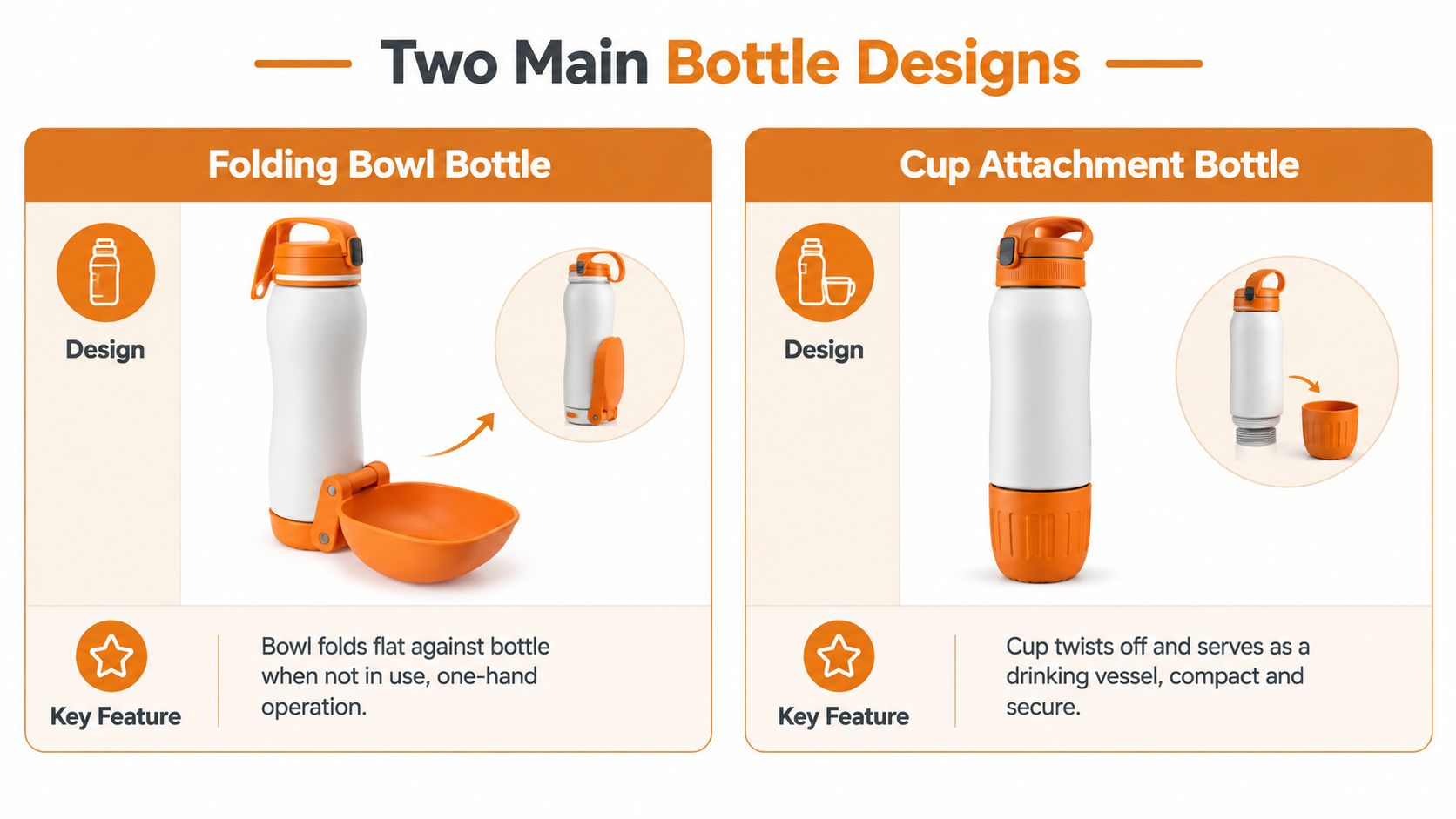
The two styles you'll run into most often are easy to picture once you compare them side by side. One looks like a bottle with a folding bowl or cup attached. The other is a compact dispenser that releases water into a shallow trough, usually with a button, squeeze section, or plunger-like mechanism.
Folding bowl bottle
This is the style many people think of first. The bowl folds flat against the bottle when not in use, then opens up when it's time to drink. It behaves a little like a thermos with its own cup, except the cup is designed for a pet's muzzle instead of a person's hand.
That wide drinking surface is the big advantage. Many pets drink more naturally from a broader area than from a narrow spout, and the one-hand operation is useful when you're also holding a leash. The trade-off is bulk. It takes up more room in a day bag, and if the bowl section is awkwardly shaped, it can flop around or catch dirt.
Cup attachment or squeeze dispenser
The second style is smaller and usually lighter. Water is pushed or released into a built-in trough, then either stays there for the pet or flows back after drinking. Think of it as a handheld drinker that borrows some ideas from a squeeze bottle, with a pet-safe surface attached.
This design is easy to pack and can feel neat for short city walks or quick transfers. The downside is that some pets hesitate because the drinking area feels narrow or unfamiliar. If a dog usually laps from a broad bowl, the first sip may take longer.
Why hybrid designs exist
Some bottles try to combine the best of both: a secure container, a wider drinking tray, and a closure that limits leaks. Those hybrids make sense because real trips don't happen in ideal conditions. You're not choosing a bottle for a showroom, you're choosing one for a bag, a leash hand, and a pet that may already be distracted.
Portable pet hydration tools are widely used, and the need is clear in travel behavior. In the American Pet Products Association's 2024 Dog and Cat Owner Insight Report, 88% of dog owners and 90% of cat owners said they had traveled with their pets in a car during the previous year, while 68% of dog owners and 80% of cat owners had flown with their pets, which shows why on-the-go water access matters so much. (American Pet Products Association report)
Materials, Safety and What to Look For
A lot of buyers start with the phrase BPA-free and stop there. That's not enough. The safer way to judge a bottle is to ask what each part touches, how it cleans, and how it behaves when it's warm, wet, or packed into a bag for hours.
| Material | Weight | Durability | Heat Handling | Cleaning Ease | Best For |
|---|---|---|---|---|---|
| Stainless steel | Heavier | Very strong | Good for temperature stability | Usually easy if the opening is wide | Frequent travel, longer outings, hotter climates |
| Plastic | Light | Good if used carefully | Depends on the specific plastic and use limits | Can be easy, but needs careful inspection | Short trips, light packing, budget-conscious buyers |
| Silicone | Very light and flexible | Good, but softer than rigid materials | Fine for casual use, less ideal for rough packing | Easy to rinse, harder if it has many folds | Small bags, small pets, flexible packing |
| Glass | Heavier and more fragile | Strong against odor, but breakable | Stable if protected well | Usually simple to clean | Careful transport, home-to-car travel, owners who prioritize nonporous surfaces |
The FDA classifies anything that touches food or drink as a food-contact substance, which means you shouldn't judge the bottle body alone. The reservoir, seal, valve, and drinking surface all matter. The same FDA guidance notes that contamination risk is generally lower for glass and metal surfaces than for some recycled plastics. (FDA food-contact guidance)
That's why I look at the whole assembly. A stainless reservoir can be a strong choice because it's durable and nonporous. A plastic bottle may be lighter and easier to carry, but it needs clear material and heat-use information. Silicone parts are useful when flexibility matters, though they need more attention around folds, seams, and odor retention.
Practical rule: a bottle is only as safe as its hardest-to-clean part.
If you're buying for a sitter handoff, I'd favor a bottle with obvious material labeling, a wide opening or easy disassembly, and a drinking surface that won't trap residue. I'd also be cautious with any bottle that looks clever but hides its seal or valve, because that's where problems usually start.
Matching Capacity to the Animal and the Journey
A bottle that works for a 20-minute park loop can be the wrong choice for a summer hike or a flight day. Capacity only makes sense when you match it to the pet's size, the weather, and how hard it'll be to find safe refills.
Dog hydration guidance suggests roughly 30 to 50 ml of water per kg of body weight per day, with an extra 10 to 25 percent for heat and activity, so a 20 kg dog may need around 690 to 1,150 ml on an ordinary travel day. (Travel hydration guidance) That's why a tiny bottle can feel fine in the store and fail in real life.
For a small cat or toy dog on a short outing, a compact bottle is usually enough if you're staying close to home and returning quickly. For a medium dog on a road trip, I'd look for a bottle that meets the immediate drinking need and a separate reserve in the bag. For a large dog on a warm hike, the bottle should be easy to use one-handed and big enough that you're not rationing every sip.
A useful way to think about it is this:
- Short park walk: choose convenience first, because the bottle is mainly there for a quick rinse and a few drinks.
- Road trip: prioritize a secure valve and enough water for rest stops, not just the first leg of the drive.
- Airport or flight day: pack for delays, transfers, and long waits, because movement and stress can interrupt drinking.
- Multi-day sit: treat the bottle as part of the pet's routine, not a backup you hope you won't need.
There's also a planning trap people fall into. A bigger bottle is not automatically better if you can't refill it safely or carry it comfortably. In some trips, dividing water between a drinking bottle and a sealed reserve is smarter than relying on one oversized container.
A matched capacity beats a giant bottle you leave in the bag because it's too awkward to use.
If you're also planning an international stay, keep the bottle choice tied to the trip itself, not just the pet. That's especially true when you're reading broader travel advice such as Global Pet Sitter's guide to traveling with pets internationally, because hydration planning changes once airports, delays, and unfamiliar water sources enter the picture.
Leakproof Valves and the Hygiene Trade-Off No One Talks About
Leakproof and hygienic are not the same thing. A bottle can stay dry in your bag and still be a poor choice if it's hard to clean or if the drinking path pulls dirty water back into the reservoir.
The first thing to look at is the valve. Some bottles use push buttons, some use twist locks, and some rely on a squeeze action to move water into the tray. The best one for you is the one that still works after repeated use, when the seal has been opened and closed a lot and the bag has been bounced around all day.
The less obvious issue is the return-to-bottle design. That feature lets unused water flow back into the reservoir after the pet drinks, which saves water and feels convenient on a short walk. The trade-off is simple. If saliva, dirt, or outdoor residue enters the drinking area, that material can be cycled back into the clean supply.
Veterinary guidance says pets should be offered water at regular stops rather than waiting until they actively seek it, and it warns against contaminated standing water such as ponds, puddles, and troughs. (University of Illinois veterinary guidance) That makes bottle hygiene central, not optional.
For that reason, I use this rule of thumb:
Return-to-bottle designs are fine for short, cool outings with a healthy pet, as long as the bottle is emptied and cleaned at home.
For hikes, airports, or pets with medical vulnerabilities, I prefer a design that keeps water moving one way only, or a bottle that drains easily and doesn't leave a hidden pool behind. That reduces the chance that leftover moisture becomes a problem later.
The most important habit is not the brand name on the bottle. It's what happens after the walk. Warm, damp components are where trouble starts, and a valve that looks clean from the outside can still hide residue inside. If you want a bottle that's genuinely usable on repeat trips, the cleaning path has to be as simple as the drinking path.
Cleaning, Care and the Sitter Handover Routine
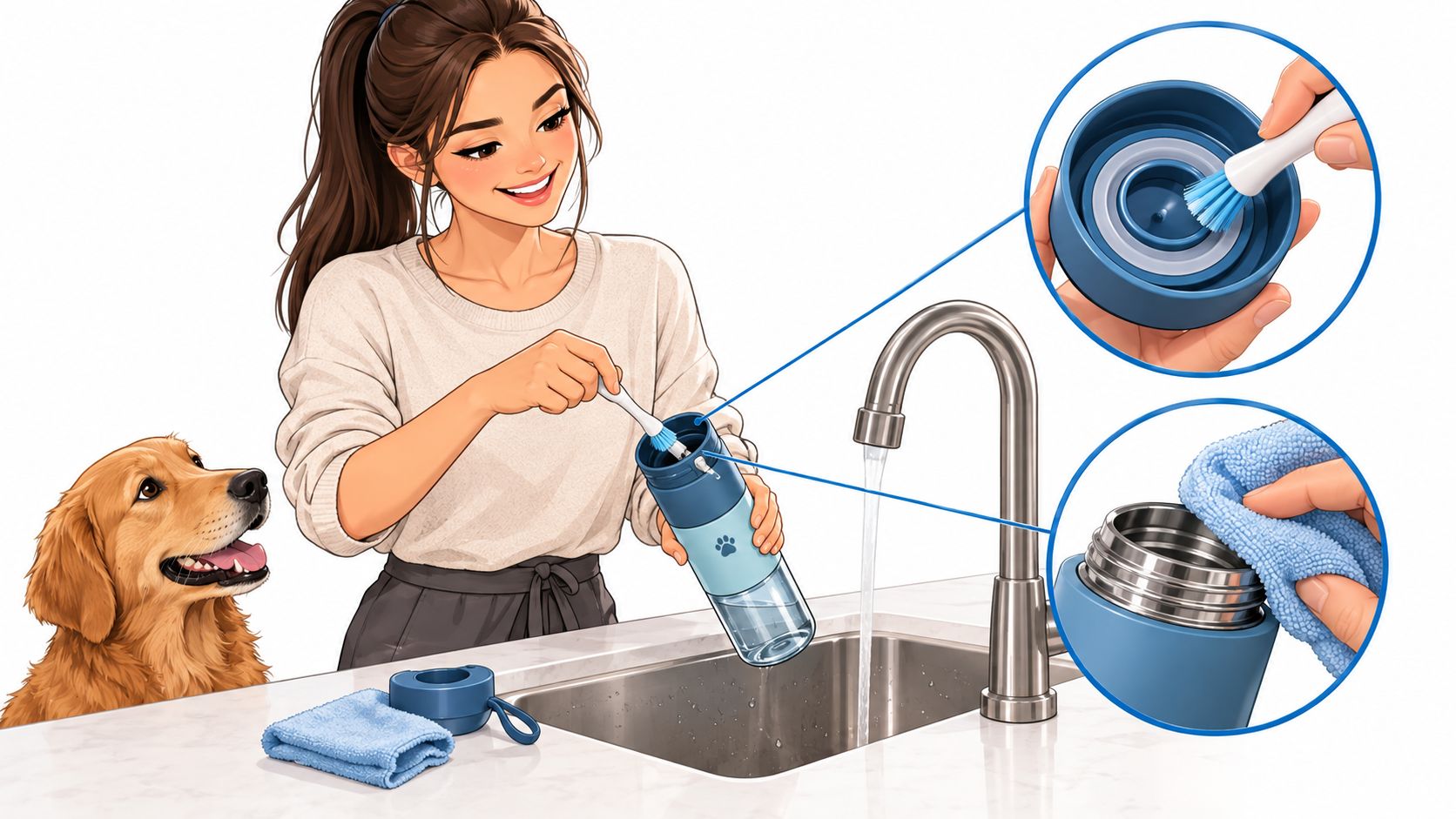
The parts that wear out first aren't always the ones buyers notice in a product photo. It's the silicone gasket that keeps a smell, the thread that collects scale, the folding bowl that never dries fully, or the valve that starts feeling sticky after a few trips.
A simple routine keeps most of that under control. Rinse after each outing. Disassemble fully on a regular schedule. Let every part dry before it goes back in a bag. If the manufacturer allows it, dishwasher cleaning is useful because it reaches parts that a quick hand rinse often misses.
A few warning signs mean it's time to slow down and inspect the bottle carefully:
- Odor that lingers after washing often means residue is sitting in a hidden seam or valve.
- Cloudiness or cracking in plastic parts can mean the material is aging and no longer trustworthy.
- Tacky seals usually point to wear that affects both hygiene and leak resistance.
- Chewed edges are a safety issue, not just a cosmetic one.
The hygiene concern gets sharper in warm weather or after repeated use. Bacterial buildup can happen quickly in damp components, and cracked or chewed plastic or silicone can become a choking or ingestion hazard for dogs. That's why full disassembly, replaceable seals, and clear cleaning instructions matter so much. (Cleaning and safety guidance)
For sitters, the handover routine should be as routine as leash clipping. When you receive a pet's bottle, check whether the animal prefers that exact drinking surface, whether any returned water should be discarded, and where fresh refill water will come from. Then wash the nozzle and tray before first use, even if the bottle looks clean.
A sitter who's handling a new pet's gear can also benefit from a short written handoff, like the one you'd keep in a sitter information sheet. It keeps preferences, refill notes, and cleaning expectations in one place, which is useful when the owner wants the same routine repeated exactly.
Later in the day, I always remind myself of one simple thing. A bottle left damp in a hot car is already on the wrong path. Drying and storage aren't extra steps, they're part of the product's actual lifespan.
Putting It Together and Picking the Right Bottle
The right bottle is the one that fits the trip before it fits the shopping cart. Match the design to the journey, the material to the climate, the capacity to the pet's size, and the cleaning routine to the reality of your schedule.
If you want a fast checklist, use this:
- Will the pet drink from it easily? If not, the bottle is the wrong shape.
- Can I clean every part? If a seal or valve hides residue, skip it.
- Is the capacity enough for the actual outing? Don't guess from the package photo.
- Does the valve stay reliable when wet, dirty, or packed? That matters more than a marketing label.
- Do I need a reserve? For longer days, yes.
For many trips, the strongest setup is a bottle with a wide drinking surface, a durable body, and a cleaning routine you'll keep. For a sitter traveling with an unfamiliar pet, a familiar bottle plus a separate reserve is often safer than one large container with complicated moving parts.
If you're packing more than water, it helps to think of hydration as part of the whole travel kit. A good carrier, a clear route plan, and the right bottle all serve the same goal, which is keeping the pet calm and comfortable. For practical packing ideas, I also like the carrier advice in Nandog Pet Gear carrier recommendations, because the best bottle in the world still has to fit alongside the rest of the travel setup.
Pet care while on vacation is easier when the owner and sitter agree on the drinking routine before the trip starts. If you need trusted in-home care or want to make that handoff smoother, visit Global Pet Sitter and build a plan that keeps your pet's routine steady wherever the trip leads.
Please sign in to leave a comment
