You've got the trip booked, the keys are ready, and the hard part still isn't the flight. It's handing your home and your pet to someone you only half trust, then trying to enjoy the getaway without checking your phone every ten minutes. That's exactly where trusted pet house sitters matter, because the right person doesn't just show up, they fit your pet's routine, your home rules, and your tolerance for uncertainty.
Why Trusted In Home Care Matters More Than Boarding
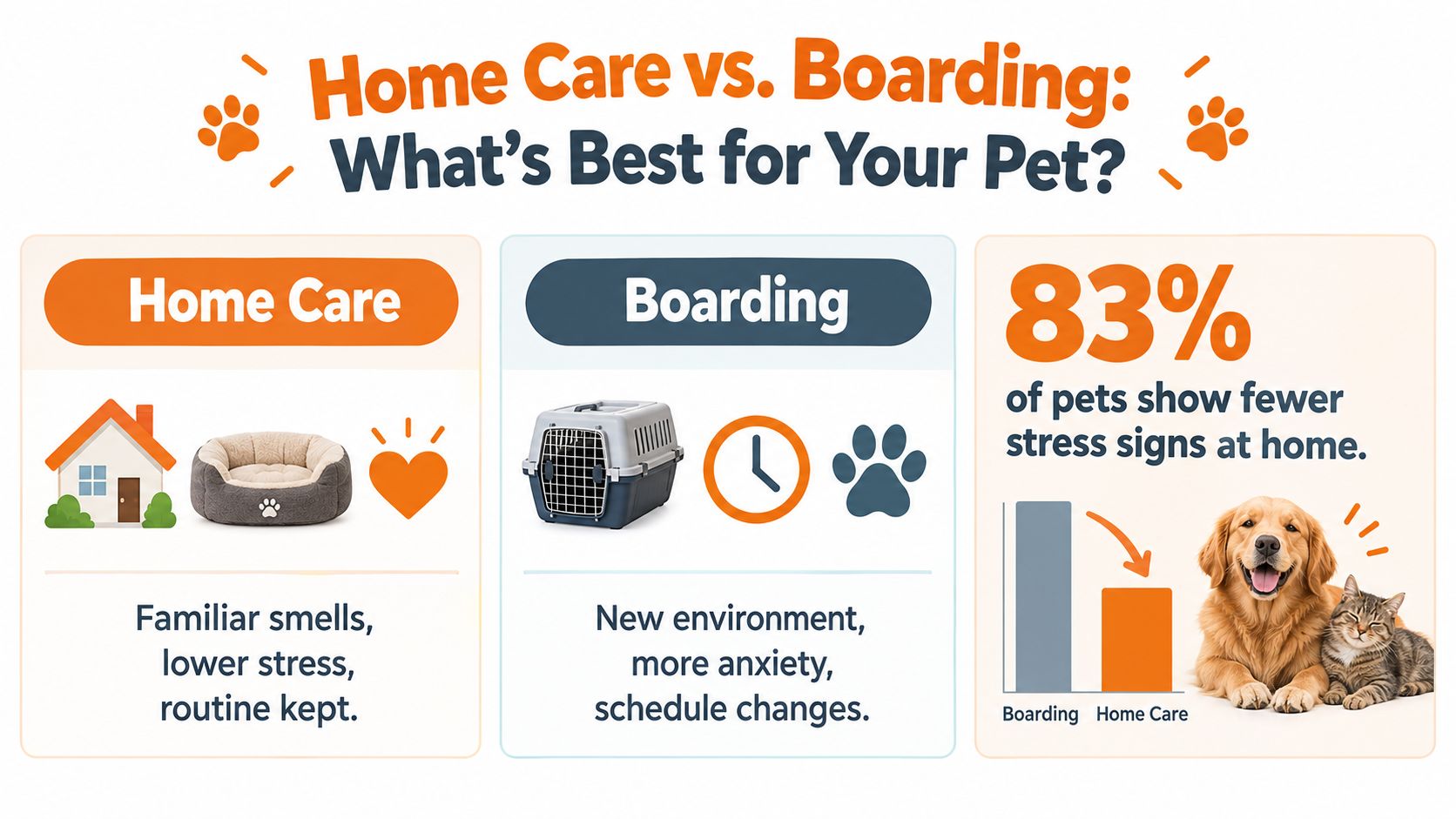
The old choice between boarding and in-home care usually gets framed as convenience. In real life, it's about whether your pet is calmer in a familiar space, sleeping in familiar spots, hearing familiar sounds, and keeping the rhythm they already know. That's why in-home care keeps winning for owners who've seen how much a change of environment can unsettle an animal.
A historical survey of 1,133 pet owners found that 82.12% chose in-home pet sitting at the pet's residence as the most convenient, healthful, and nurturing option, far ahead of group day care and kennel boarding, which were much lower choices in that same survey Dogster's pet sitting statistics. That preference didn't appear out of nowhere. It reflects what many owners already know, pets often do better when the smells, furniture, feeding spot, and daily cues stay the same.
What the market shift tells you
The category has also become more organized. One recent industry estimate put the global pet sitting market at USD 2,685.2 million in 2024 and projected it to reach USD 5,143.3 million by 2030, with an 11.8% CAGR from 2025 to 2030 Grand View Research. That matters because owners are clearly moving toward platforms, reviews, and transparent profiles instead of relying only on who a friend happened to know.
That shift changes how trust works. A recommendation from a neighbor still helps, but now the question is whether a sitter's profile, review history, communication style, and care experience match your actual risk level. A healthy cat for one night doesn't need the same proof as a senior dog on medication, and treating those situations the same is how people end up disappointed.
For a broader comparison of pet care options, this guide on pet sitting versus boarding is worth a look.
The rest of this guide is built around that idea. Trust isn't one-size-fits-all. It should match how complex your pet's care really is.
How to Create a Listing That Attracts the Right Sitter
A strong listing does most of the filtering before you ever speak to a candidate. If you're vague, you attract vague people. If you're clear about the pet, the house, and the rhythms of the stay, you make it easier for the right sitter to recognize the fit and for the wrong sitter to scroll past.

Start with care reality, not marketing polish
A listing should read like a useful handover note, not an ad. Name the dates, the pet's age, energy level, daily routine, and any medical or behavioral quirks that matter. If your dog pulls on leash, say so. If your cat hides from strangers for two days, say that too.
For a senior dog on medication, the listing needs to say when the medicine is given, whether it must be hidden in food, and what happens if a dose is missed. For a shy cat, it helps to describe how long they usually take to warm up and whether they want one quiet person in the home or less contact overall. For a multi-pet household, spell out feeding order, separate bowls, and whether any animals need to be kept apart.
Practical rule: the more specific the listing, the less time you waste on polite mismatches.
Include the home rules that affect the stay
Sitters don't just care for pets, they live inside your routine for a few days or weeks. That means they need to know if they can work from home, whether visitors are allowed, what time the pets usually eat, and what level of house care you expect. If the gardener, cleaner, or neighbor might stop by, mention it before someone accepts the stay.
A good listing also makes the success criteria obvious. Don't just say you want someone “reliable.” Say what reliability means in your home. Maybe it's sending a short nightly update, keeping the dog off the couch, or not leaving the pets alone more than a certain stretch.
This listing-writing guide is a practical reference if you want to tighten your wording before you post.
Good listings reduce guessing. They don't try to impress every sitter. They help the right ones self-select quickly.
Use structure that makes screening easier
A simple format works best:
- Pet summary. Breed or type, age, temperament, exercise needs, and special care.
- Daily routine. Feeding times, walks, bathroom breaks, play, and bedtime.
- Home details. Wi-Fi, parking, access instructions, plant care, and house rules.
- Care expectations. Updates, alone-time limits, and vet escalation preferences.
On platforms built around transparent profiles and messaging, that kind of detail speeds up matching because everyone starts from the same facts. The goal isn't to attract the most applicants. It's to attract the most suitable ones.
How to Vet Candidates With Layered Trust Signals
A single good review is comforting. It's not enough for every sit. The deeper the care requirement, the more you need signals that stack up in the same direction, identity verification, background screening, external references, and a live conversation that tests whether the sitter understands your pet.
| Care Scenario | Minimum Trust Signals | Extra Checks Worth Adding |
|---|---|---|
| Healthy cat, short weekend | Verified profile, several relevant reviews, clear written communication | Brief video call, photo-based proof of past sits |
| Adult dog, regular walks | Verified identity, review history, references that match profile tone | Live call about leash habits, feeding routine, and alone-time tolerance |
| Senior pet, medication, anxiety | Identity verification, background screening, references, strong review consistency | Detailed video call, emergency plan, written handover, daily updates agreed in advance |
| Multi-pet home or medically complex care | Full layered vetting, strong behavioral evidence from previous sits | Higher communication frequency, backup contact, explicit escalation thresholds |
The strongest signal isn't a badge, it's behavioral evidence from previous sits. Independent guidance on house-sitting safety says review history is often the single most reliable indicator of trustworthiness before a sit begins The Travelling House Sitters. That doesn't mean review counts by themselves decide everything. It means they're the start of the evaluation, not the end.
How to read reviews without being fooled by the star count
Imported reviews can be helpful, but you should treat them like evidence, not proof. Look for consistency across multiple reviews, especially around communication, punctuality, pet handling, and how the sitter reacted when something unexpected came up. If the profile says one thing and the reviews describe another, pay attention to the reviews.
Cross-checking matters even more when a sitter arrives with reputation from another platform. Screenshots of previous reviews can still be useful, but the test is whether the story holds together across sources. If references describe calm handling and the call sounds thoughtful and specific, that's a better sign than a profile that looks polished.
For a parallel in another trust-heavy field, childcare background check guidance shows the same basic logic, layered verification beats a single screening step.
Match scrutiny to the complexity of the sit
Not every stay deserves the same depth of vetting. That's the mistake many owners make. They either over-screen a low-risk weekend or under-screen a stay that really needs medical competence and reliable communication.
A useful internal benchmark is simple, healthy pet and short stay, basic trust signals are often enough. Once medication, age, anxiety, or multiple animals enter the picture, the vetting needs to get stronger. That's where a video call, proof of identity, and a conversation about emergency handling stop being optional extras.
This overview of trusted signals and reviews is a useful companion if you want to compare signal quality before you choose.
The point isn't to be suspicious of everyone. It's to be precise. Trust should scale with the care burden, not with how charming the profile looks.
Interview Questions and Red Flags That Reveal True Reliability
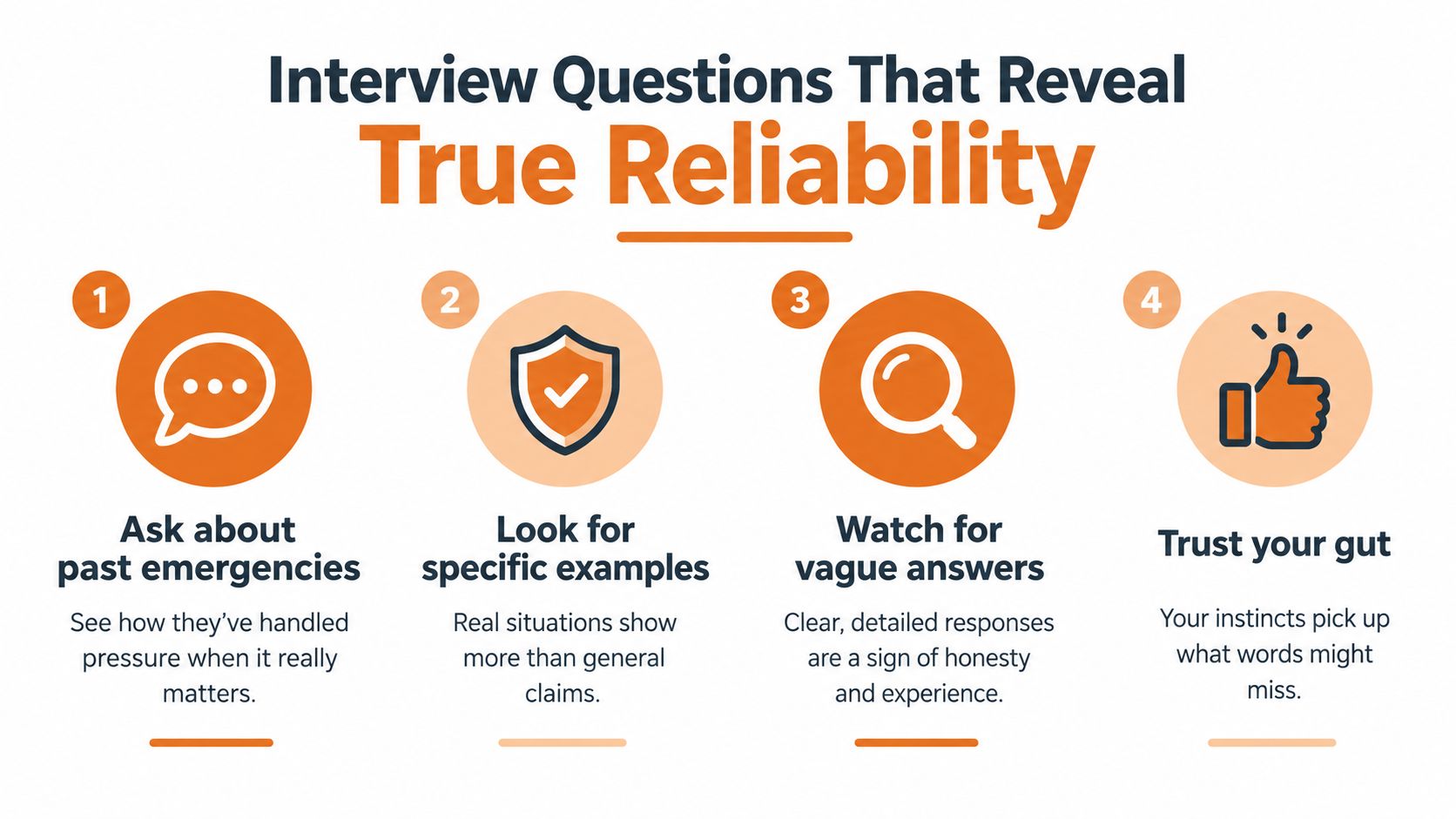
The interview call should feel like a working conversation, not an interrogation. Good sitters usually welcome specifics because they know pets are easier to care for when the owner and sitter are aligned on the details. The wrong person tends to get slippery right where clarity matters most.
Ask for behavior, not reassurance
A weak answer sounds polished but thin. “Don't worry, I'm great with pets” means very little unless it comes with examples. A strong answer names routines, prior situations, and how the sitter would adapt if something changed.
Use questions that force specifics:
- Feeding: “Walk me through how you'd handle breakfast, dinner, and treats.”
- Walks: “What do you do if the dog gets reactive or hesitant on leash?”
- Medication: “How do you track doses and confirm a pet took them?”
- Alone time: “What's your limit for being away during the day?”
- Vet escalation: “What would make you contact me or the vet first?”
- House care: “How do you handle trash days, doors, and cleaning up after a pet accident?”
If the answer stays general, you haven't learned much. If the sitter starts describing the pet's likely behavior, the plan for a problem, and how they'd keep you updated, you've got a more usable signal.
“Specific answers usually sound a little less polished and a lot more real.”
Watch for the small things that say a lot
A reluctance to video chat is a bad sign when the sit is anything beyond casual. So is a candidate who never asks about the pet's temperament, emergency contacts, or house setup. The most prepared people usually ask a few smart questions of their own because they understand that trust goes both ways.
Consistency matters too. If they tell you they've handled senior pets before, they should be able to speak confidently about medication timing, mobility issues, or monitoring changes in appetite. If their story shifts when you ask follow-up questions, that's not a reason to argue, it's a reason to move on.
The platform video below is a useful reminder that reliability shows up in the details, not the title on the profile.
Compare strong and weak signals side by side
A confident sitter might say, “If your dog skips breakfast, I'd note the time, try the routine once more, and message you before I improvise.” A vague sitter says, “I'm sure it'll be fine.” One of those answers shows process. The other shows hope.
Green flag: the sitter asks what threshold should trigger a message to you. That question usually means they understand that care is a partnership, not a guess.
The best interviews leave you with a clear feeling. Not “this person seems nice,” but “this person understands my pet, my home, and when to escalate.”
Booking Handover and Stay Management Without Surprises
The sit doesn't really begin when the sitter arrives. It begins when you lock in the booking and decide how much detail you're willing to leave undocumented. A smooth stay is usually boring in the best way, because the important questions were answered before anyone carried a bag through the front door.
Confirm the agreement in writing
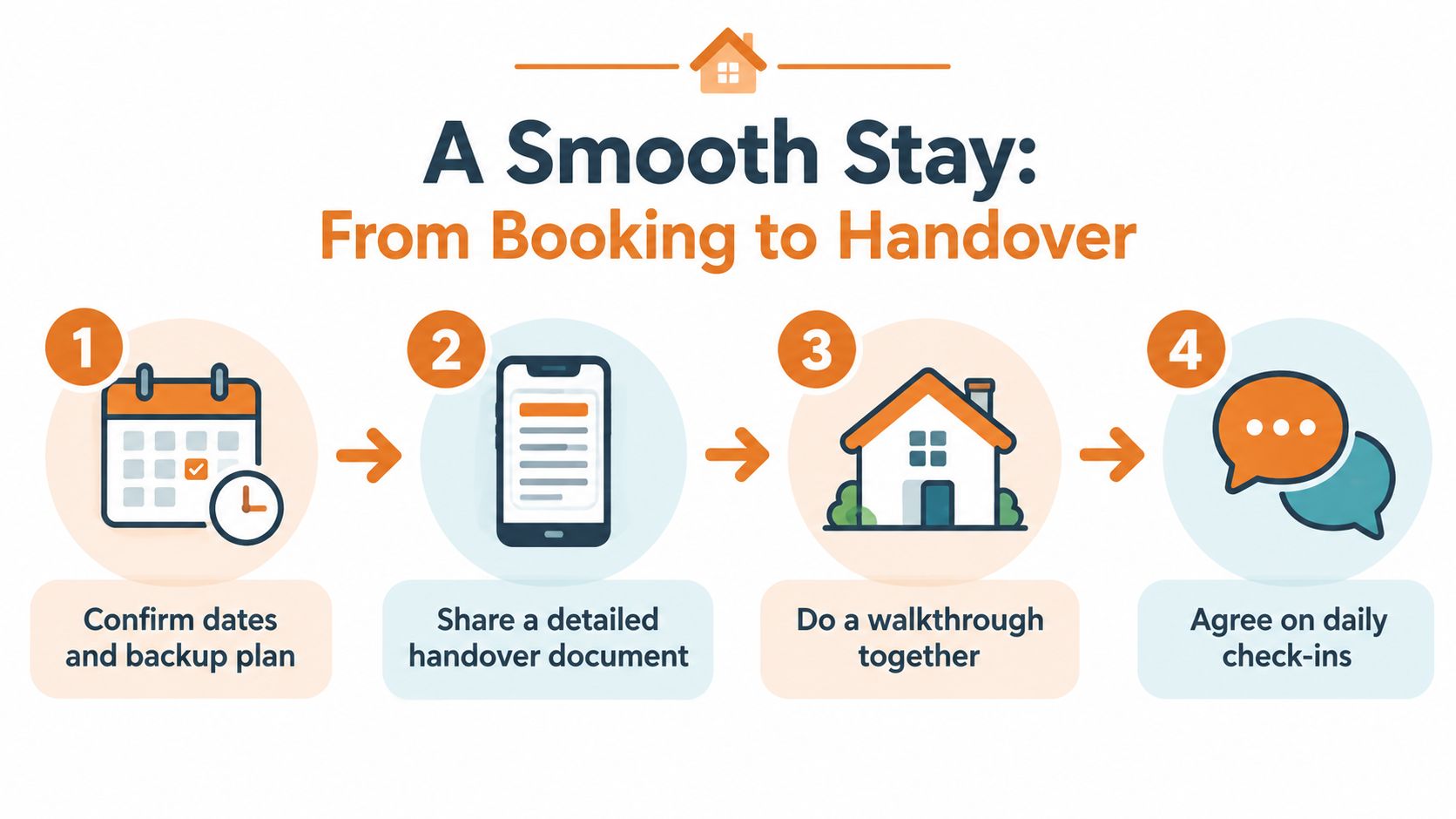
Start by confirming the dates, arrival window, departure time, and backup plan if travel changes. That sounds obvious until a delayed flight, traffic issue, or handover misunderstanding creates stress right when you're trying to leave. Put the key terms in writing and keep them easy to find.
The handover document should include feeding times, medication instructions, house rules, vet contacts, and the point at which the sitter should contact you. That last part matters more than people think. Some owners want every small change reported immediately. Others only want a message if there's a real issue. If you don't say it clearly, the sitter is forced to guess.
Make the house walkthrough do real work
Walk through the property together and show, don't just tell. Point out where food is stored, which door sticks, where the leash hangs, what the pet does when the doorbell rings, and how the trash system works. If there are alarms, gates, or spare keys, explain them before you leave, not in a text later.
This is also the moment to address house safety and handling. Market guidance warns that standard homeowners or renters insurance seldom covers third-party pet incidents, and specialized coverage can be costly, so the safest protection is still a written protocol and a careful handover Trupanion's pet sitter safety guidance. For handling risks, a documented plan matters because pets can bite, slip, bolt, or react when routines change.
Set the communication rhythm early
Daily check-ins help most when they're agreed upfront. Some owners want a photo and a short note each day. Others only need a quick update if the pet seems off, the weather affects walks, or the sitter needs to adjust routine. Don't leave that expectation fuzzy.
If you're using a marketplace that includes messaging and profiles, keep everything important in the thread, not scattered across texts and memory. Some platforms now frame the process as create profile, find a match, then connect and care, which is a sensible way to keep the steps simple without skipping the world details.
For a related look at how communication and task flow affect guest experience in another home-stay setting, this guide on virtual assistants and guest experience makes the same point from a different angle.
A good handover doesn't feel ceremonial. It feels complete. When the sitter leaves with clear instructions and clear boundaries, your pet gets steadier care and you get fewer surprises.
Your Calm Confident Plan for Booking Trusted Care
The cleanest way to choose trusted pet house sitters is to stop treating every stay as the same kind of risk. A healthy pet with a simple routine may only need strong reviews and a clear video call. A senior pet, a medication schedule, or a multi-pet home deserves layered verification, written instructions, and tighter communication expectations.
That shift makes the whole process calmer. You're no longer trying to find a perfect person in the abstract. You're matching a real sitter to a real level of care. When the fit is right, trust feels less like a gamble and more like a process that held up under scrutiny.
A simple pre-departure routine helps: review the listing, compare the applicant's story against their reviews, hold the video call, write the handover, and confirm the check-in rhythm before you go. If you're using a community-driven platform, the review loop and responsive support can make it easier to build confidence over time, especially if you're newer to house sitting or moving from another marketplace.
Trust is still personal, but it doesn't have to be vague. The best plan is specific, documented, and matched to the care your pet needs.
Global Pet Sitter gives pet owners a place to post sits, review profiles, and connect with sitters who can care for pets at home. If you want a simpler way to compare candidates, keep your handover organized, and work inside a review-driven marketplace, visit Global Pet Sitter and see how the process fits your next trip.
Please sign in to leave a comment
