You've booked the holiday, the countdown's started, and now you're staring at your dog, cat, or rabbit wondering who'll feed them, let them out, and notice if something's wrong. Kennels feel like a disruption, family can't always help, and taking your pet with you isn't always sensible. That's where UK house sitting fits, provided you set it up properly. The arrangement that works isn't built on goodwill alone. It's built on a clear care setup, a written specification, and both sides knowing exactly what they've agreed to before anyone travels.
How UK House Sitting Works and Who Benefits
Say you're away for two weeks and your labrador needs two walks a day, breakfast at seven, and medication with his evening meal. A sitter moves into your home on the day you leave, sleeps there, follows that routine, brings in the post, and sends you a photo each evening. Your dog keeps his own bed, garden, and walking route. When you return, the sitter leaves the house clean and hands back the keys.
That's the core exchange. Sitters care for pets at the owner's home in exchange for a free stay, and no money changes hands. The owner gets care in familiar surroundings, with the pet's own bedding, smells, and routines intact, rather than the noise and timetable of a kennel or cattery. The house stays occupied, which helps with post, plants, and the small problems that grow when a property sits empty.
What the Sitter Gets in Return
For the sitter, the value is accommodation and location. Sitters can save on accommodation while house sitting and see new countries, and within Britain that might mean a fortnight in the Cotswolds, a month near the Scottish coast, or a base in a city they'd otherwise pay heavily to visit. Many sitters enjoy animals they can't keep full time because they rent, travel, or work irregular hours.
The basic rules keep the exchange clean. The owner vacates the property for the duration, and the sitter has sole occupancy unless both sides agree otherwise in advance. That matters for privacy, insurance, and simple comfort. Nobody should discover mid-sit that a relative plans to stay over or that the owner expects to pop back for a night.
A Real Responsibility, Not a Free Holiday
Sitters don't need to be professionals, but this isn't a casual favour either. A dog that needs letting out at dawn sets your alarm whether you're tired or not. A cat on medication doesn't care that you'd planned a long day out. Owners, in turn, need care for family visits, work trips, and weekends away, not only overseas flights, so demand recurs through the year rather than peaking once.
If you wouldn't trust someone with your keys, your pet's medication, and a burst pipe at midnight, you haven't found the right match yet.
Run a quick self-check before you go further.
- Will the pet settle at home: Most do, especially cats and older dogs, but a pet that needs constant specialist handling may need a different arrangement.
- Can you commit to the routine: Feeding times, walks, and daily presence aren't negotiable extras.
- Are you comfortable with their rules: Living in someone else's house means their boundaries on guests, smoking, and rooms apply.
Where to Find Sits and Stand Out to Owners
A sit is easier to assess when dates, location, and pet-care details are together in one place. On Global Pet Sitter, owners post their sits with dates and pet details, while sitters browse the map and apply to opportunities. For other ways to find openings, see this guide to finding house-sitting jobs and applying.
These routes can complement each other:
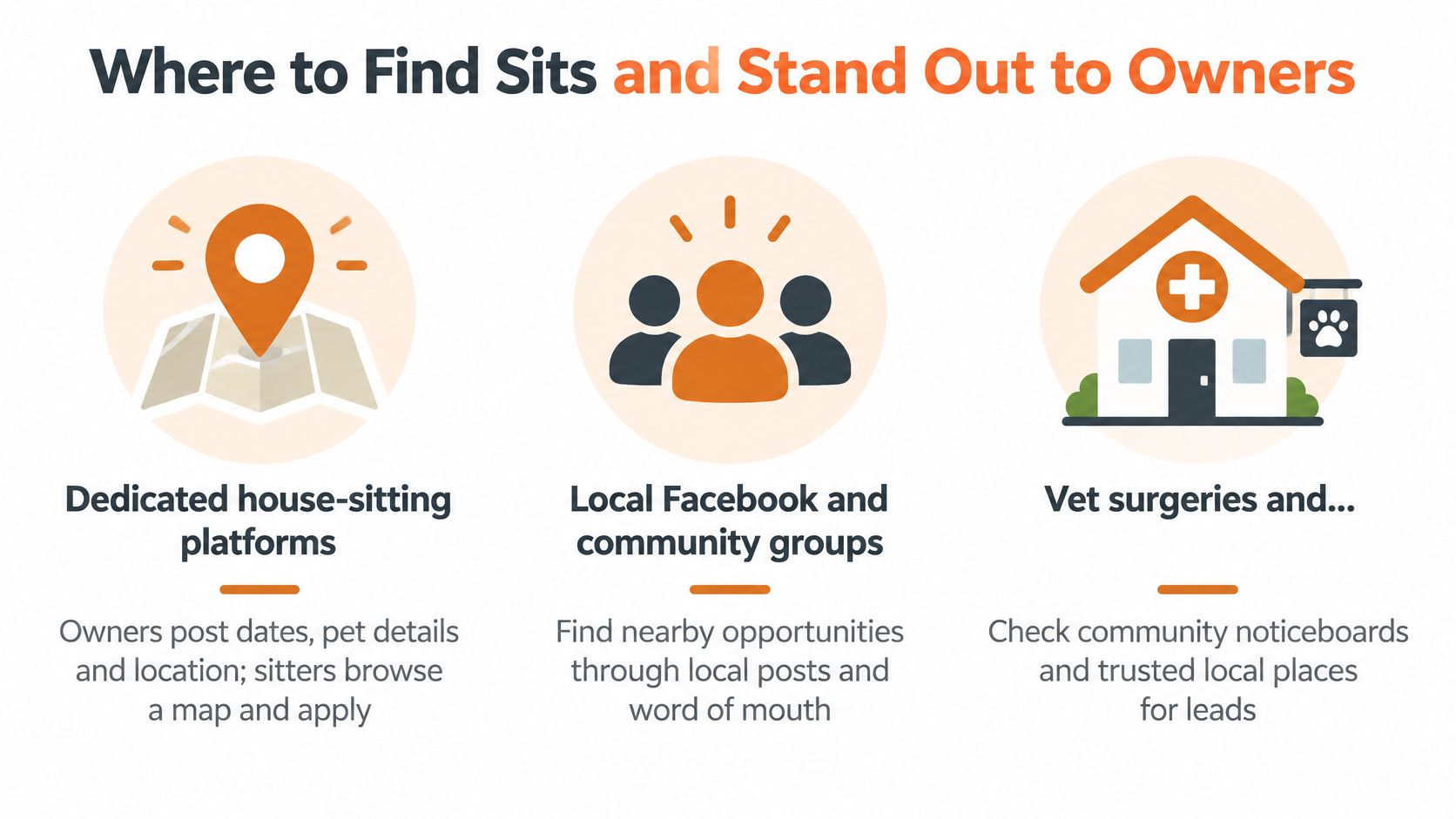
- Dedicated house-sitting platforms: Browse sit listings and apply through your profile.
- Local Facebook and community groups: Look for nearby opportunities, then check the arrangements and expectations directly with the owner.
- Vet surgeries and pet shops: Noticeboards can help you spot local leads.
- Word of mouth: Friends and neighbours may know an owner planning a trip.
Build a Profile Owners Can Judge
Owners need to judge whether your experience suits their pets and routine. Use a clear photo and a concise bio that names the animals you have cared for and the tasks you can handle. Be specific: giving medication, walking a large dog, or caring for an elderly cat tells an owner more than a general claim that you love animals.
If you have reviews from another platform, Global Pet Sitter lets experienced sitters import 5-star reviews using screenshots. Make sure your profile describes your actual experience, and be clear about which animals or tasks you are not prepared to take on.
Strong applications respond to the listing. Mention the pets and their routine, confirm that your dates work, and suggest a video call to discuss the care specification. Apply early for dates that suit your schedule, but do not commit until you understand the daily duties and can meet them.
First Application Checklist
Before applying, check that your profile has a photo and clear bio, your references are ready to be contacted, and your availability is up to date. State which animals you can care for, and be candid about your limits. That gives the owner useful information before either of you commits.
- Profile: Does it show relevant experience and the care tasks you can manage?
- Availability: Are you free for the full sit, including the handover?
- Fit: Have you identified any animals or responsibilities you cannot take on?
Legal Duties, Licences and Insurance Across the UK
The rule that decides most cases in England isn't about payment. It's about where the animal is housed. According to Wandsworth Council's summary of animal welfare licence requirements, the Animal Welfare (Licensing of Activities Involving Animals) (England) Regulations 2018 require licensing for commercial boarding of cats or dogs, including home boarding where animals are taken into the sitter's premises. A person caring for a dog or cat in the animal's normal home does not require an animal-boarding licence.
That distinction should shape every listing. Record the care location, whether animals will be transported, and whether the sitter will ever accommodate pets at their own address. The safest specification is simple. The pet remains in its established home.
Licensing by Care Setup in England
| Care setup | Licence needed in England | What the listing should record |
|---|---|---|
| Pet stays in its own home with the sitter | No boarding licence needed | Pet remains in its established home |
| Sitter takes pets to their own address | Licence needed for commercial home boarding | Care location and transport arrangements |
| Sit across Scotland, Wales or Northern Ireland | Devolved rules, check the local council | Local licence status confirmed before agreeing |
| Owner's home insurance during a sit | Check the policy wording with your insurer | Written confirmation that sitter occupancy is covered |
Don't assume England's position travels. Animal-activity regulation is devolved, so Scotland, Wales, and Northern Ireland run separate rules and local authority requirements may differ. I would check with the relevant council before agreeing any sit outside England, and I'd keep a note of the answer with the rest of the paperwork.
Insurance and the Welfare Duty
Insurance is where informal arrangements fall apart. Owners should check their home insurance for occupancy clauses and get written confirmation that a sitter living there is covered. Some policies restrict cover when the named policyholder is absent or when someone unlisted stays for an extended period. Ask the sitter whether they hold their own cover too. Our guidance on how to verify insurance coverage before a sit explains what to ask and what to get in writing.
Alongside licensing sits a broader duty. Under the Animal Welfare Act 2006, owners and keepers must take positive steps to meet an animal's welfare needs, and during a sit the sitter takes on that practical responsibility day to day. Payment, or the absence of it, doesn't change that.
Paperwork That Prevents Arguments
Put a short signed agreement in place stating dates, pet-care duties, who pays for vet bills, and what happens if the sit ends early. Add emergency contacts, veterinary authorisation, medication instructions, and a written handover record. Confirm the care setup and insurance position before agreeing, not after flights are booked.
Pet Care Expectations and Veterinary Authority in the UK
A sitter remains a person responsible for an animal even when no money changes hands. The government's home boarding licensing statutory guidance frames welfare needs under the Animal Welfare Act 2006 around a suitable environment, appropriate diet, normal behaviour, companionship or separation requirements, and protection from pain, suffering, injury and disease. Those aren't abstract principles. They're a checklist you convert into instructions a stranger can follow at 6 a.m. without guessing.
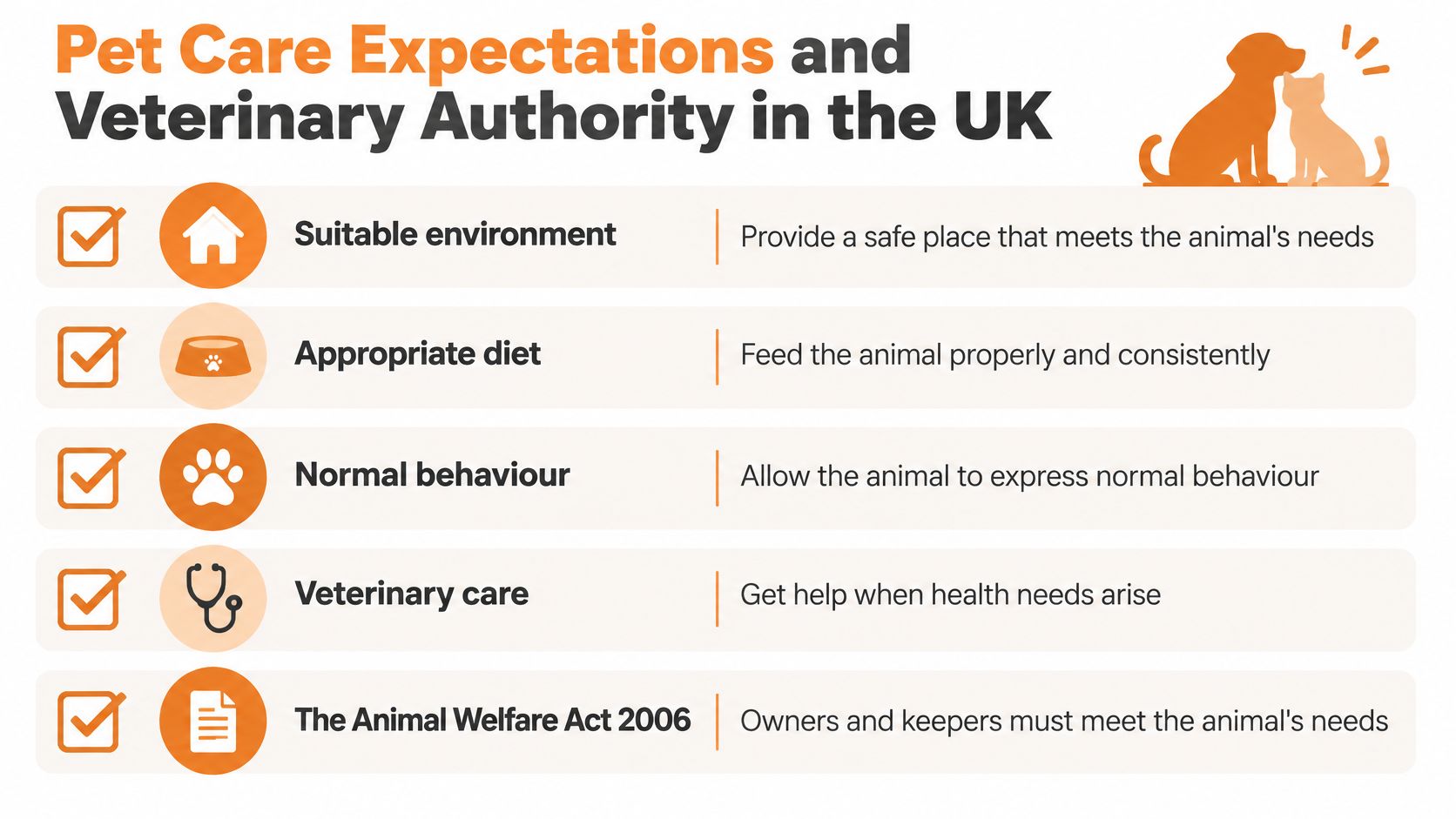
Turn Welfare Into a Care Specification
Write measurable instructions. Cover feeding quantity and times, exercise limits, medication dose and timing, and which rooms or garden areas the pet can access. Note temperature needs for small animals, and name behavioural triggers such as fireworks, thunderstorms, other dogs on walks, or separation distress when left alone. State how long the pet can reasonably be left, because that's the instruction sitters most often have to infer and most often get wrong.
Competence matters too. Someone who's confident with a small elderly cat may not be safe handling a strong, reactive dog. Sitters are under no obligation to accept arrangements involving pets they deem unsuitable, and saying no protects both sides far better than struggling through.
Veterinary Authority Before You Leave
Pet owners should provide sitters with veterinary details and authorisation for emergency care before the sit begins. That means the practice name, address and phone number, your account details there, a named emergency contact who can make decisions if you're unreachable, and written authorisation for emergency treatment with a spending limit. If you're still choosing or reviewing a practice, The Vet Price Comparison Site guide is a useful starting point for judging what to look for.
The working norm is clear. Sitters should contact the pet owner before incurring veterinary expenses where possible. In a true emergency, where delay risks the animal, the sitter acts first to protect it and contacts you as soon as they can.
Practical rule: If a decision might need making at midnight, write down who makes it before you leave.
Most failures are mundane rather than dramatic. A cat slips out of an unfamiliar garden gate. A dog is left alone longer than it's used to. Medication gets missed on a busy day because the routine lived in the owner's head.
Use this six-item checklist to close those gaps.
- Feeding plan: Quantity, times, and where food is stored.
- Medication schedule: Dose, timing, and how it's given.
- Vet and emergency contacts: Practice details plus a decision maker.
- Authorised treatment limit: The amount a sitter can approve immediately.
- Escape-proofing check: Gates, cat flaps, windows, and lead rules.
- Fixed daily update time: One agreed check-in so nobody worries in silence.
Vetting Sitters and Handover Steps Before You Commit
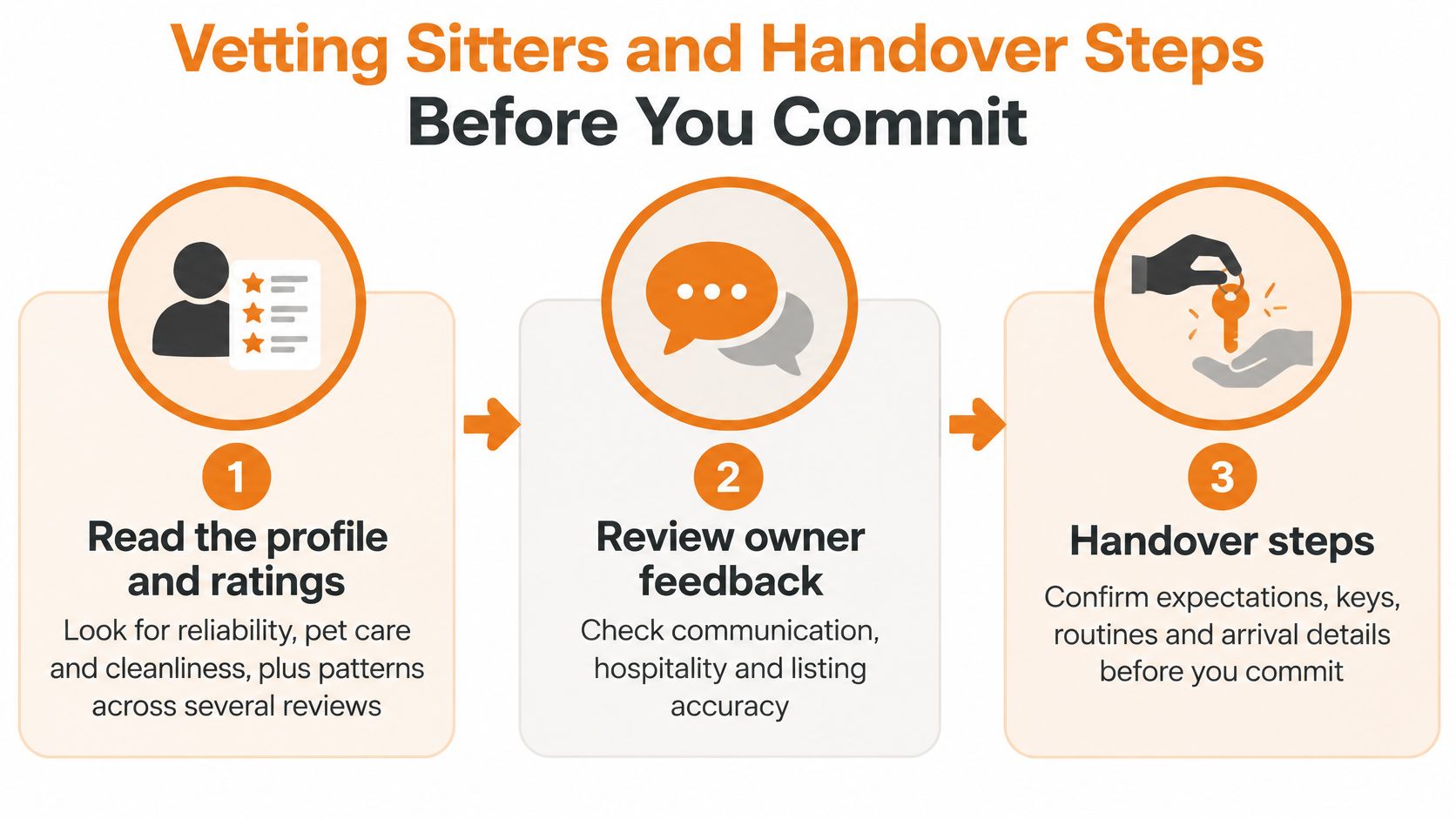
Vetting works in both directions, and it works best as a sequence rather than a gut feeling after one friendly message. Follow these steps in order.
-
Read the profile and ratings carefully. Sitters are rated on reliability, pet care, and cleanliness, while owners are rated on communication, hospitality, and listing accuracy. Look for patterns across several reviews, because one glowing review tells you little and one harsh one may reflect a mismatch rather than a bad sitter.
-
Hold a video call or meet in person. Ask how they'd handle your pet's actual routine, a missed dose, or a dog that pulls towards traffic. Owners who skip this step are choosing based on writing style, and that's the most common vetting mistake.
-
Check experience with your specific animal. General pet love isn't enough. Confirm they've handled your species, breed size, age group, and any medication you need administered, whether that's tablets, drops, or injections.
-
Confirm references and put the arrangement in writing. Speak to at least one reference directly. Then record dates, duties, emergency consent, and the veterinary spending limit so nothing rests on memory.
-
Run the handover. Pet owners must hold a mandatory handover with the sitter before leaving, either in person or by video call. Walk through the care specification, show where the keys, stopcock, and fuse box are, and point out the vet practice you'll use.
-
Agree the first-day check-in. Set the daily update time and confirm how you'll communicate if plans change or a return is delayed.
Questions Sitters Should Ask
Sitters need to vet owners just as carefully. Ask about house rules on smoking, since sitters must not smoke in the owner's property unless expressly permitted. Confirm that pets must not be removed from the property overnight without prior approval, and agree the notice required if you had to leave early, because sitters must not leave a sit early without first informing the owner. A listing that understates the workload is as much a problem as an unreliable sitter.
Red Flags Worth Acting On
Walk away if you see reluctance to share references, pressure to skip the handover, or little interest in the pets' routines. Add vague answers about insurance and emergency contacts to that list. Enthusiasm for the house combined with indifference to the animals is the clearest warning sign of all.
What a UK House Sit Really Costs Each Side
The free stay removes the accommodation bill. It doesn't remove running costs, and assuming it does is how resentment starts. This table shows who usually pays for what in a free-stay arrangement.
| Cost | Usually paid by | Agree before the sit |
|---|---|---|
| Accommodation in the owner's home | Nobody, the sitter gets a free stay | Dates, occupancy and house rules |
| Travel to and from the home | Usually the sitter | Whether the owner contributes to fuel or fares |
| Food for the pets | Usually the owner | Brand, quantity and who buys top-ups |
| Routine vet visits and medication | Usually the owner | Vet practice and medication stock |
| Emergency vet treatment | Owner, with sitter acting to protect the animal | Written authorisation and spending limit |
| Utility bills and household running costs | Usually the owner | Which bills are covered and any cap |
| Paid pet-sitting visits, if used instead | Owner, at the agreed day rate | Rate, visit length and cancellation terms |
Sitter Costs and Owner Costs
Sitters normally cover travel to and from the home, their own phone, food for themselves, and any liability cover they choose to hold. For a sit at the other end of the country, travel can be the biggest single expense, so factor it in before accepting.
Owners normally cover pet food, routine vet visits, medication, and household bills such as utilities. If you want a cap on heating or electricity use during a long winter sit, say so in advance rather than arguing about a bill afterwards. Emergency veterinary treatment sits with the owner, with the sitter acting to protect the animal and written authorisation preventing delays or surprise disputes over cost.
The Paid Alternative and a Worked Example
Some owners pay a daily rate for visits instead of offering a free stay. That's a different arrangement, so the agreement needs the rate, visit length, and cancellation terms spelled out. Our breakdown of how much to pay for a house sitter helps you compare the two models fairly.
Take a two-week sit with one dog. The owner stocks enough of the usual food, leaves medication counted out, and covers routine vet costs and utilities. The sitter pays their own rail fare and buys their own groceries. A short written note confirms who buys food top-ups if supplies run low and how they're reimbursed.
Put the cost split in writing before you travel, then review it after the first week if anything changes.
Confirm the Setup Before You Book Your First Sit
Work through five decisions in order and you will avoid most of the problems that make UK house sitting go wrong.
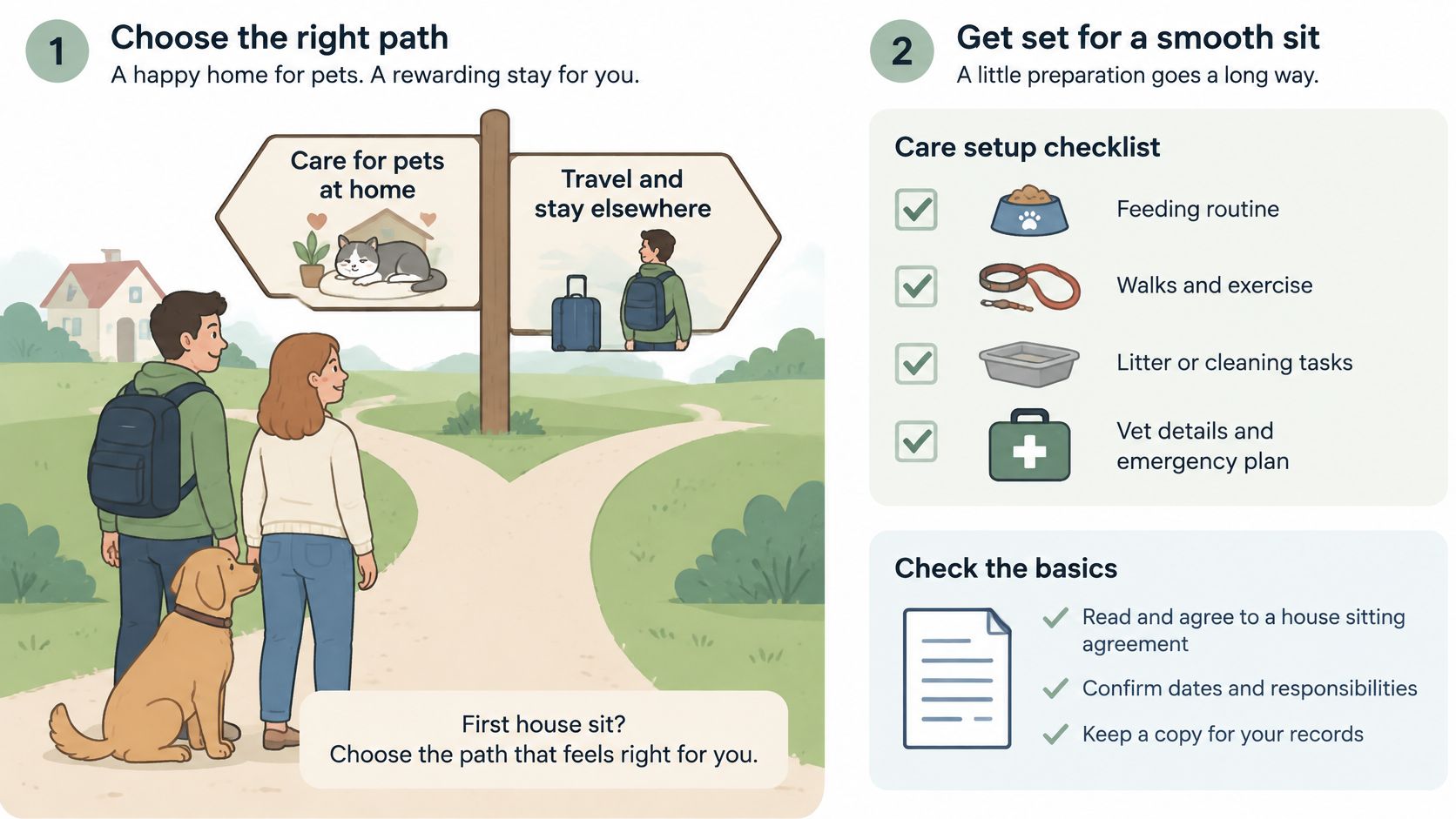
First, decide whether a sit suits your pet. Will they settle at home with a new person, or are they better travelling with you or using a different form of care? Second, confirm the care setup and legal position for your area, including whether pets stay in their own home throughout. Third, check insurance in writing for both the property and any cover the sitter holds.
Fourth, prepare the care specification covering feeding, medication, behaviour triggers, vet details, and emergency authorisation. Fifth, vet the other side through a call or video meeting, then complete the mandatory handover before the owner leaves.
The short video below shows how that preparation looks in practice when owners and sitters work through the details together.
Global Pet Sitter is one place to start, since owners post sits with dates and pet details while sitters browse the map and apply. Global Pet Sitter charges no booking fees, ever, and there's one price whether you are a sitter, an owner, or both, and you can switch roles at any time.
Do one thing this week. Write your care specification and send it to the sitter before you agree dates, so the arrangement starts from the same information on both sides.
Post your dates and pet details, or browse the map for UK sits that match your availability, then use the care specification approach above to agree everything in writing before you travel. Visit Global Pet Sitter to create your profile, message members directly, and set up your first sit with no booking fees.
Please sign in to leave a comment
