Onboarding is the structured process that helps a new participant understand expectations, access the resources they need, build relationships, and become able to contribute independently. It extends well beyond paperwork or a first-day welcome, and only 12% of employees strongly agree that their organization does a great job onboarding new employees.
That difference matters when someone joins a pet-sitting marketplace. A new sitter might have an account and a welcome email, yet still wonder how to contact an owner, what a home's rules mean in practice, or how to show they're trustworthy. A pet owner might have found a promising profile but feel unsure what to check before welcoming someone into their home.
Good onboarding answers those questions in stages. It helps each person take the next step with enough information and support to feel confident, rather than asking them to figure everything out alone.
What Onboarding Really Means Beyond the Welcome
A new sitter receives a login and a friendly greeting. But what should they say in their first message? How do they know whether a sit is right for them? And what does the owner expect when they say their pet needs a familiar routine?
Onboarding is the organized process that helps people find answers to those questions. It gives a new participant clear expectations, useful resources, relationships, and the ability to take part independently. A welcome message can start that process, but it can't do the whole job.
Think of joining a community as moving to a new neighborhood. A map at the door might show the streets, but it won't explain which shop sells what you need, how neighbors handle shared spaces, or whom to ask for help. A guided tour fills in that practical context over time. Onboarding should work the same way: not as a bundle of instructions dropped at the start, but as support that arrives when someone needs it.
Welcome is a moment, onboarding is a journey
The word orientation often refers to an introduction or a first meeting. Onboarding is broader. In employment, effective onboarding includes role clarity, cultural integration, manager involvement, training, social connection, and follow-up through the early months. That wider meaning applies to a marketplace, too. A person needs to understand not just how to open an account, but how to participate safely and successfully.
For a pet owner, that might mean learning what details to include in a sit listing and how to discuss home access. For a sitter, it could mean completing a useful profile, understanding communication expectations, and knowing what to do if plans change. The platform provides the steps and information; the people involved build the relationship.
This way of thinking gives everyone a shared definition. Onboarding isn't finished because someone saw a welcome screen or filled out a form. It's working when a new member understands what happens next, can act with confidence, and knows where to turn for help. Those outcomes matter more than the number of introductory messages delivered.
Why Onboarding Decides Who Stays
An onboarding process can exist on paper and still leave new members unsure, unsupported, or unable to take the next step. The quality of the experience matters as much as whether the activities exist. Gallup found that only 12% of employees strongly agree that their organization does a great job onboarding new employees, a gap between having onboarding activities and making them useful (Gallup's research on the onboarding experience).
The consequences can be substantial. Gallup reports that organizations can lose roughly one-third to two-thirds of new hires within their first 12 months, while about one-third of new employees don't remain for 90 days. Those are workplace findings, not marketplace forecasts. But they show why a confusing start deserves attention: people who don't feel prepared or supported may leave before they have a chance to become confident participants.

Trust is part of the first experience
In a pet-sitting marketplace, a weak start can mean lost participation, not just a forgotten password. An owner who feels uneasy about inviting an unfamiliar person into their home may stop searching. A sitter who can't tell whether a listing is complete or whether an owner will respond may decide not to apply. Neither person has to complain for the process to have failed. They can leave.
That means onboarding should address practical uncertainties before they become reasons to give up. Owners need guidance on what information to share and how to assess a potential match. Sitters need to know how to present their experience and communicate clearly. Both need to understand how trust signals, reviews, and support work.
Gallup also found that employees who strongly agree their onboarding was exceptional are nearly twice as likely to feel fully prepared to excel and 2.3 times more likely to say the job matches or exceeds expectations. For a marketplace, the parallel isn't a promise of identical results. It's a useful design principle: help people feel prepared, set accurate expectations, and make the next step clear. A community that depends on care in someone's home needs more than a sign-up form to build confidence.
Mapping the Stages From Sign-Up to Day 90
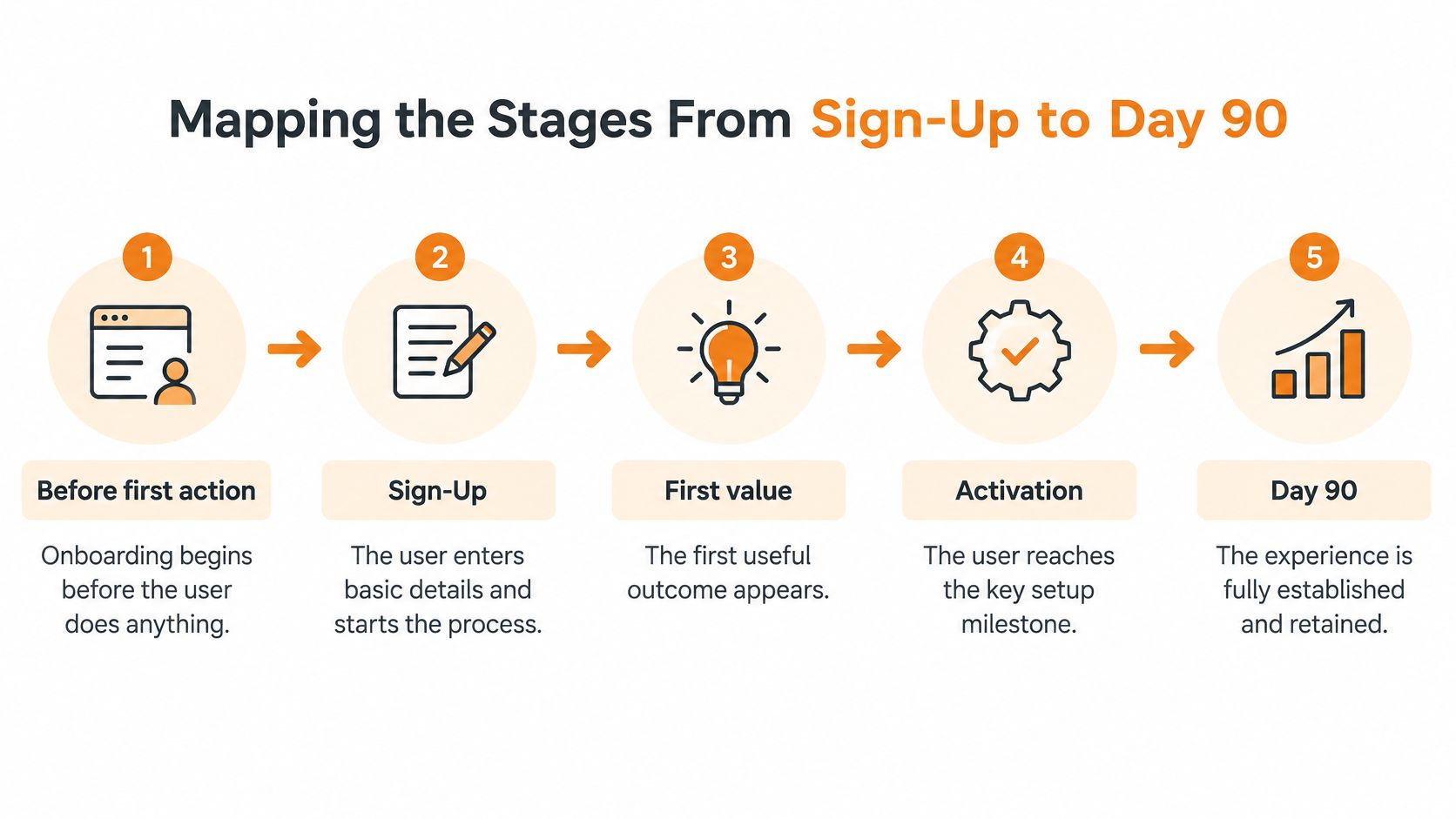
A useful onboarding flow begins before a person's first meaningful action and continues as they learn how to participate. It shouldn't deliver every instruction at once. In a 2025 survey of recently hired U.S. employees, 42% said onboarding overwhelmed them with too much content at once; others reported too little role training or follow-up. These workplace findings point to a practical lesson for any community: give people relevant guidance at the point they can use it (BambooHR's onboarding benchmarking guide).
Start with preparation and expectations
Before someone acts, tell them what information they'll need, what the process involves, and where help is available. The platform team owns this groundwork. A pet owner should understand what makes a useful sit listing; a sitter should know what profile details help owners decide whether they're a fit.
At sign-up, ask for only what's needed to begin. The member supplies basic information, while the platform explains what comes next. The aim is a clear first step, not a long, unexplained questionnaire.
Help each person reach a first useful outcome
Next comes the first value: an owner completes enough sit details to explore suitable candidates, or a sitter completes enough of a profile to start browsing. The member supplies accurate information, and the platform provides prompts and a clear view of what's missing.
Activation is the next meaningful milestone. A person reaches it when they're ready to take a trust-building action, such as sending a thoughtful first message. The platform should make any necessary verification or safety expectations understandable before that action. The member should be able to tell what they can do now and what, if anything, still needs attention.
Keep support in place after the first interaction
A first message or accepted sit doesn't automatically mean someone feels settled. The community support team can provide timely guidance, while owners and sitters clarify care routines, home access, and expectations directly with each other. After a sit, a prompt to leave a review helps members understand how to share useful feedback.
SHRM treats onboarding as an operational process that can be assessed through milestones and feedback, not merely whether introductory information was delivered (SHRM's guide to measuring onboarding success). For a marketplace, the important question at each stage is straightforward: can the member take the next appropriate step, and do they know how?
Verification and Structured Data That Build Trust
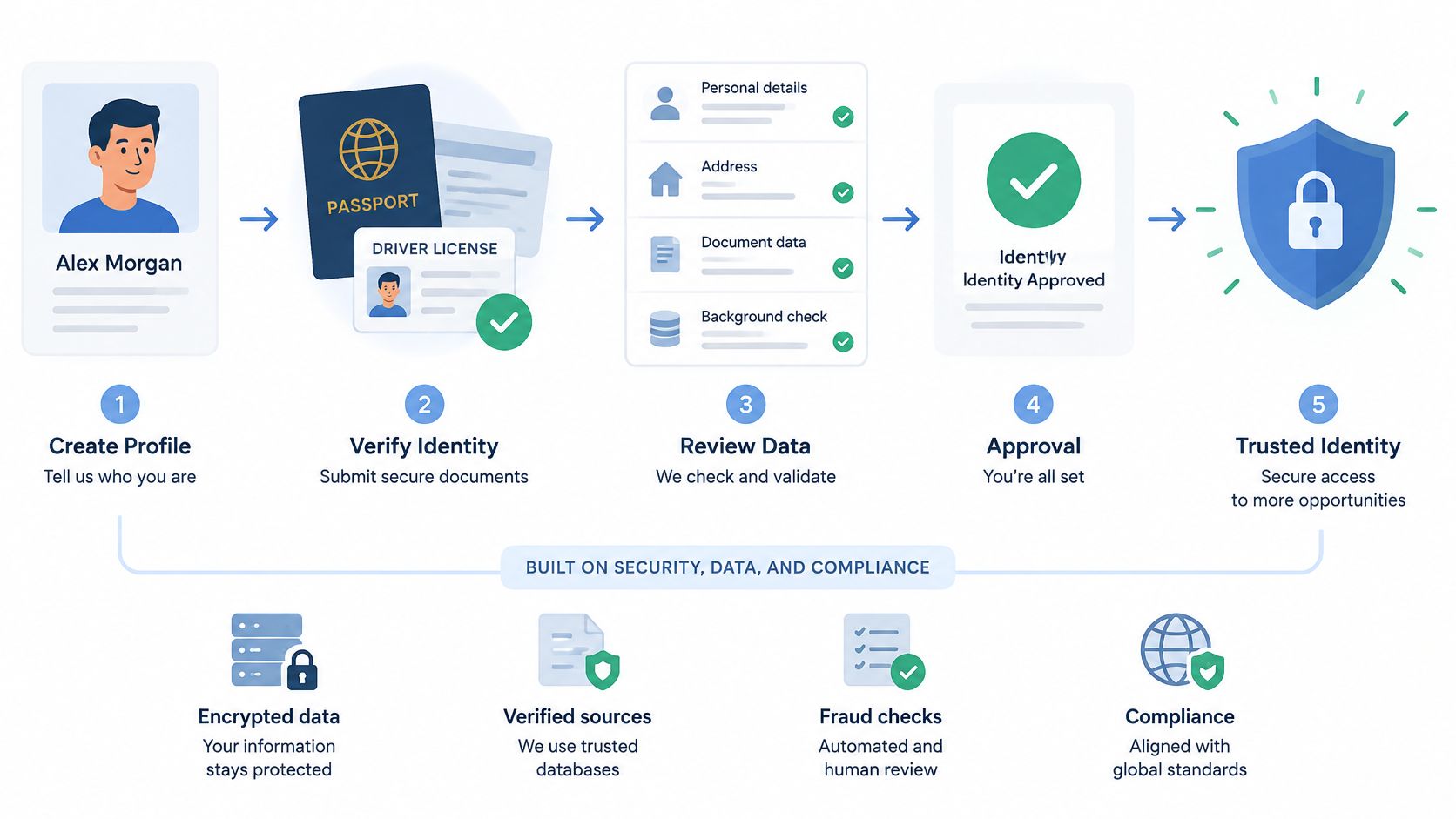
Verification works best as part of an identity lifecycle, not as a single hurdle at registration. NIST describes digital identity onboarding through preparation, identity proofing and enrollment, and actions that follow enrollment. Those steps can happen in one session or be spread over time (NIST's digital identity guidelines).
That separation supports a practical design. Let someone create an account with low-friction basics, then request stronger checks as they move toward actions with greater consequences. Browsing may call for less assurance than contacting an owner or accepting a sit. The right requirement depends on the risk of the action, and the platform should explain why it's asking for information.
Keep verification separate from reputation
Identity checks, platform reviews, imported review evidence, and completed sits can all help a member make a decision. But they don't mean the same thing. An identity check can support confidence that a person's identity has been reviewed; a review describes someone's reported experience. Combining them into one unexplained score hides what each signal tells a member.
Show trust signals with clear origins and labels. That makes it easier for people to judge the evidence for themselves, rather than treating a single badge or score as proof of everything. For more on why clear information helps members assess each other, see this guide to how transparency builds trust.
Verification isn't the end of account protection, either. Initial identity proofing checks who someone is; authentication checks whether they control the credentials used to access the account. Keeping those concepts distinct helps a platform design sensible protections after sign-up, too. A staged approach can reduce unnecessary friction without asking members to take trust-sensitive actions before required checks are complete.
Measuring Whether Onboarding Actually Works
A completed checklist shows that someone delivered the information. It doesn't show whether a new member understood it or could act on it. To learn whether onboarding works, define milestones and watch where people progress, pause, or leave. Useful categories include time-to-productivity, retention, new-user surveys, satisfaction, engagement, performance, and informal feedback.
In employment, time-to-productivity measures how many days someone needs to reach the performance standard expected for their role. For a marketplace, the equivalent is how quickly a new member reaches a useful, appropriate action, and whether delays point to confusing steps, missing information, or necessary verification. For ideas on interpreting behavior patterns, teams can also improve site performance with traffic insights.
| Milestone | What It Reveals |
|---|---|
| Profile-completion rate | Whether members understand which details help them take part |
| Verification completion | Whether the purpose and steps of identity checks are clear |
| Time from registration to first message | How quickly a member reaches an active interaction, and where they may be getting stuck |
| Time to first accepted sit | Whether profiles, listings, and matching give both sides enough information to make a decision |
| First-sit review completion | Whether members know how and why to share feedback after an experience |
| Support-contact frequency | Which steps may be generating repeated questions or uncertainty |
| Return rates at 30, 90, or 180 days | Whether members continue participating after their first experience |
Those time intervals are measurement windows, not claims about expected performance. Compare patterns across member roles, locations, devices, and acquisition sources, then investigate the reasons behind them. A low completion rate might reflect a confusing form, but it could also reflect a verification step that people need explained more clearly.
Pair event data with direct feedback. Ask new members what they expected, what felt unclear, and what would have helped them move forward. Reviews are another useful part of this picture, especially when members can understand who left them and what experience the feedback reflects; see this guide to reputation and reviews. No single metric tells the whole story. Together, milestones and member comments show whether onboarding builds readiness and trust.
Onboarding in Practice for Pet Owners and Sitters
A pet owner is planning a holiday and needs someone to care for their animals at home. A useful onboarding experience helps the owner describe the sit before reaching out to candidates: dates, property location, pet species, daily routines, care requirements, emergency contacts, and any home-access constraints. A sitter can then judge whether the arrangement fits before starting a conversation.
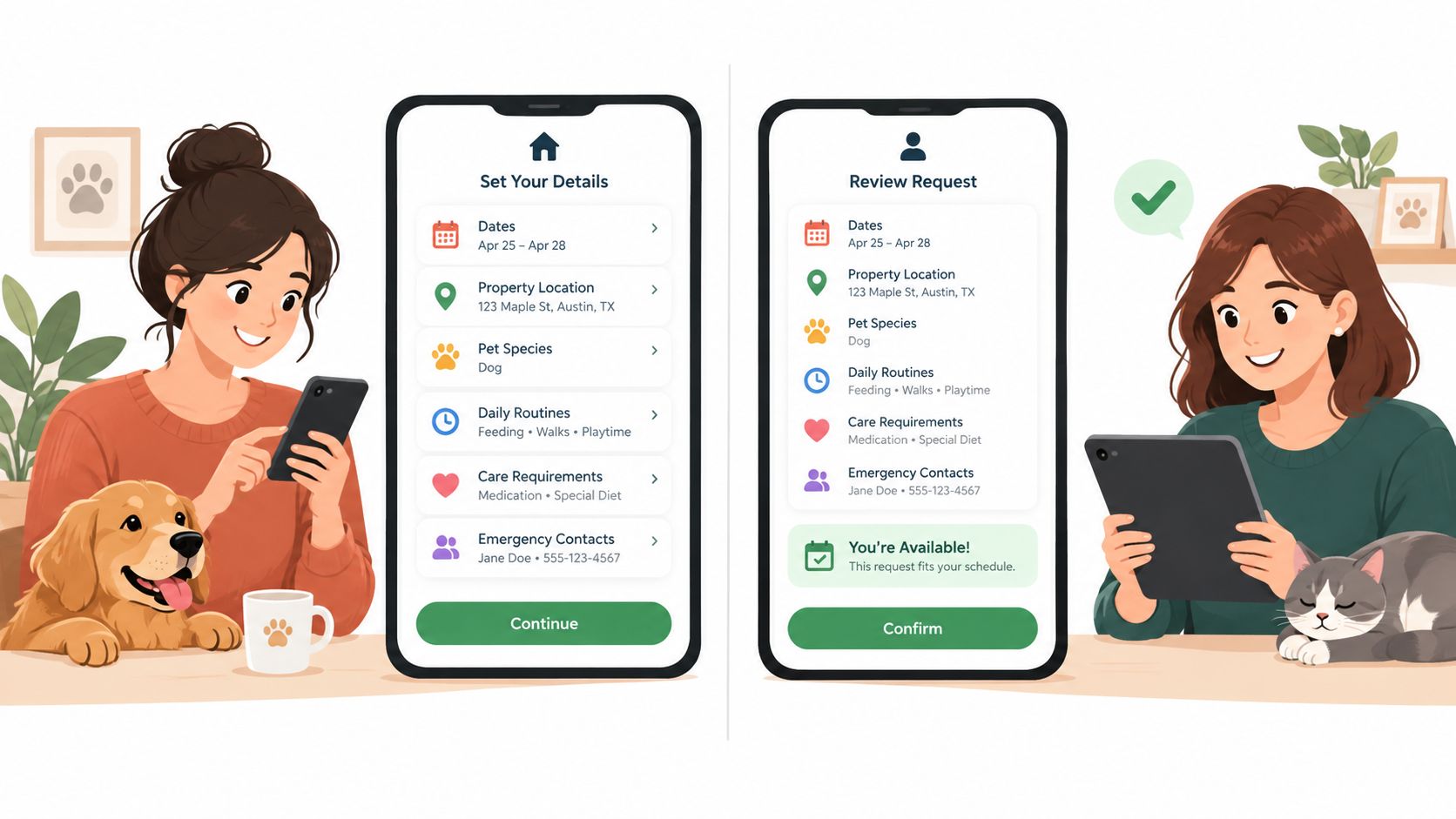
The alternative is a rushed listing that says only that the owner has pets and needs help. A sitter then has to ask about routines, dates, medication, or access one question at a time. That back-and-forth can slow down a good match, while incomplete details make it harder to judge whether the sit is suitable. Structured questions help both sides start with a clearer picture.
Give sitters a way to show fit
Now consider an experienced sitter moving from another platform. A long biography might describe their love of animals, but it won't reliably tell an owner where they travel, which dates work, or whether they can manage a pet's medication. Typed profile fields make those details easier to find and compare: location, travel radius, dates, pet experience, medication capability, references, and response preferences. That structure supports matching without asking people to search through paragraphs for practical facts.
An experienced sitter may also have reviews earned elsewhere. If the platform supports importing review evidence through screenshots, those past experiences can help the sitter establish credibility without asking owners to rely on an unsupported claim. A related sitter information sheet can help organize the details an owner and sitter may need to discuss.
For a first-time member, the difference can be reassuring. Clear prompts help an owner describe a pet's routine; a profile checklist helps a sitter spot missing details; and guidance explains how to start a conversation. By contrast, a rushed profile can lead to unsuitable messages and repeated clarification. The point isn't to collect every detail immediately. It's to ask for the right detail when it helps someone make a sound decision.
See how those member journeys work in this video.
Choosing a Marketplace and Taking the Next Step
Marketplace onboarding often falls into three broad styles. Instant access with minimal checks feels fast, but can leave owners unsure what they can trust. A long form before browsing may gather detail early, but asks people to invest effort before they understand the value. A staged path offers a middle ground: let members begin with useful actions, then add guidance and verification as they approach more sensitive steps.
| Onboarding style | What it offers | Where it can fall short |
|---|---|---|
| Instant access | A quick start for people eager to browse | Owners may want clearer trust signals before contacting a sitter |
| Long form upfront | Many details are collected before participation | First-time users may feel overwhelmed before they see a useful outcome |
| Staged onboarding | Early access with relevant guidance and checks as needed | The platform must explain each step and keep the journey coherent |
A staged experience can serve different needs. Owners looking for reassurance benefit from transparent profiles and clear verification expectations. Sitters benefit from a way to show experience and build credibility. First-time users benefit from guidance that explains what to do next without front-loading every possible instruction.
Global Pet Sitter uses a three-step flow: create a profile, find a match, and connect and care. Owners can post sits with dates and pet details, then message candidates. The platform doesn't handle payments between members; experienced sitters can import five-star reviews from other platforms through screenshots. Members can also vote on features, share feedback, and take part in the community's Facebook group.
The practical next step is to start a profile and either post a sit or browse available opportunities. Early adopters are free and keep lifetime-favored rates when paid plans launch.
If you're looking for in-home pet care or a sit that fits your travels, create a profile and explore the next step at Global Pet Sitter. Its staged profile-to-match flow helps owners and sitters share useful details, build trust, and begin a conversation with clearer expectations.
Please sign in to leave a comment
