You're finalizing a holiday, your sitter has asked for the vet's details, and you've realized you don't know who would pay if your pet needed treatment while you were away. You open a few pet care insurance reviews and find glowing ratings beside furious complaints. Neither tells you whether your pet's particular emergency would be covered.
That's the question worth answering. Buy protection for the bills you couldn't comfortably absorb, and arrange care so nobody has to guess during an emergency. Owners need a usable medical policy. Sitters need clear authority, payment arrangements, and an understanding of their own potential liability.
What Pet Care Insurance Reviews Should Tell You
A useful review describes a claim, not just a feeling. Before trusting someone's recommendation, look for the treatment involved, the coverage purchased, the insurer's decision, and the explanation behind it.
Consumer satisfaction provides context, but it doesn't settle your decision. In a Consumer Reports survey of 3,583 U.S. policyholders conducted in December 2024 and January 2025, 53% were very or completely satisfied, another 33% were somewhat satisfied, and 14% expressed dissatisfaction. Those findings support a balanced reading: dissatisfied reviewers matter, but they don't represent every customer.
| Review detail | Useful evidence | What you can assess |
|---|---|---|
| Policy type | Coverage category and relevant benefits | Whether the review applies to your needs |
| Claim circumstances | Condition, treatment, and eligibility explanation | Whether the decision makes sense |
| Reimbursement timing | Submission, requests for records, and payment sequence | Administrative friction |
| Understanding of exclusions | Specific policy wording behind the decision | Whether expectations matched the contract |
Read the explanation before the rating
Policy type comes first. Praise for preventive-care benefits tells you little about protection against a serious illness. Likewise, a complaint about an excluded treatment doesn't establish that an insurer mishandled an eligible claim.
Next, look for reimbursement timing with context. Did the reviewer submit the requested medical records promptly? Did the insurer explain what was missing, or leave the owner chasing an answer?
Then assess the reviewer's understanding of exclusions. A detailed account that distinguishes an excluded condition from an unexplained denial deserves more weight than an angry sentence with no supporting information.
Practical rule: Trust a review more when you could reconstruct the claim from its details.
Finally, consider the volume and relevance of the feedback. A vivid story can reveal a question to ask, but it shouldn't decide your purchase alone. For sitters, prioritize reviews that discuss emergency authorization and communication with an absent owner, not just whether the owner liked the premium.
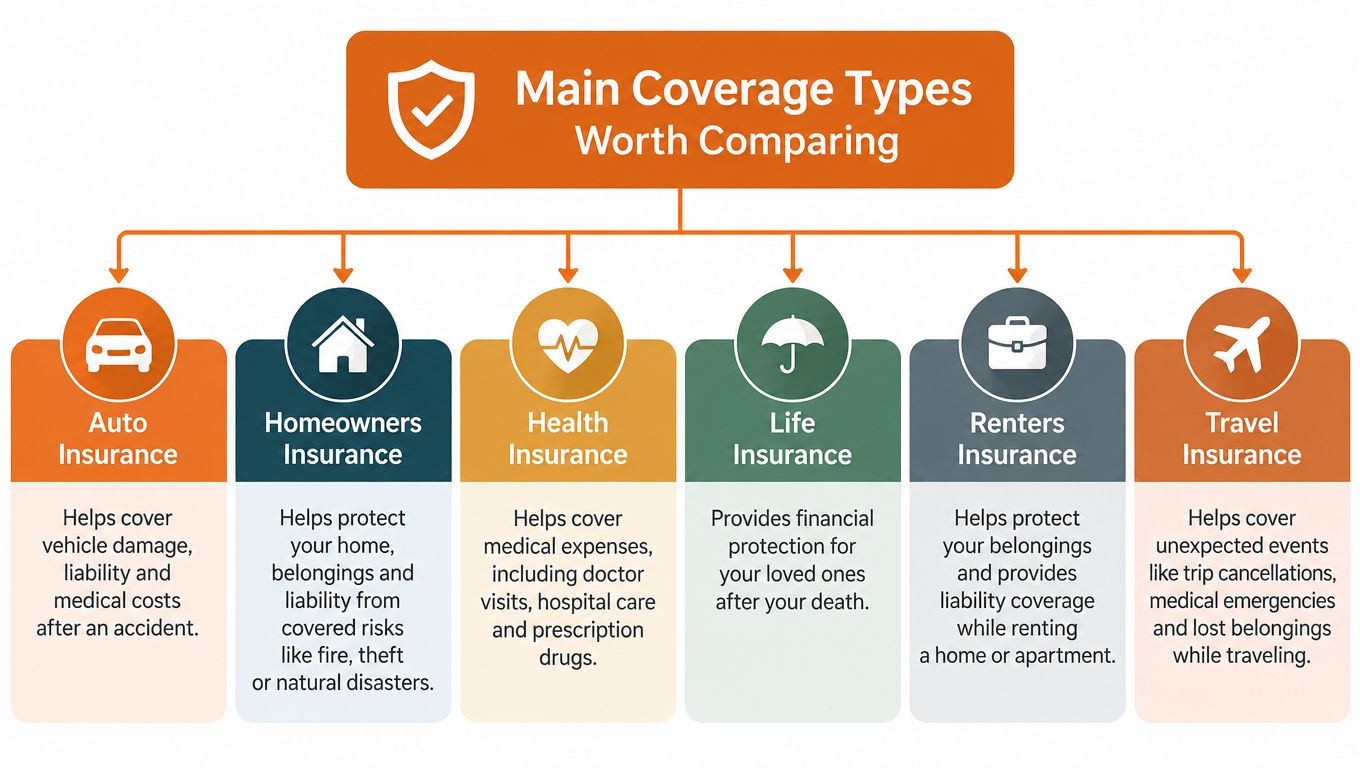
Main Coverage Types Worth Comparing
Compare coverage categories before brands. A policy can perform exactly as written and still be wrong for the situation you're trying to protect against.
Medical protection versus routine budgeting
For accident-only coverage, test a concrete event such as a swallowed object or an injured leg. Ask the insurer whether the diagnosis and proposed treatment would qualify under its accident definition. Don't use an accident-policy review to judge protection against illness.
For accident-and-illness coverage, ask for the relevant wording covering both an unexpected injury and a newly developing disease. My recommendation is to start with this category if your main concern is an unpredictable veterinary bill, then examine the exclusions rather than assuming the category name guarantees payment.
Wellness add-ons deserve a different calculation. Compare the scheduled benefits for services you already intend to purchase, such as vaccinations or preventive appointments, against the add-on's price. Don't buy one because it makes the package sound more complete.
| Coverage category | Scenario to test | Buying question |
|---|---|---|
| Accident-only | Pet swallows a foreign object | Does this event and treatment qualify? |
| Accident and illness | Pet develops a sudden medical problem | Which diagnostic and treatment charges are eligible? |
| Wellness add-on | Planned preventive appointment | Will you actually use the listed benefits? |
| Sitter liability and care-related protection | An incident occurs during a sit | Whose responsibility and expenses are insured? |
Sitters need a separate comparison
An owner's veterinary policy and a sitter's protection answer different questions. Don't assume that arranging treatment under the owner's policy also resolves responsibility for an incident involving the sitter.
Use this pet-sitting liability insurance guide to prepare questions about liability, animals in your care, and the circumstances of the assignment. Ask the insurer to address the actual arrangement, including unpaid sitting or care in the sitter's home.
Care continuity is also a planning requirement, whether or not an insurance product pays associated expenses. If the sitter becomes unavailable, identify who can take over, collect the pet, and authorize treatment. A review that praises medical coverage but ignores those arrangements answers only part of an owner's question.
Reading Premiums and Reimbursement the Right Way
The premium is the visible price. Your financial exposure after a claim is the more important comparison. Don't accept a review's value judgment until you can see how the policy calculates payment.
That example concerns eligible expenses, not necessarily the full veterinary invoice. Ask the insurer to identify which invoice items enter the calculation before comparing the resulting reimbursement with your expected bill.
Normalize the quote before judging value
Request quotes with matching annual limits, deductibles, and reimbursement percentages. Otherwise, you're comparing different amounts of protection, not different prices.
- Deductible structure: Ask when the deductible applies and when it resets. Don't rely on a comparison table that supplies an amount without explaining the mechanism.
- Benefit limits: Check the annual maximum and ask whether narrower limits apply to particular treatments or conditions.
- Eligible charges: Request clarification on examination fees, diagnostics, medication, and follow-up treatment relevant to your pet.
- Payment arrangements: Establish who pays the clinic, who receives reimbursement, and what the insurer requires before processing the claim.
For help navigating definitions, exclusions, and endorsements, use the guide to reading your policy from For The Public Adjusters, Inc. as a reading aid. Your actual policy wording remains the document to resolve with the insurer.
A cheaper premium isn't a saving if you've removed the protection you intended to buy.
For cancer, orthopedic treatment, or an ongoing condition, request a written explanation of how the relevant limits would apply across treatment and follow-up care. Don't invent a likely payout from the headline reimbursement percentage.
Finally, keep affordability practical. Choose a deductible you could pay promptly, not one that only looks manageable in a spreadsheet. If treatment begins while you're traveling, your sitter also needs a workable way to access funds without becoming your emergency lender.
Exclusions and the Claims Gap Reviews Often Miss
A denial doesn't automatically prove poor service. It might expose an unsuitable policy, an unclear explanation, missing evidence, or a disputed interpretation. Those are different problems, and a useful review separates them.
In a MarketWatch survey of 1,000 U.S. pet-insurance owners, 74% rated their provider favorably and 81% considered insurance worth the cost, yet 67% of respondents who had filed claims reported at least one denial. Satisfaction and denied claims can coexist. The reason for the decision matters more than the mere existence of a rejection.
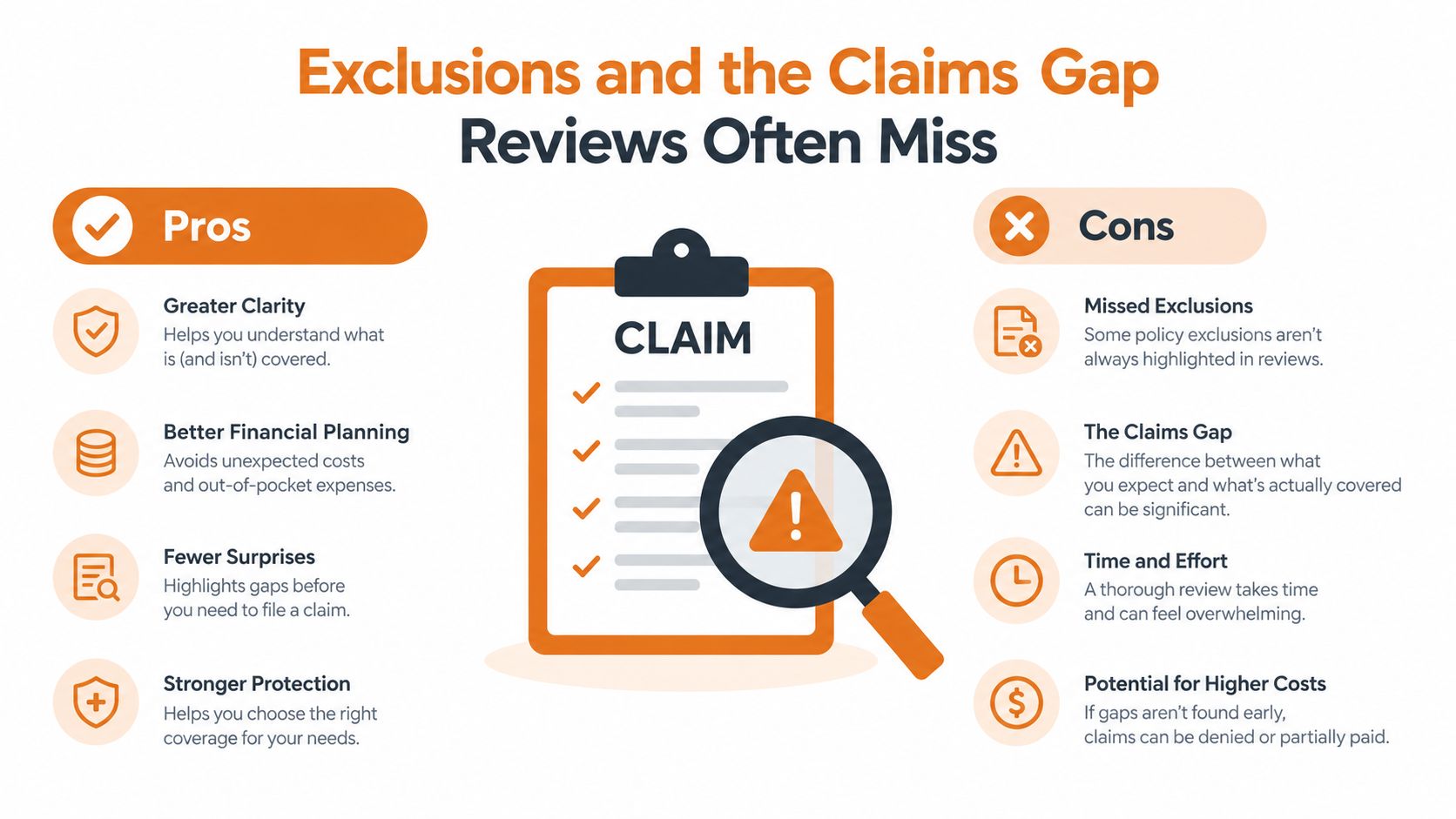
Identify what actually prevented payment
The NAIC pet-insurance reporting framework separates unpaid claims by reasons including inadequate documentation, waiting periods, maximum benefit limits, deductibles, and pre-existing-condition exclusions. Use those distinctions when reading complaints instead of treating every unpaid invoice as the same event.
- Pre-existing conditions: Request the contractual definition and ask how the insurer would assess the pet's existing medical history.
- Hereditary, congenital, and chronic conditions: Ask about eligibility and continuing-treatment restrictions separately.
- Dental and wellness treatment: Get the boundary between eligible medical treatment and excluded preventive services in writing.
- Waiting periods and records: Confirm the effective dates and documentation needed to establish eligibility.
A review should identify the condition, when coverage began, when symptoms appeared, and what records were supplied. Without that context, you can't tell whether the complaint concerns communication or the policy's design.
For a second reading aid, the tips from My Policy Quote can accompany your review of the contract. Use them to organize questions, not as a substitute for the insurer's answer about your pet.
My recommendation is to request the exact clause behind any disputed decision. If the wording clearly excludes the care you want protected, better customer service won't make that policy suitable. If the insurer can't explain its decision clearly, treat that as a separate concern.
Side-by-Side Scoring of Leading Review Criteria
Don't award a provider a high score because its website lists attractive benefits. Award it consideration when the evidence supports the protection you need.
There isn't enough provider-specific evidence here to name a winning insurer responsibly. Instead, score the quality of the review and the suitability of the contract separately. A well-documented review can describe a policy you still shouldn't buy.
Pet Insurance Review Scoring Framework
| Criterion | What to Look For | Red Flag |
|---|---|---|
| Overall satisfaction | Relevant feedback with enough context to interpret it | An average rating presented as a verdict |
| Claims transparency | Itemized decisions tied to policy wording | Unexplained deductions or unclear reasoning |
| Premium-to-protection ratio | Equivalent coverage settings and realistic exposure | Cheapest premium wins automatically |
| Exclusion breadth | Accessible definitions and condition-specific answers | Broad promises without the contract |
| Service responsiveness | Clear answers and a documented resolution process | Friendly sales contact but evasive claim answers |
| Owner-sitter usability | Confirmed authority, payment, and submission arrangements | Everyone assumes someone else can handle it |
Mark each criterion supported, unclear, or unsuitable. Don't let attractive features cancel an unsuitable result on a nonnegotiable requirement. If your pet's relevant condition falls outside the coverage, an appealing app doesn't fix the problem.
Weight the evidence around your situation
An owner who can manage paperwork but can't absorb substantial treatment costs should prioritize eligible benefits and limits. A frequent traveler should also give significant weight to whether another person can coordinate treatment without repeated administrative obstacles.
For a sitter, an owner's positive experience is useful background, not authorization. Ask for the arrangement that applies to this assignment.
A comparison resource from another insurance category, Wealth Collective's how to find the right income protection, can provide an additional reference for approaching policy selection. It isn't pet-insurance evidence and shouldn't be used to infer veterinary benefits.
Decision standard: A provider earns your shortlist by answering your difficult questions before you pay.
Keep the insurer's written responses beside the policy documents. When reviews disagree, compare the circumstances behind them with those responses. That produces a more defensible choice than trying to determine which reviewer sounded most convincing.
Real Scenarios for Owners and Sitters
The following are hypothetical claim rehearsals, not customer case studies. Use them to test the arrangements before anyone leaves home.
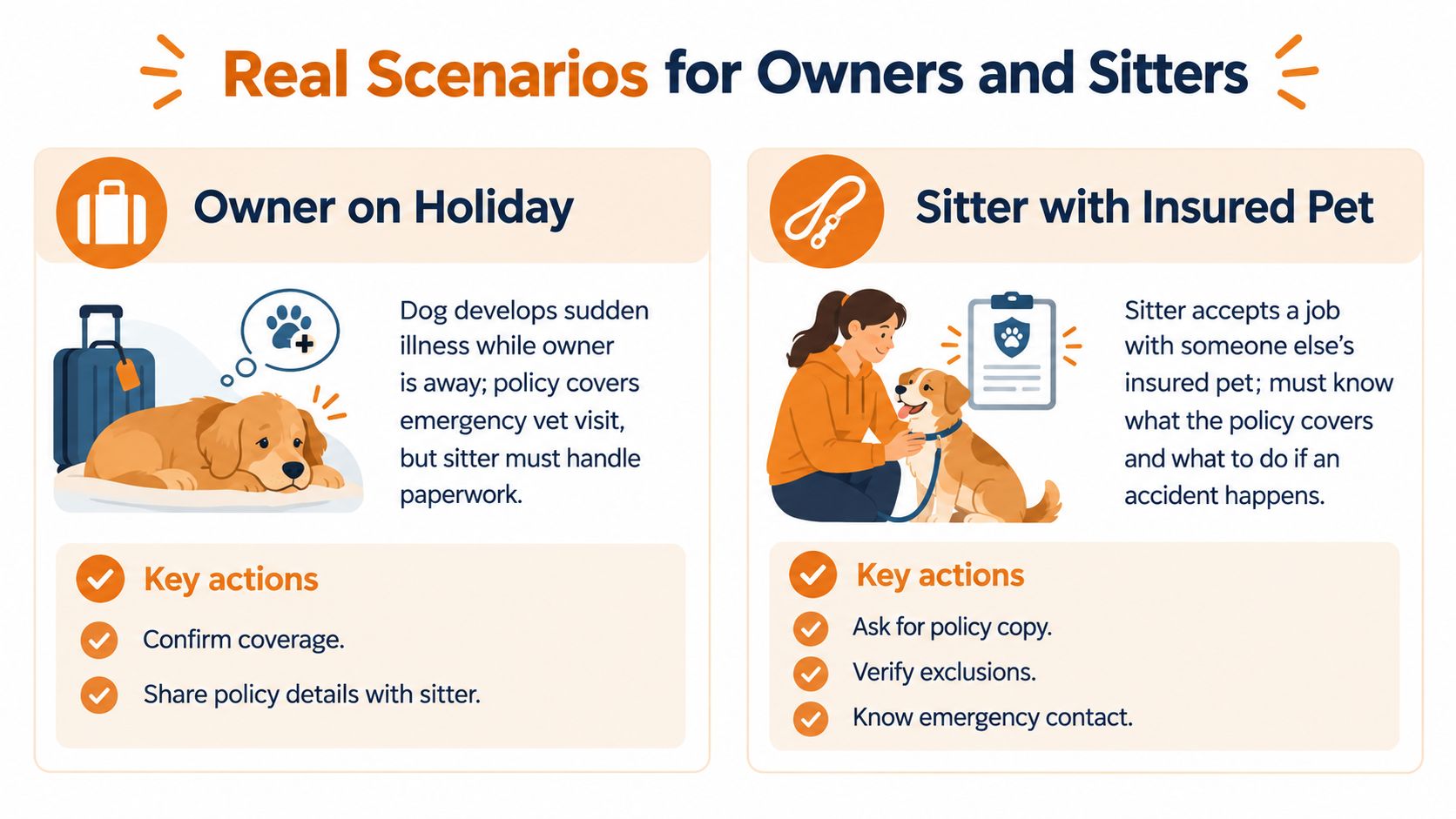
An owner is abroad when the dog becomes ill
The sitter notices repeated vomiting and contacts the veterinary clinic. The owner's practical need is immediate: someone must communicate the symptoms, arrange transport, authorize appropriate care, and handle payment.
Ask the insurer beforehand how the illness would be assessed under the actual policy. An accident-only contract shouldn't be treated as general illness protection, while an accident-and-illness label still requires an eligibility decision.
The sitter should record the symptom timeline, retain the clinic's instructions, and send the owner the treatment documents. Agree in advance who submits the claim and who follows up if the insurer requests earlier records.
The owner's trip abroad and the pet receiving treatment abroad are different circumstances. Ask about each separately if international care is possible. Don't infer territorial coverage from a review about an owner who merely traveled overseas.
A cat needs urgent dental treatment at the sitter's home
The sitter notices that the cat won't eat and appears uncomfortable. The veterinarian must establish the cause; the sitter shouldn't assume that urgency makes the treatment eligible.
Ask how the policy distinguishes dental injury, dental disease, and preventive treatment. Then confirm whether the temporary care address affects any relevant terms and whether the sitter has authority to approve the recommended work.
Separately, if someone alleges that the sitter caused an injury, seek advice under the sitter's applicable protection. Don't treat the owner's veterinary claim as an answer to that allegation.
Use a pet-sitting contract template to document emergency contacts, treatment authority, spending arrangements, and handover responsibilities. For rotating sitters, maintain a shared care log so the next person can see symptoms, medication instructions, appointments, and outstanding questions.
The strongest rehearsal ends with named responsibilities. The owner handles coverage decisions and funding arrangements; the sitter knows the care instructions, escalation route, and records to preserve.
Choosing the Right Policy for Your Situation
Choose around the loss you need help absorbing, not around the most attractive review headline. There's no defensible universal deductible or annual limit without knowing your finances, your pet, and the contract.
Recommendations by owner and sitter situation
- A cat owner seeking major-emergency protection: Start by comparing accident-and-illness policies. Choose a deductible you can fund immediately and assess the annual limit against a serious treatment course, rather than selecting the cheapest available setting.
- A dog owner concerned about orthopedic problems: Prioritize written answers about orthopedic eligibility, hereditary conditions, waiting periods, and rehabilitation. Don't proceed while the treatment category you most want protected remains unclear.
- An active sitter caring for different animals: Compare protection applicable to your sitting activities separately from each owner's medical insurance. Ask about the locations, animals, and working arrangements you accept.
- A frequently traveling owner: Favor a contract and administration process you can use while away. Confirm territorial terms, access to documents, communication permissions, and backup decision-makers before departure.
When narrower coverage is reasonable
I'd consider accident-only coverage only if you deliberately accept the financial risk of illness. That's a budget decision, not an equivalent substitute for broader medical protection.
I'd buy a wellness add-on only after checking its schedule against planned care. If the benefit doesn't justify the price and administrative effort for your pet, keep the money in your own care budget instead.
For chronic medication, request an explanation of ongoing eligibility and renewal-related terms before buying. For a sitter assignment, insist on a payment plan that works even if the owner is temporarily unreachable.
Don't chase the highest deductible merely to lower the premium. Equally, don't pay for a low deductible that forces you to compromise on the protection you need.
My final filter is simple: Can you explain, in ordinary language, what this policy is intended to pay and what you'll remain responsible for? If not, keep asking questions before you commit.
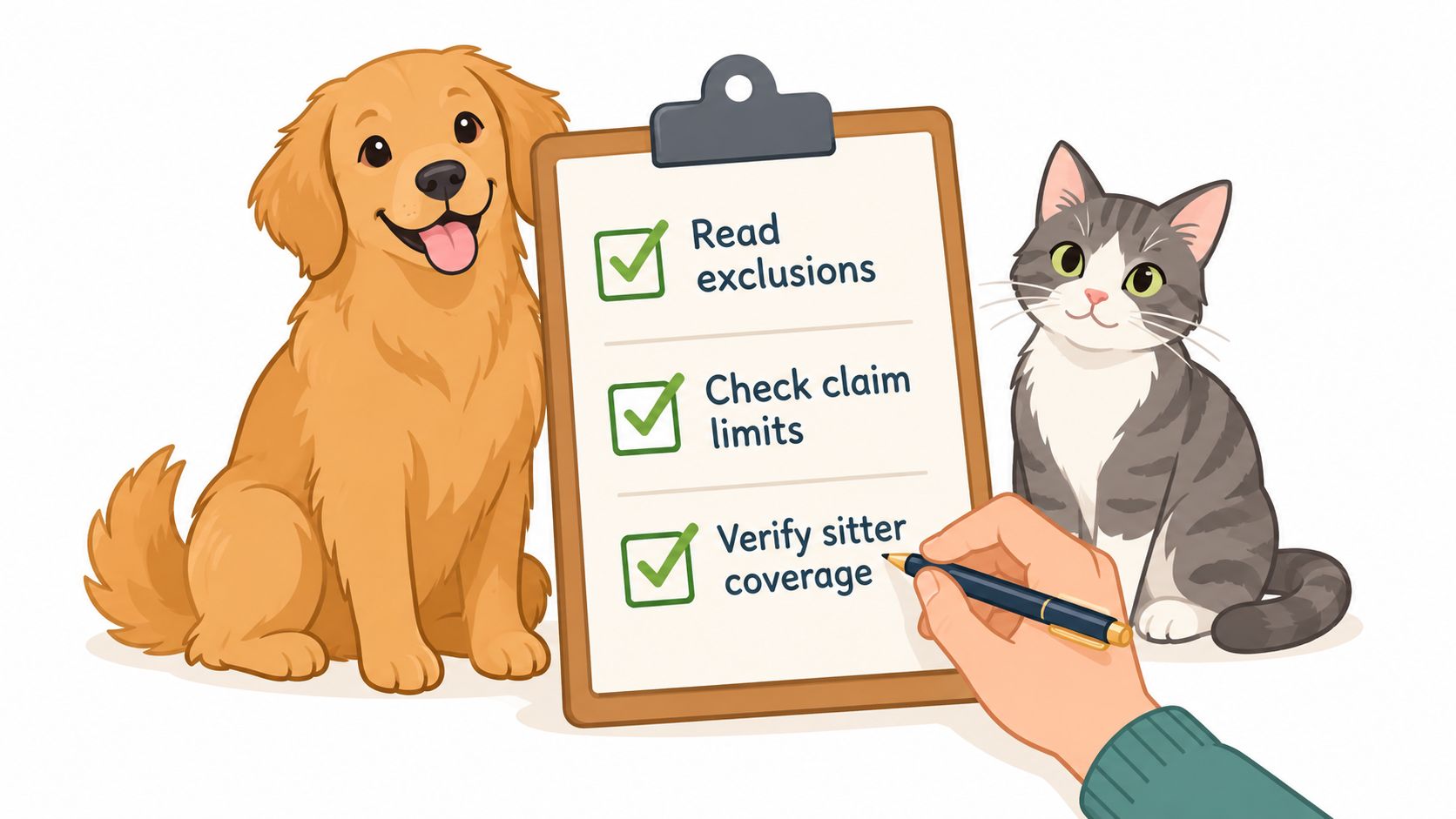
A Quick Checklist Before You Buy or Sit
Save the answers somewhere both owner and sitter can access. Use this guide to verifying insurance coverage to organize the confirmation process.
- With the insurer: Confirm relevant benefits, effective dates, location restrictions, and claim requirements.
- With the owner: Agree on veterinary contacts, treatment authority, available funds, and backup care.
- In writing: Save the policy, insurer responses, care instructions, and emergency agreement.
Questions owners and sitters ask
Is pet insurance worth it?
Judge it against the eligible veterinary costs you couldn't comfortably pay yourself. Don't assess it solely by whether routine reimbursements exceed premiums.
What counts as pre-existing?
Use the policy's definition and request an assessment of relevant history. Don't guess from the diagnosis date alone.
How long does reimbursement take?
There's no universal timeline established here. Ask about processing expectations, missing-record requests, and escalation.
Can a sitter use the owner's policy?
Don't assume so. Confirm treatment authority, communication permissions, claim submission, and the reimbursement recipient before the sit begins.
For arranging care alongside your insurance preparations, Global Pet Sitter is a house- and pet-sitting marketplace connecting owners with sitters worldwide. Visit to explore a match, then discuss emergency responsibilities and share the relevant documents before confirming the sit.
Inicie sesión para dejar un comentario
