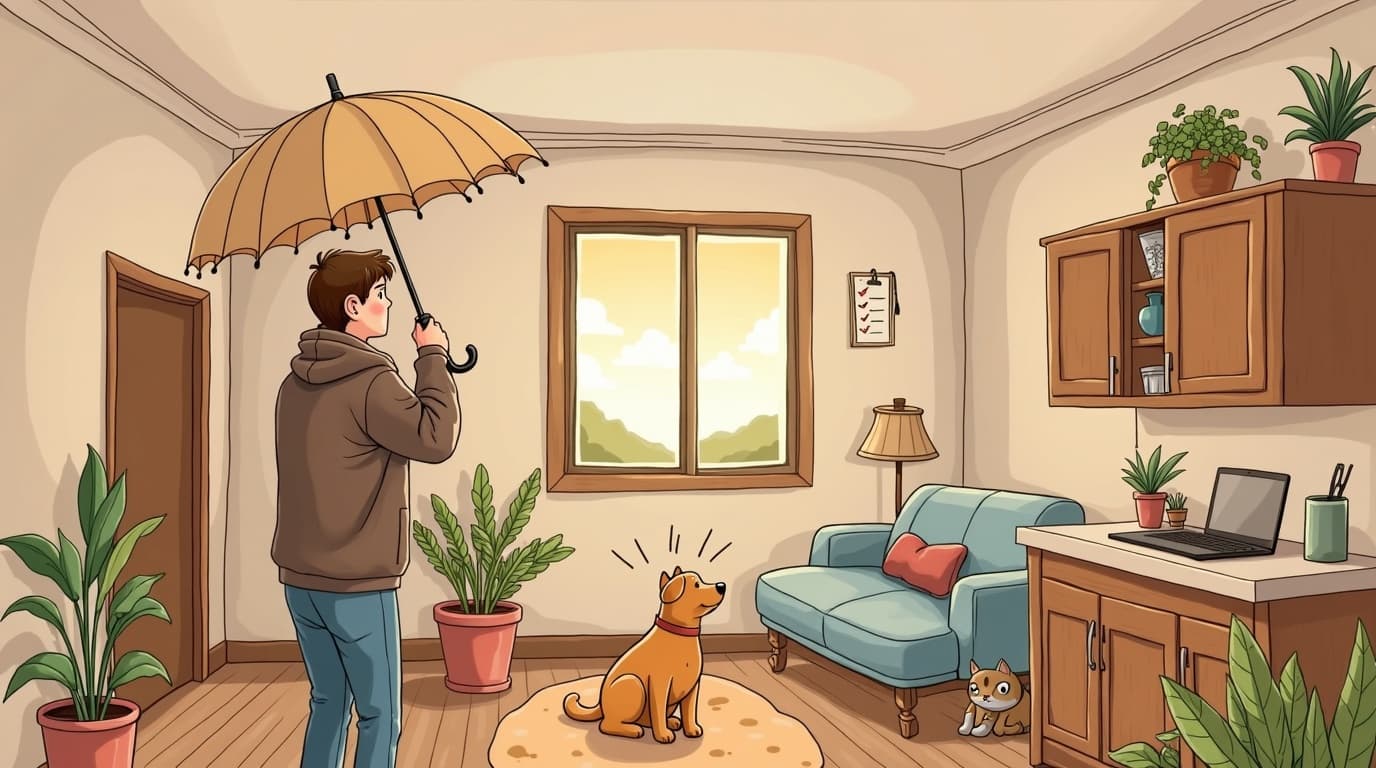
Insurance is a topic no one likes to think about -until something goes wrong. Whether you're working as a house sitter in someone's home or, as a homeowner, giving your keys to someone else: knowing what is and isn't covered can save you from a financial nightmare.
Why Insurance Matters for Both Sides
Let's be honest: most house-sitting assignments go off without a hitch. The pets are fed, the plants are watered, and everyone is happy. But what if something does go wrong? That's when you truly realize that insurance isn't a luxury, but an absolute necessity.
For homeowners, the risk is straightforward: you're letting someone live in your home, use your appliances, and care for your animals. If a pipe bursts and the sitter doesn't notice for two days, or the dog escapes and causes damage to a neighbor's property, who pays? Your standard homeowner's policy might cover some of it, but there are gaps you wouldn't expect.
For sitters, the risk is different but just as real. What if a pet bites you and you need medical treatment? What if you accidentally break an expensive piece of furniture? What if you slip on wet stairs and can't work for a month? Without coverage, you're personally liable for damages and personally responsible for your own medical bills.
The hard truth is that trust alone does not provide a financial safety net. You may like someone and be convinced that they are responsible, but you could still suffer financial loss if neither of you has the right insurance coverage. The best house-sitting arrangements are based on mutual trust and the right protection.
What Pet Sitting Insurance Typically Covers
Pet-sitting insurance, also known as pet care insurance or liability insurance for pet sitters, is designed for people who care for other people's pets. This insurance differs from general liability insurance, and that difference is important.
Standard coverage usually includes:
- Animal bailee coverage - if a pet in your care gets injured, lost, or dies, this covers veterinary bills or the pet's value
- General liability - property damage or bodily injury to third parties (like if the dog you're walking bites a passerby)
- Care, custody, and control - damage to a client's property while you're staying there
- Professional liability - claims that you were negligent in your duties
What it usually does NOT cover:
- Pre-existing conditions in the pet
- Damage to your own belongings
- Injuries to you (that's what your own health insurance is for)
- Intentional harm or gross negligence
- Exotic animals or breeds excluded in the policy
Insurance premiums and coverage vary widely. Basic insurance costs about $15 to $42 per month, depending on the provider and the level of coverage, while comprehensive insurance with higher coverage limits can cost $50 to $60 per month. If you work full-time as a pet sitter through platforms like Global Pet Sitter, this is a business expense that you should include in your budget.
Always read the fine print. For example, an insurance policy that covers pet care may not cover house-sitting, and vice versa. Ask the insurer directly: Am I covered if I stay at someone else's home to care for their pets?
Homeowner's Insurance and the Gaps You Don't Know About
Most homeowners assume that their current insurance covers everything that happens in their home. That's true -but only partly.
Standard homeowners insurance typically covers structural damage and liability for injuries that occur on your property. So if your house sitter trips on a broken step and sues you, your insurance will likely cover it. If a tree falls on the roof while you're away, that's covered too.
Many insurance policies exclude coverage for damage caused by non-residents or for certain types of negligence. If your house-sitter leaves a lit candle burning and causes a fire as a result, some insurers may argue that you allowed an unauthorized person into your home. Other insurers may settle the claim without any issues. It depends entirely on your policy.
The biggest gap usually concerns the house sitter's personal belongings and their liability. Your home insurance covers you, but not the house sitter. If the house sitter breaks your TV, your insurance may cover the damage, but your insurer can then recover the costs from the house sitter (subrogation).
Before you leave for your trip, call your insurance company and ask:
- Is my property covered if someone is house sitting for me?
- Does my liability coverage extend to injuries the sitter might sustain?
- Are there any exclusions I should know about regarding temporary occupants?
- Do I need to notify you that someone will be staying in my home?
Some insurers require that you notify them if someone stays at your home for more than a certain number of days. If you fail to do so, this could give them grounds to deny a claim.
Platform-Provided Insurance vs Standalone Policies
Some pet-sitting and house-sitting platforms offer insurance or guarantees as part of their services. It sounds great on paper, but you need to know exactly what you're getting in return.
Platform guarantees offered by some house-sitting platforms typically serve as a safety net for bookings made through the platform. They may cover property damage up to a certain amount, provide emergency assistance, or mediate in disputes. These are valuable services, but they are not the same as independent insurance. Not all platforms offer guarantees; be sure to check exactly what your specific platform offers before relying on it.
Key differences:
- Platform guarantees usually have lower coverage limits than standalone policies
- They often only apply to sits booked through the platform - if you take a sit off-platform, you're unprotected
- Claims processes can be slower and may require platform mediation
- Some platform guarantees are more like damage deposits than actual insurance
Standalone policies give you more control:
- Higher coverage limits (often $1M+ for liability)
- Coverage regardless of how you found the sit
- Direct relationship with the insurer for claims
- More comprehensive coverage options
The smartest choice? Use both. Let the platform's warranty serve as your first line of defense and take out your own insurance as a backup. This is especially important for sitters who do this regularly: the platform's coverage is a nice bonus, but it shouldn't be your only safety net.
Homeowners should not assume that the platform's coverage replaces their own home insurance. It is intended to supplement it. If something serious happens, you want your own policy to cover the major expenses.
Liability: Accidents vs Negligence
This is where things get interesting from a legal standpoint, and where most people get confused.
An accident is something that happens despite reasonable care. The dog slips its collar during a walk despite the sitter holding on properly. A pipe bursts in the wall with no warning signs. A cat knocks over a lamp while the sitter is in another room. These are genuine accidents, and insurance generally covers them without fuss.
Negligence is a failure to exercise reasonable care. Leaving the front door open and the dog escapes. Ignoring a pet's medication schedule. Not cleaning up water on the floor that then causes damage. When negligence is involved, insurance still typically covers the damage - but the insurer might increase premiums, and in extreme cases, they could deny coverage.
Gross negligence is a completely different matter. This refers to reckless disregard for safety, such as leaving pets without food or water for days on end, or throwing a party that results in damage to the home. In most policies, gross negligence is completely excluded, and you may then be held personally liable.
Here's a practical tip for pet sitters: document everything. Take photos as soon as you arrive. Note the condition of the home and the pets' health. Follow the care instructions carefully. If something goes wrong even though you've done everything right, evidence is your best friend.
For homeowners: provide clear, written instructions. If your pet has a medical condition, document it. If there are any peculiarities about the house (the dishwasher sometimes leaks, the back gate doesn't close properly), make a note of them. If you fail to report a known problem and the pet sitter gets injured or the pet becomes ill, you could be held liable for negligence.
Do You Need a Written Agreement?
Short answer: Yes. Always.
A written agreement between the homeowner and the house sitter isn't just a formality; it's a document that protects both of you and can be decisive in the event of an insurance claim. Insurance companies love documentation. Judges love documentation. And when memories of what was agreed upon differ, that written agreement is the deciding factor.
A good house sitting agreement should include:
- Dates and duration of the sit
- Pet care responsibilities - feeding schedules, medications, exercise requirements, vet contact info
- House rules - guests allowed? Smoking? Use of car?
- Emergency procedures - who to call, what authority the sitter has to make veterinary decisions and up to what cost
- Insurance details - what coverage each party has
- Liability expectations - who's responsible for what types of damage
- Cancellation terms - what happens if either party needs to cancel
- Compensation details - if applicable, what the sitter is being paid or what benefits they receive
You don't need a lawyer for this. A clear, signed document that both parties agree to is usually sufficient. Many platforms, including GPS, offer messaging and contract drafting features that create a paper trail.
The key point: verbal agreements are difficult to enforce. If you agreed over the phone that the homeowner would reimburse veterinary costs up to $500, but there's nothing in writing, you'll end up in a situation where it's one person's word against another's. Put it in writing, even if that feels a bit awkward. The people for whom it's worth taking care of will appreciate that professionalism.
Practical Steps to Get Covered
So what exactly should you do? Here's a practical checklist for both parties.
If you're a sitter:
- Get a standalone pet sitting liability policy if you sit regularly - providers like Pet Sitters International (which connects members with group-rate insurance through partner providers), Pet Care Insurance, and various local providers offer them
- Make sure it covers house sitting specifically, not just drop-in visits
- Carry renter's insurance if you don't own a home - some policies extend liability coverage to temporary residences
- Keep your own health insurance current, because pet sitting insurance won't cover your injuries
- Ask homeowners about their insurance before accepting a sit
If you're a homeowner:
- Call your homeowner's insurance company and disclose that you'll have a house sitter
- Ask specifically about coverage gaps for temporary occupants
- Consider an umbrella policy if you have significant assets to protect - they're surprisingly affordable ($200-400/year for $1M in coverage)
- Verify that the sitter has their own insurance, especially for pet care liability
- Use a reputable platform like GPS that provides identity verification, reviews, and on-platform messaging for a verifiable record
For both:
- Never skip the written agreement
- Take timestamped photos of the home before and after the sit
- Keep all communication on-platform where possible - it creates a verifiable record
- Save receipts for any expenses, especially emergency vet visits
- Know your local laws - some jurisdictions have specific regulations about temporary occupants and pet care liability
Insurance isn't exactly exciting. It's not the reason why someone starts pet sitting. But thanks to insurance, you can enjoy the experience without any worries, knowing that you won't be left holding the financial bag if something unexpected happens.
House Sitting Insurance Checklist
Make sure both sides are covered before the sit begins