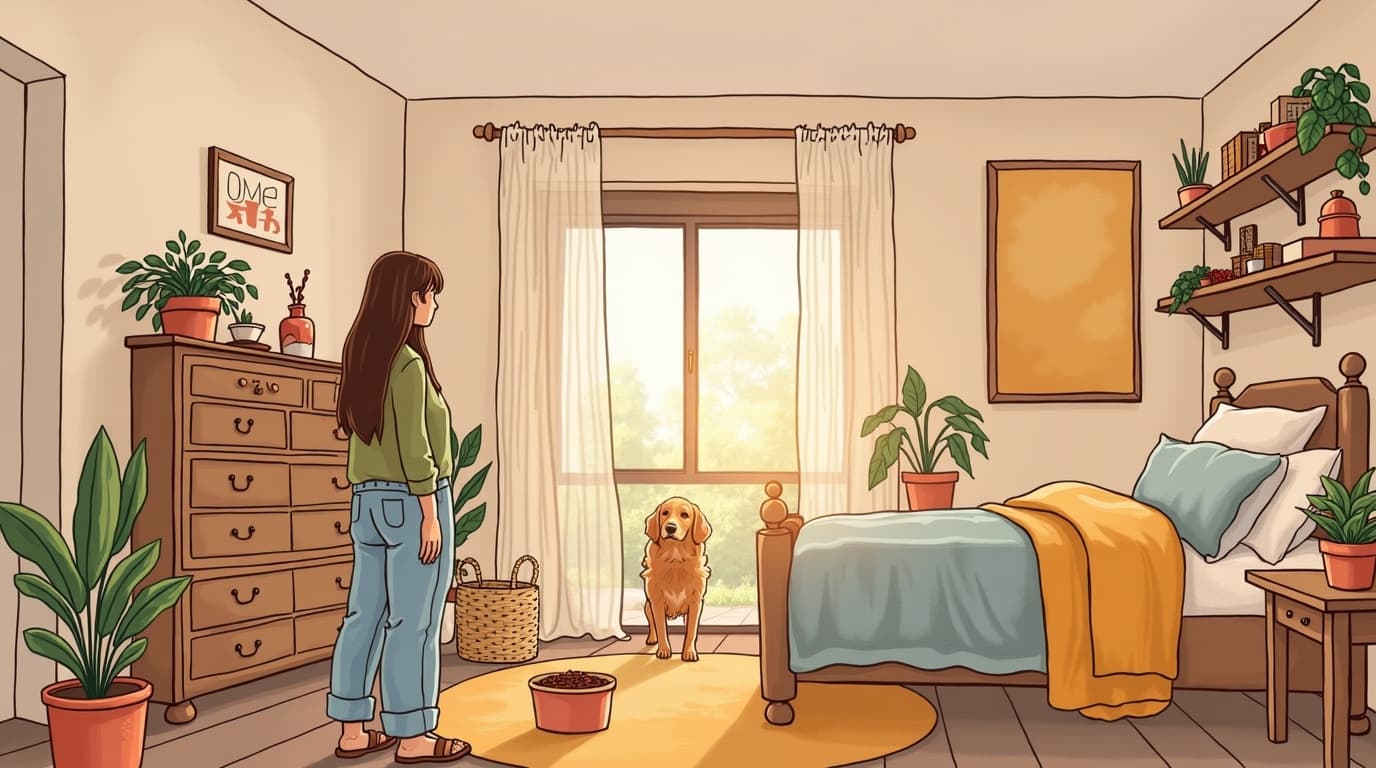
A well-prepared home makes all the difference between a smooth house-sitting experience and a stressful situation. Here you'll find everything you need to do before handing over the keys, from a thorough cleaning to putting together a welcome kit that will help your house-sitter feel right at home.
Deep Cleaning and Decluttering
You don't need to hire a professional cleaning service, but you should leave your home in a condition that you yourself would be happy to walk into. That means clean bathrooms, fresh linens, and a kitchen where last week's dishes aren't still sitting in the sink.
Start with the rooms your house sitter will use most often: the bedroom, the bathroom, the kitchen, and the living areas. Vacuum, mop the floors, wipe down surfaces, and make sure there are no "scientific experiments" in the fridge. If you have a guest room that also serves as storage space, now is the time to clear it out.
Decluttering isn't just about appearances. A tidy home is easier for your house sitter to manage and keep clean. Clear off the countertop, organize the essentials in the pantry, and make sure there's actually room in the closet for your house sitter's clothes. No one wants to live out of a suitcase for two weeks because all the drawers are crammed full.
Don't forget about your pets' areas, either. Clean the litter boxes, wash their beds, and make sure their feeding areas are tidy. Your pet sitter will be taking care of these areas, so make sure they have a clean start.
Securing Valuables and Personal Items
This isn't about trust; it's about making sure everyone feels at ease. Even the most trustworthy house sitter will feel uncomfortable if they're surrounded by expensive jewelry, important documents, or personal belongings that are clearly not meant to be seen by them.
Store your valuables in a safe or a locked room. This includes, for example:
- Jewelry and watches - anything you'd be devastated to lose
- Important documents - passports, birth certificates, financial records
- Prescription medication - yours, not the pet's
- Sentimental items - irreplaceable family heirlooms
- Cash - keep only what your sitter might need for emergencies
If you have a home office with confidential work documents, you might want to consider locking that room as well. Let your house sitter know which rooms or cabinets are off-limits; they'll appreciate the clarity rather than having to guess.
This also helps you avoid awkward conversations. If something goes missing and you didn't secure it properly, the situation becomes uncomfortable for everyone. Prevention is always better than arguing about it later.
Stocking Essentials for Your Sitter
Your house sitter is leaving their own home to look after yours. The least you can do is make sure they don't arrive to find an empty fridge and no toilet paper.
Make sure you have the essentials at home before you leave:
- Bathroom: Fresh towels, toilet paper, soap, shampoo, a clean bath mat
- Kitchen: Tea, coffee, milk, sugar, cooking oil, salt and pepper, basic condiments
- Cleaning: Dish soap, sponges, bin bags, laundry detergent, surface cleaner
- Household: Light bulbs, batteries, a basic toolkit
You don't need to stock the fridge with fancy ingredients, but it's a thoughtful gesture to have enough on hand for a few simple meals. Think bread, butter, eggs, pasta, and some fresh fruit. Your house sitter might arrive late and tired, and it really makes a difference if they don't have to go looking for a grocery store right away.
If you have special cleaning products for certain surfaces (marble countertops, hardwood floors), please have them ready with a short note attached. Your house sitter wants to take good care of your home, so please help them do so.
The Welcome Pack: First Night Sorted
This is what sets good homeowners apart from great ones. A welcome kit doesn't have to be elaborate; it just needs to solve the problem of the first night.
Think about it: your house sitter has probably been on the go all day. They arrive at an unfamiliar house -maybe even in an unfamiliar city -and have to figure out what to eat, where everything is, and how the shower works. A simple welcome kit takes that pressure off.
This works well:
- A ready meal or takeaway menu - a home-cooked lasagna in the freezer is gold, but even a good local takeaway menu with a recommendation works
- A bottle of wine or some beers - if they drink
- Snacks - biscuits, crisps, chocolate, fruit
- A handwritten note - genuinely, this matters more than you think
The note doesn't have to be long. Something like, "Welcome! Feel free to help yourself to anything in the fridge. The cat likes to sleep on the bed -we hope you don't mind. Enjoy your stay!" is perfectly fine.
Pet sitters on Global Pet Sitter consistently cite the welcome package as one of the things that make a pet-sitting assignment unforgettable. It costs next to nothing, but goes a long way toward building goodwill.
Creating Clear House Rules
House rules aren't meant to control others, but to make it clear what's expected so that no one has to guess. The clearer you are from the start, the fewer misunderstandings there will be.
Think about what really matters to you:
- Smoking - inside, outside, or not at all?
- Guests - can your sitter have visitors? Overnight guests?
- Parking - where should they park? Any permits needed?
- Noise - are there noise-sensitive neighbors? Quiet hours?
- Garden - what needs watering? Any plants that need special care?
- Bins - which day is collection? What goes where?
Be clear about what is strictly prohibited and what is merely a preference. "Please do not smoke indoors" is a strict rule. "We usually take our shoes off at the door" is a preference. Your house sitter needs to know the difference.
Write these things down instead of relying on verbal instructions. People forget things, especially when they have a lot of new information to process. On GPS, you can add the house rules directly to your welcome guide; your house sitter will have access to them before they arrive and can refer to them at any time.
Be sure to establish specific rules for pets. Is the dog allowed on the couch? Is the cat allowed in the bedroom? Where should the pets be when your pet sitter leaves the house? These details are important.
Testing Everything Before You Leave
Nothing ruins a vacation faster than a broken water heater, a door that sticks, or the wrong alarm code. Test everything at least a week before you leave, not just the night before.
Locks and keys: Try each key in every lock. Have spare keys made if necessary. Make sure your house sitter knows which key goes with which door. Label them if it's not immediately clear.
Appliances: Turn on the dishwasher, washing machine, and dryer. Check to see if the oven and stovetop are working. Make sure the microwave isn't on its last legs. If something has a quirk ("you have to hold down the start button for three seconds"), write it down.
Heating and hot water: Explain to your house-sitter how the thermostat works. If you have a timer system, set it before you leave. There's nothing worse than having to figure out how the boiler control panel works in the middle of the night in a cold house.
Alarms and security: If possible, explain the alarm system to the house sitter in person. Write down the code, how to arm the system, and what to do if it goes off accidentally. Also include the phone number for the alarm monitoring center.
WiFi: Write down the network name and password clearly. Test the connection in the rooms your house sitter will use most often. If the signal is weak in certain areas, please note this. The GPS welcome guide includes a section on the connection where you can note down the Wi-Fi network, password, and speed; this is especially useful for remote workers who rely on a reliable connection.
If anything needs to be repaired, make sure it's taken care of before your pet sitter arrives. It's not fair to expect them to fix a leaky faucet or a broken window latch. They're there to take care of your pets, not to work through your to-do list.
The Handover: In Person vs Remote
If you can handle the handover in person, always choose that option. There's nothing like giving someone a tour of your home, introducing them to your pets, and pointing out the little details that don't come across well in written instructions.
A good handover should include the following:
- A full house tour - every room, including the ones they won't use much
- Pet introductions - let your sitter spend time with the animals while you're still there
- A neighborhood walk - show them the dog walking routes, the nearest shops, the vet
- A practical demo - alarm, heating, appliances, anything with quirks
It's ideal if you can spend a few hours together -or even a night, if the pet-sitting period is long. This gives your pets time to get used to the new situation and allows your pet sitter to ask any questions that aren't covered in the ad.
If an in-person handover isn't possible -for example, because your flights don't connect -then a tour via video call is the best alternative. Record it so your pet sitter can watch it again later. Combine this with a detailed written guide, and you'll have most things covered.
No matter which approach you choose, make sure your house sitter has your contact information and knows that they're welcome to reach out if they have any questions. The best house sitting experiences happen when communication flows smoothly in both directions.