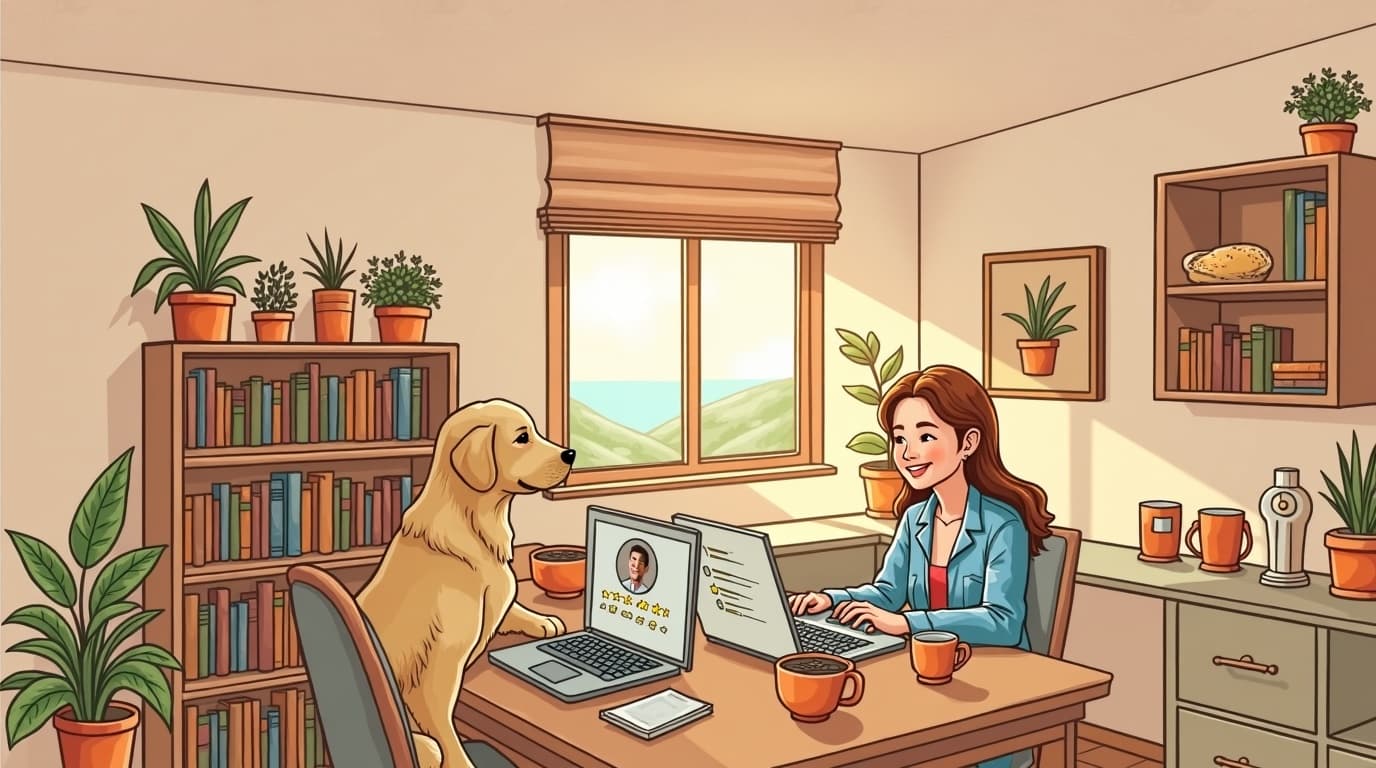
Your profile is often the only thing standing between you and your next house-sitting gig. Here's how to make sure no one just scrolls right past it.
Choosing Photos That Build Instant Trust
Your profile photos are the first thing pet owners see, and they form an opinion within seconds. The most important photo you can post is one where you're interacting with an animal. Don't just pose next to an animal—actually engage with it. Play with a dog, hold a cat, feed a bird. This immediately gives the pet owner the impression: "This person feels comfortable around animals."
Your main profile photo should be a clear, well-lit photo of your face that makes you look approachable and friendly. Avoid sunglasses, group photos, and selfies with heavy filters. Homeowners want to see the real person who will be staying in their home.
Add some variety to your photo gallery: thanks to GPS, you can upload up to 15 profile photos, so take advantage of that. A mix of photos of you with different kinds of animals shows that you're flexible. A photo of you outdoors suggests that you're active and enjoy walking dogs. A photo in a homey setting indicates that you're homebody and won't turn their house upside down.
Avoid photos that seem forced. Party photos, overly Instagram-style photos, or anything that gives the impression you're trying too hard. Authenticity is key here. Homeowners are entrusting you with their home and their pets; they want to see the real you.
If you don't have any nice photos yet, ask a friend to take a few the next time you're around animals. Even a quick snapshot on your phone, showing you in the park with a friend's dog, is perfectly fine. In this case, of course, personal always beats professional.
Writing a Bio That Tells Your Story
Most pet-sitter profiles read like a cover letter. "I'm a responsible and reliable person who loves animals." That's nice, but it doesn't tell the homeowner anything they haven't already read fifty times. Your profile should tell a story.
GPS provides separate fields for your introduction, your experience, and a special section asking, "Why are you a pet sitter?" Use each field for its intended purpose, rather than cramming everything into a single section.
Start by explaining what drew you to pet sitting. Was it because you grew up with animals? Did you discover this lifestyle while traveling? Do you miss having pets of your own? Whatever the reason, start with that in your "Why" section. It immediately makes you seem human and relatable.
Then go into specific detail about your experience. Don't just say, "I love dogs," but say: "I grew up with German Shepherds and have a soft spot for large breeds that think they're lap dogs." Don't say, "I'm good with cats," but say, "Over the past year, I've taken care of my neighbor's three house cats, including one that needed daily eye drops."
In a few sentences, describe your lifestyle and why it makes you a good fit for pet sitting. Do you work remotely with flexible hours? Are you a retired couple looking for adventure? Or are you a student taking a gap year? Pet owners want to know how pet sitting fits into your life, as this gives them a better idea of your availability and dedication.
End with something personal. A hobby, a quirk, or a fun fact. Homeowners are looking for someone to live in their home and want to feel a connection. "When I'm not walking dogs, I'm probably baking sourdough bread or reading science fiction novels" does more for your profile than any professional reference ever could.
Highlighting Your Relevant Experience
Experience doesn't just mean that you've house-sat before. Think more broadly. Have you ever had pets of your own? Have you walked dogs for friends or through an app? Have you worked or volunteered at an animal shelter, veterinary clinic, or grooming salon? Have you helped rescue animals? It all counts.
Categorize your experience by type of animal. If you have experience caring for dogs, cats, fish, birds, or reptiles, be sure to specify this clearly. Bearded dragon owners want to know that you won't panic when you see the animal.
Certain skills are worth highlighting separately. Administering medication, following special diets, handling aggressive dogs, caring for older pets, and addressing separation anxiety: these are the qualities that make owners feel confident in choosing you over someone with a less well-defined profile.
List any professional certifications you have. This includes courses in first aid for pets, animal behavior, or training as a veterinary assistant—even if you completed them through online courses. This demonstrates that you take initiative and are genuinely committed to doing this job well.
Don't underestimate informal experience either. "I've been the unofficial pet sitter for my whole group of friends for years" is a perfectly legitimate reference. Practical experience caring for animals in a home environment is exactly what homeowners are looking for.
The Power of a Video Introduction
If GPS supports video presentations, be sure to use them. If not, include a link to a video. A 60-second video says more about your profile than a thousand words in a biography ever could.
Keep it simple and natural. Sit somewhere with good lighting, look at the camera, and talk as if you were FaceTiming with a friend. Introduce yourself, explain why you love pet-sitting so much, and mention what kinds of animals you have experience with. No script, no fancy production, no background music.
The great thing about video is that homeowners can hear your voice and see your demeanor. It's incredibly difficult to fake warmth and sincerity on camera, and that's exactly why homeowners trust it. A friendly, natural video presentation can be the deciding factor between you and another pet sitter with a similar written profile.
Record the video with your phone in landscape mode, hold it at eye level, and make sure the audio is clear. If there's a pet nearby, all the better—feel free to let it appear in the frame. Nothing sells a pet sitter quite like a cat climbing into their lap mid-sentence.
If your first take sounds a bit forced, record it again. Most people need three or four takes before they're relaxed enough to sound natural. The version where you stumble a bit but recover with a smile is probably your best take.
Common Profile Mistakes to Avoid
Being too generic. "I love all animals and will take good care of your pets" could have been written by literally anyone. Replace general statements with specific ones. Which animals? What exactly does "taking good care" mean to you? Give examples.
Focusing on what you get out of it. "I'm looking for free lodging during my trip" may be true, but if you start with that, homeowners will feel like their pets are an afterthought. Lead with the animals, not the free lodging.
Leaving fields empty. Every empty field in your profile is a missed opportunity. GPS gives you the chance to share information, so be sure to take full advantage of it. Incomplete profiles give the impression that the sitter might be just as half-hearted about the sit itself.
Using corporate language. "I'm committed to providing excellent pet care" sounds like something out of a brochure. Speak like a human. "Your dog will get just as much attention as mine used to get" is ten times more effective.
Ignoring the homeowner's perspective. Someone is entrusting a stranger with their home and their pets. Everything in your profile should help them feel confident about that decision. Safety, reliability, and a genuine love for animals should come through in every paragraph.
Not updating your profile. If you completed a sit three months ago and received an excellent review, make sure your profile reflects your growing experience. An outdated profile gives the impression of an inactive sitter.