In the UK, you will typically pay about £12 to £16 for one daily cat sitter visit or £30 to £60 per night for overnight care in your home. Your total cat sitter cost then moves up or down with the number of visits, where you live, medication, extra cats and holiday dates.
You have booked the flights, arranged time off work and started thinking about packing, and then you look at your cat asleep in her favourite spot. A neighbour might be away, family may live too far away, and handing your keys to a stranger can feel like a big step. We will walk you through the arithmetic first, then the trust questions, so you can compare a paid quote with confidence and spot the extras before you agree to anything.
Typical Cat Sitter Costs at a Glance
Start with the simplest case, because everything else builds from it. For an independent adult cat, one daily visit is commonly priced at £12 to £16, while kittens, senior cats or cats needing more company may require two visits at £24 to £32 a day, according to TraderStreet's UK pet sitting pricing guide. Those visits usually last 20 to 30 minutes.
That is why a headline price tells you very little on its own. One visit a day for seven days at that rate comes to about £84 to £112. Two visits a day for the same week comes to £168 to £224. Overnight house sitting, where someone stays in your home, sits in a different price bracket altogether at £30 to £60 per night, or £210 to £420 for seven nights.
| Service | Typical UK price |
|---|---|
| One daily visit, independent adult cat | £12-£16 per visit |
| Two daily visits, kittens or senior cats | £24-£32 per day |
| Overnight house sitting | £30-£60 per night |
Checking a Quote Against a Trusted Benchmark
Cats Protection's guide to the cost of owning a cat says owners can expect to pay approximately £15 to £20 per visit, with the final price varying according to location, the number of cats and the service required. At one visit a day, that points to roughly £105 to £140 for a seven-day trip. At two visits a day, the same week rises to about £210 to £280.
A second summary of the same charity guidance gives an estimated total for professional pet sitting of £150 to £300 for a one-week holiday, as set out in PetMe's comparison of catteries and cat sitters in the UK. If your quote lands well outside that range, it does not automatically mean it is wrong. It does mean you should ask what is driving the figure, whether that is longer visits, overnight presence or specialist care.
Practical rule: Never compare a per-visit price with a per-night price until you have multiplied both out over your actual trip length.
Watch very low quotes with particular care. If someone offers far below the ranges above, check whether feeding, litter-tray cleaning, playtime and photo updates are included, or whether you are paying only for a brief doorstep check. A short visit may suit a confident, healthy adult cat perfectly well. It is less suitable for a kitten who needs frequent meals, a senior cat who eats slowly, or an anxious cat who needs time to settle with a new person before she will eat at all. The right question is not which cat sitter cost is lowest. It is how much presence your cat needs while you are away.
Regional Prices Across the UK
For the same week away, overnight cat-sitting quotes can vary sharply by city. A February 2025 report put the average rate at £35.95 per night in London, compared with £61.62 in Leeds and Birmingham, about 71% higher, according to SW Londoner's report on pet sitting prices. Across seven nights, those rates come to £251.65 and £431.34, a difference of £179.69.
Other UK cities fall between those figures for overnight care. Rates vary with local sitter availability, travel time and whether the sitter stays overnight, so a city average is a starting point, not a quote for your cat.
| Area | Average overnight rate | Seven nights |
|---|---|---|
| London | £35.95 per night | £251.65 |
| Leeds and Birmingham | £61.62 per night | £431.34 |
| Other UK cities | Varies by location | Varies by quote |
Drop-In Visits Follow a Similar Pattern
Short visits also vary by area. A 20 to 30-minute visit is commonly listed at £15 to £20 in London and the South East, £12 to £16 in major cities and £10 to £14 in suburban or rural areas. Local travel helps explain the difference: a sitter driving to a rural home may have a longer round trip than one visiting several homes on the same street.
Compare like with like before deciding whether a quote is high. Check the visit length, which tasks are included and whether travel is already covered. Then multiply the quoted rate by the number of visits or nights you need. That gives you a clearer estimate of your trip's total cost than a regional average alone.
Factors That Push the Price Up
The biggest surprise for many first-time owners is holiday pricing. A UK sitter-rate survey reported an average bank-holiday visit price of £27.43 against £13.74 on a weekday, roughly double, in Sitkit's guide to pet sitting charges. Peak dates bring more demand and fewer available sitters, so Christmas, New Year and bank holidays need early booking and a written quote that names those dates.
Smaller extras then stack on top of the base rate. CatLife's UK cat sitter cost guide reports that medication administration can add approximately £2 to £5 per visit, and additional cats may add £1 to £3 each. Other guides put a second cat at around £3 to £5 per visit, which is exactly why you should ask each sitter for their own figure rather than assuming. A £15 visit with medication and a second cat is no longer a £15 visit.
| Factor | Typical extra cost | What to check |
|---|---|---|
| Medication administration | £2 to £5 per visit | Whether tablets or injections are included |
| Each extra cat | £1 to £5 per visit | Whether the price rises for a second or third cat |
| Bank holidays and Christmas | About double the weekday rate (£27.43 against £13.74 per visit) | An all-in quote that names the holiday dates |
| Travel, weekends and call-outs | Set by distance and time, quoted in advance | Mileage, weekend and emergency charges in writing |
When Your Cat Needs More Than a Basic Visit
Senior, anxious or medicated cats often push the price up through frequency rather than a single surcharge. Two visits a day doubles the daily total, and a longer visit for a slow eater or a cat on timed medication costs more than a quick feed and litter change. Weekend work, longer travel and emergency call-outs can add charges too, particularly if your cat needs a vet trip while you're away.
Before you pay anything, ask two questions: what is included, and what is charged separately?
Also pin down the price basis. Is the quote per visit, per night, per 24-hour period or per booking? Those four phrases can describe very different amounts of care. Ask for the answer in writing, with medication, extra cats, travel and holiday dates itemised. A sitter who is happy to itemise is giving you something you can compare. A single round number with no breakdown leaves you guessing, and guessing is where holiday budgets go wrong.
How to Estimate Your Total Trip Cost
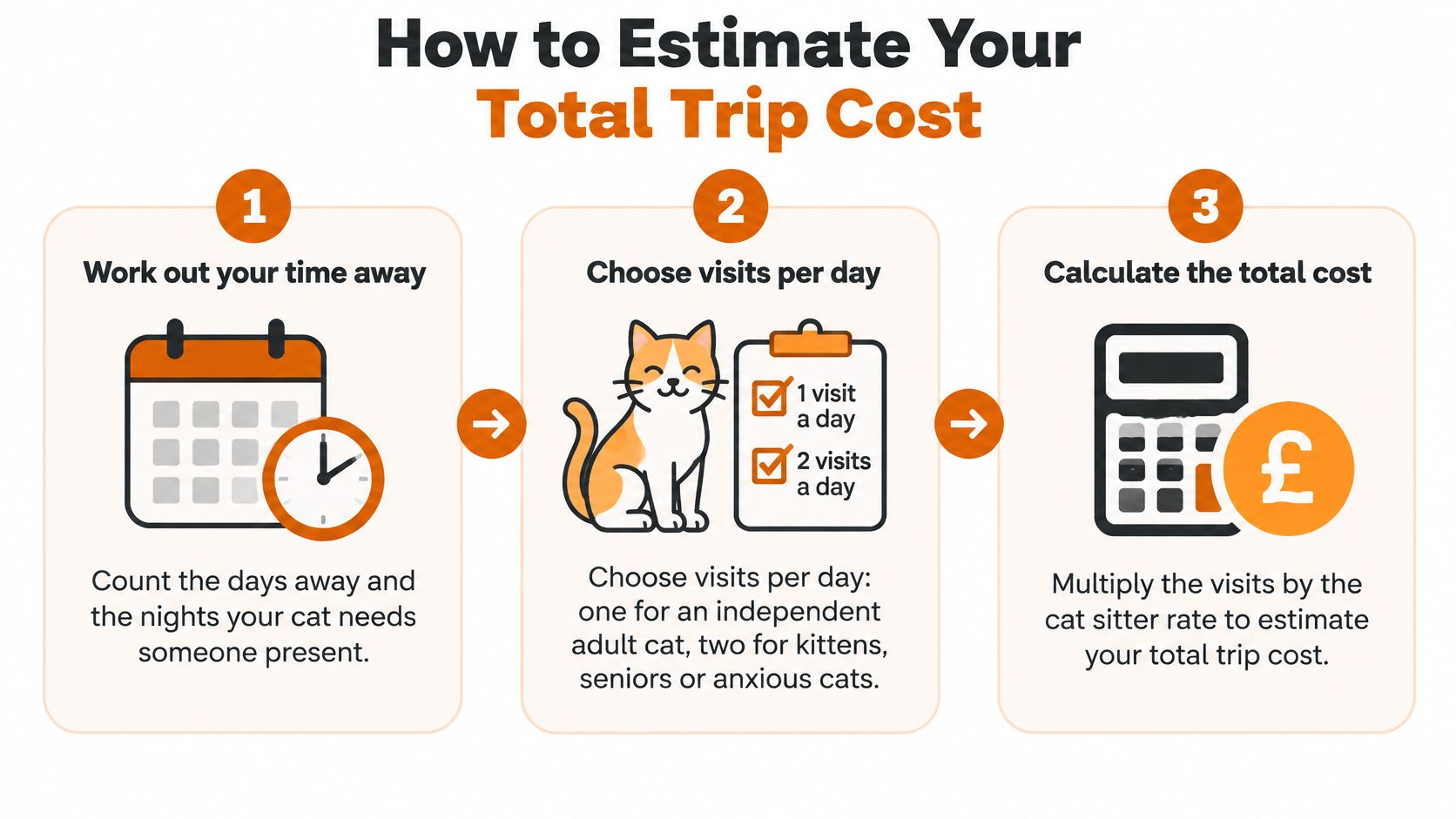
A quote can look manageable until you count every day your cat needs care. Start with your travel dates, then build the total one cost at a time.
- Count the days and nights. Note how many days you'll be away and how many nights your cat needs someone present. A late return can mean an extra day of care.
- Choose visits per day. Decide whether one visit suits your cat or whether their feeding, medication or routine calls for two.
- Multiply by the local rate. Multiply the cost per visit by the number of visits. This gives you the base cost.
- Add applicable extras. Include medication, additional cats and travel charges for each visit where they apply.
- Check holiday dates. Ask whether any dates on your trip carry a higher rate, and add the quoted charge.
- Set aside a buffer. Allow room in your budget for changes or unexpected costs. If veterinary care may be needed, agree how the sitter should contact you before costs are incurred where possible.
- Compare trip totals. Work out the cost of each care option over the same dates, then compare what each provides.
A Worked Example You Can Copy
Suppose your cat needs one daily visit at £14 for seven days. The visits cost £98. Medication at £4 a day adds £28, bringing the subtotal to £126. A 10% buffer adds £12.60, for a budget of about £139.
Now compare that with overnight care for the same trip: seven nights at the UK average of £38.71 comes to £270.97 before extras. The higher total includes overnight presence, rather than a short daily visit. Compare the full cost with the care your cat needs, not just the headline rate. A cat comfortable alone between visits may suit the first option; a cat needing overnight company may need the second.
House Sitting as a Lower-Cost Alternative
There's a different model worth pricing alongside paid visits. With in-home house sitting through our platform, sitters care for pets at the owner's home in exchange for a free stay, and no money changes hands. We charge no booking fees, ever, and joining is free. Your cat stays in her own home, with her own litter tray, feeding spot and sleeping places, while one person is there in the evenings and overnight.
That changes what the arrangement costs you. Instead of daily fees, your main investment is time: writing a clear listing, speaking to applicants, organising a handover and preparing your home. For a seven-night trip, set that effort against the overnight benchmark of around £270.97 at the UK average rate, or considerably more in higher-priced cities. If you're also weighing up a cattery, our guide to cattery prices helps you compare that option on the same total-cost basis.
When Each Model Fits Best
- Paid drop-in visits: A good fit for short trips, confident adult cats and owners who only want someone present for part of the day. You pay per visit and keep the house empty between calls.
- Paid overnight sitting: Suits owners who want a professional present overnight for a defined fee, particularly for timed medication. Costs rise quickly on longer trips.
- Free house sitting: Suits longer trips and routine-dependent cats who settle best at home with one familiar person. Your home is occupied and looked after at the same time.
Be clear about the practical conditions before you choose. Pet owners must vacate the property for the duration of a sit, and the sitter must have sole occupancy of the home unless otherwise agreed in advance. Sitters are under no obligation to accept a pet they deem unsuitable, and we do not confirm that any sit will go ahead as arranged. That's honest, not off-putting: it means you should start your search early and keep a back-up plan, such as a paid sitter's number, until your arrangement is firmly agreed.
Our honest view: House sitting is not a replacement for every situation, but for a longer holiday it can remove the per-night fee entirely while keeping your cat in her own routine.
Think about your cat's temperament as you decide. A sociable cat who greets visitors at the door often thrives with a house sitter's company. A very shy cat may prefer brief, predictable visits from one quiet person. Either way, continuity matters more than the label on the service, so choose the arrangement that keeps feeding times, medication and evening routines closest to normal.
Keeping Your Cat and Home Safe Before You Pay
You may feel uneasy about giving someone access to your home while you are away. A few practical checks can help you decide whether a sitter is a good fit. To find local options, start with this guide to finding a cat sitter near you.
Ask for references, read them carefully, and meet the sitter in person or by video call. If they have insurance, ask to see the details and check what it covers rather than assuming it applies to every situation. Global Pet Sitter does not run background checks or vet members unless explicitly stated otherwise, and it does not confirm that any sit will go ahead as arranged. You can use the guide to pet sitter red flags to prepare questions about experience and expectations.
Vet Details, Keys and the Handover
Before the sit begins, give your sitter your vet's contact details and written authorisation for emergency care. Include an emergency contact who can make decisions, plus clear instructions about what the sitter may approve. You remain responsible for injury, damage or loss caused by your cat, so share relevant details about habits such as scratching, spraying or trying to escape.
Limit access to what the sitter needs. Go over the locks and any alarm instructions together, test the key, and note who has a copy. For a separate look at home security options, see these home alarm system rankings.
A handover before you leave is required. Meet in person or by video call, then show the sitter how you feed your cat, give medication and manage the litter, and explain your cat's hiding places and usual habits. Record dates, duties and emergency arrangements in writing with a pet sitting contract template. That conversation also gives you a chance to see how the sitter interacts with your cat before you go.
Confirm the Quote Before You Book
You now have a local rate, a trip total and a sense of which model suits your cat. The last step is confirming everything in writing before money changes hands. Run through this short checklist with any sitter you're about to book.
- Price basis: Is it per visit, per night or per booking, and how long is each visit in minutes?
- Extras: Are medication, extra cats, travel and holiday dates included or charged separately, and at what rate?
- Daily tasks: Are photo updates, litter cleaning, playtime and post collection part of the service?
- Vet costs: Who pays for vet care, and what may the sitter approve in an emergency before reaching you?
- Dates and terms: What are the handover date, cancellation terms and notice period on both sides?
If any answer is unclear, our list of questions to ask a pet sitter gives you wording you can copy into a message. A written agreement protects both you and your sitter, because it turns friendly assumptions into shared expectations. It also gives you a clean total to compare against an overnight quote or another provider, which is the only fair comparison.
The cheapest headline rate is not always the lowest total once visits, extras and holiday dates are multiplied out.
Once the sit is done, many owners like to say thank you. Our guide on whether you tip pet sitters explains what's customary for paid care, and why a thoughtful review matters so much for house sitters who care for your cat in exchange for their stay.
So take ten minutes today. Estimate your total trip cost using the seven steps, compare it with a free in-home house sitting option, and then decide with real numbers rather than a headline rate. Find a trusted house sitter for free
If the per-night maths for your next holiday is making you wince, we can help you find a house sitter who stays in your home and cares for your cat in exchange for their stay, with no booking fees and no money changing hands. Your cat keeps her routine, your home stays lived in and looked after, and you organise the handover on your own terms. Start today at Global Pet Sitter and list your dates in a few minutes.
Please sign in to leave a comment
