Most travel advice about house sitting in France starts with “free accommodation” and stops before the difficult questions. Who is responsible if a pet is injured? Does an unpaid exchange affect your immigration status? Will the homeowner's insurer cover a third party in the property? Which platform has enough French listings to make your plans realistic?
A successful sit is closer to temporary residential stewardship than a holiday discount. You're caring for animals, protecting a home, following local instructions, and sometimes managing a rural property far from the services you know. France rewards careful preparation, but it exposes casual assumptions quickly.
The Reality of House Sitting in France
House sitting in France works best when both sides understand that the accommodation is secondary. The sitter takes on a defined responsibility for pets, security, plants, deliveries, and ordinary household routines. The homeowner, in return, offers access to a lived-in home rather than a hotel, with all the quirks that come with it.
That might mean learning an unfamiliar heating system, finding the correct waste collection arrangements, or understanding why a dog must avoid a particular route. A countryside property can require more attention than an apartment in Lyon. A cat that appears independent may still need medication, monitoring, and a reliable response if it doesn't return at the expected time.

The exchange is built on trust
Unpaid house sitting is generally understood as a free-use arrangement rather than a conventional rental. That distinction doesn't remove the sitter's duties. It changes the nature of the relationship, from tenant and landlord to homeowner and temporary custodian.
The strongest arrangements have a practical handover, written expectations, and honest discussion about limitations. A sitter who loves cats but can't administer medication should say so. A homeowner who expects daily garden work, constant dog companionship, or access to a car must put those requirements in the listing rather than introducing them after confirmation.
Practical rule: If a responsibility would affect your decision to accept the sit, discuss it before either side commits.
France also has a formal pet-care environment, which makes the casual “anyone can do this” narrative misleading. Professional pet sitting falls under the French Rural Code, with activity declarations and operational obligations that can include animal records, hygiene documentation, and veterinary arrangements. Unpaid house sitting isn't automatically the same as professional pet care, but anyone moving from an informal exchange into paid services needs to understand the difference.
Why the lifestyle still appeals
The attraction is real. A sitter can experience a village, maintain a slower routine, and care for animals in their familiar environment instead of moving through short hotel stays. Owners avoid sending pets into an unfamiliar setting and can leave with someone present in the home.
That arrangement only works when the sitter accepts the constraints. Long restaurant evenings, spontaneous road trips, and overnight travel may not fit a dog's routine. The homeowner's property isn't a base for treating France as an unlimited itinerary. It's a home entrusted to you for a defined period.
Navigating Visas, Insurance, and Legal Rules
Legal planning begins with a distinction many guides blur: unpaid house sitting and paid pet sitting aren't the same activity. Independent guidance describes unpaid house sitting as a free-use arrangement with no income to declare, while professional pet care is regulated in France. The safest approach is to describe your arrangement accurately, avoid accepting payment casually, and obtain advice for your nationality and circumstances before arranging consecutive stays.
For professional operators, the ACACED credential became the standard qualification in 2016, replacing the older CCAD certificate. Existing CCAD holders remain valid, while new professionals are generally expected to hold ACACED. The activity also requires declarations to the DDPP or DDETSPP and to INPI, with additional obligations for operators working from a home base or dedicated premises. Bpifrance Création's guidance on regulated dog and cat care outlines the framework, including annual renewal of the declaration in at least one official source.
Immigration status needs individual checking
Non-EU sitters shouldn't assume that an unpaid exchange automatically answers every visa question. The relevant issues include nationality, permitted stay, the wording of the arrangement, consecutive bookings, and whether the traveler is also performing remote work or receiving money from another activity.
General Schengen guidance often focuses on short tourism stays, but it doesn't create a universal house-sitting ruling. If you need a clearer starting point for visa research, Madeira Remote visa advice can help explain the wider Schengen context. Treat it as background, not a substitute for an official decision about your own case.
The practical test is simple. Don't build a long sequence of French sits first and investigate immigration later. Confirm whether your travel status permits the arrangement, keep dates and addresses organized, and ask an immigration professional or relevant consulate when the facts are uncertain. France increased fees for residence permits and long-stay visa validations in May 2026, with the long-stay visa equivalent rising to €300 from €200, according to Guardians France's discussion of house sitting. That makes long-stay planning more consequential, not less.
Insurance is a pre-arrival task
French house sitting is treated as a free accommodation-use arrangement rather than a rental, but the homeowner should have a holiday-stay clause in the home insurance policy and notify the insurer about the sitter's presence. The sitter should carry civil liability coverage, because damage caused by the sitter may otherwise create an uninsured dispute. French public guidance on temporary occupation and insurance is a useful reference point.
Ask for written confirmation, not a verbal “we're covered.” Confirm the exact dates, the sitter's identity, whether pets are included, and how the insurer handles accidental damage. Keep the confirmation with the house instructions and emergency contacts.
Vacancy clauses create another risk. French home-insurance contracts can weaken or exclude cover when a property is empty for extended periods, with reported thresholds as short as 30 days and commonly capped around 90 days for a primary residence, as discussed by FrenchEntrée's explanation of home insurance. A sitter may reduce the practical exposure of an empty property, but only if the policy permits temporary occupation and the insurer has been informed.
For broader preparation, this international house and pet sitting guide is useful for organizing the travel, care, and communication questions that sit alongside the legal checks.
Finding Sits Across Fragmented Platforms
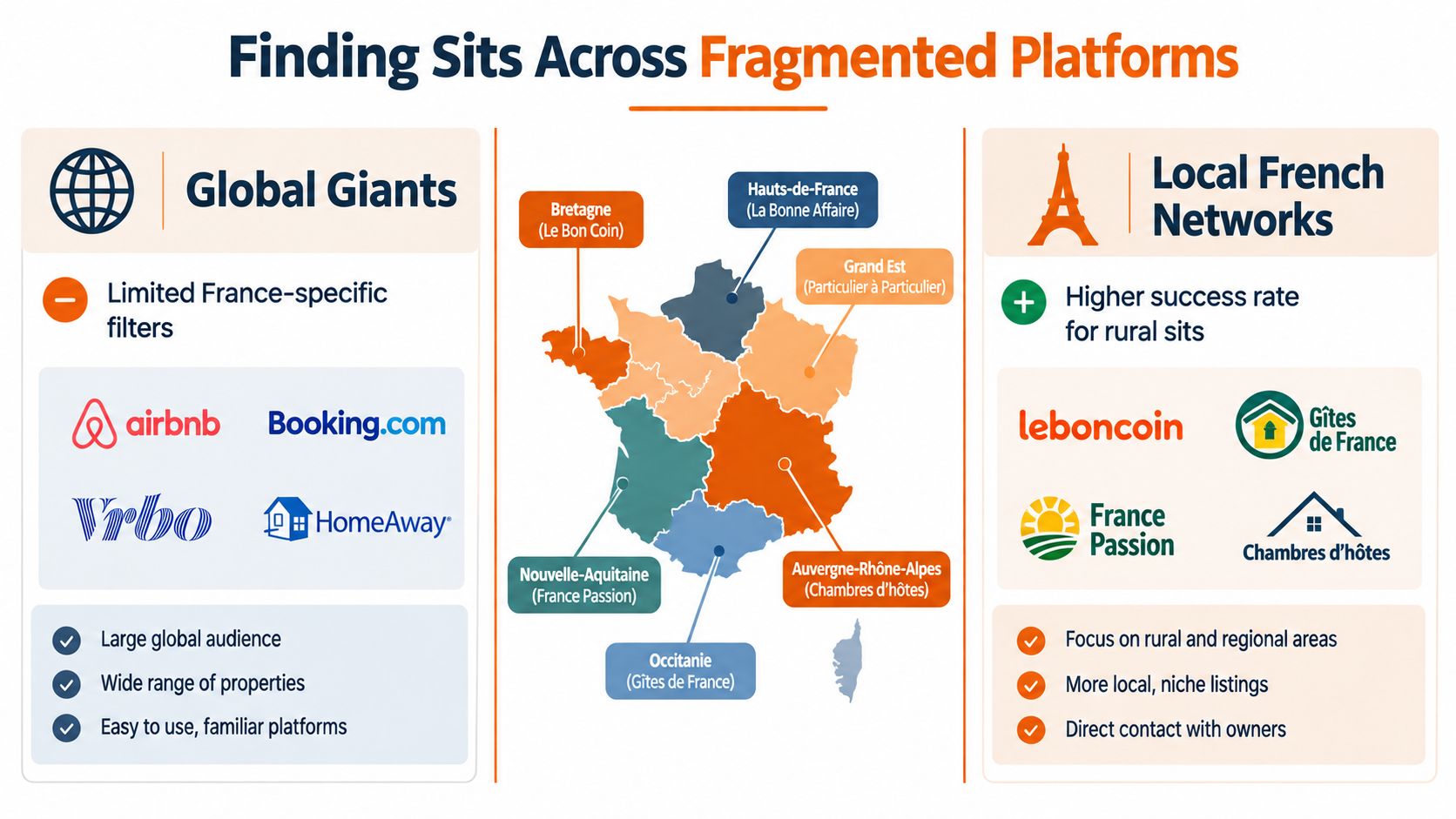
A single global marketplace won't show the whole French market. France has unusually concentrated platform supply, and the right search strategy depends on where French homeowners publish their listings.
One 2026 comparison places France at roughly 1,000+ listings on Nomador, compared with about 76 to 115 on TrustedHousesitters, depending on the snapshot used. The same comparison places the UK at about 3,800 listings on TrustedHousesitters, while Nomador and MindMyHouse show only 22 to 29 there. Those figures demonstrate that platform strength is country-specific, not a universal ranking. The Europe house-sitting comparison explains the difference.
Search locally before you widen the net
Nomador deserves attention for France-focused searches because its inventory is much more concentrated there. TrustedHousesitters can still make sense if your itinerary includes several countries and you already need its broader international coverage. MindMyHouse and informal community groups may add opportunities, but they can offer less consistent verification, support, or dispute handling.
Don't search only by destination name. Search by dates, rural radius, pet type, transport access, and the level of isolation you can handle. A village near a regional town may be a better fit than a famous coastal destination where applications arrive quickly and transport becomes expensive.
French-language listings also create an advantage for sitters willing to work beyond English filters. Basic French helps with reading instructions, contacting a vet, speaking with neighbours, and understanding a homeowner's expectations. You don't need literary fluency, but you do need enough language to manage routine care without relying on translation for every decision.
Community platforms add a different layer
Community-driven services can be useful when you want more direct feedback and a less impersonal matching process. Global Pet Sitter lets owners post dates and pet details, allows members to message candidates, and gives experienced sitters a way to import reviews from other platforms through screenshots. Its GPS features are designed to help users find sits by location, while its community model includes visible feedback and member participation in feature decisions.
The trade-off is that newer or smaller networks may have less inventory in a particular region. Use them alongside local and global marketplaces rather than assuming one account will solve every destination. This comparison of house-sitting platforms gives a useful framework for evaluating coverage, trust tools, and pricing models.
Platform choice should follow the country you want to sit in, not the platform you happened to discover first.
Building a Profile and Landing the Assignment
French homeowners often choose a sitter before they choose a travel story. Your profile needs to answer the practical question behind every application: can this person safely manage my animals and home without constant supervision?
Start with a clear photograph and a short biography that candidly identifies your experience. Mention the animals you've cared for, the environments you understand, and any relevant skills such as administering medication, handling anxious dogs, managing gardens, or living without immediate public transport. Don't fill the profile with holiday photos that say nothing about responsibility.
Build evidence before chasing prestige
Reviews matter because homeowners are handing over access to both animals and property. If your strongest reviews sit on another platform, preserve them through legitimate screenshots where the receiving community allows it. Label them accurately and don't imply that a review was written on the new platform.
A first-time sitter can compensate for a thin review history with references, a detailed video call, and a sensible first assignment. Apply for a sit that matches your actual experience instead of starting with a complex property, multiple animals, and an owner who expects total independence.
Use a personal application rather than a reusable paragraph. Refer to the pets by name, respond to the actual dates, explain how you'll reach the property, and address any specific duty in the listing. These profile tips for sitters can help you refine the presentation without turning it into advertising copy.
Use the interview to test the match
A video call isn't a formality. It lets both sides notice gaps that a profile hides. Ask about the pet's normal day, time alone, exercise, food, medication, behaviour around strangers, escape risks, and emergency history. Ask the homeowner to demonstrate equipment rather than assuming a written description will be enough.
Discuss the house with equal directness. Confirm heating, internet, rubbish collection, laundry, parking, garden work, access to a vehicle, deliveries, neighbours, and whether anyone else may enter the property. Ask what happens if the owners' travel plans change or if you need medical care yourself.
The conversation should also establish communication expectations. Some owners want frequent photographs, while others prefer only urgent messages. Agree on a rhythm and identify the preferred emergency channel before departure.
A short visual walkthrough can reveal details such as steep stairs, unsecured gates, or a pet that becomes distressed when the owner leaves. This video provides an example of the kind of preparation sitters and owners can discuss before confirming an arrangement.
Daily Responsibilities and Sitter Etiquette
The first morning sets the tone. Feed the animals according to the agreed routine, check that gates and doors are secure, and walk through the property while the handover is still fresh. Don't improvise a new diet, invite visitors, or move household items just because you prefer a different system.
French homes can have unfamiliar heating controls, shutters, appliances, and waste arrangements. Write down the instructions that seem obvious during the handover. The detail you forget at noon may become urgent when the house is cold at night or the rubbish collection requires a particular sorting method.
Pet care is the central obligation
Dogs with separation anxiety may need gradual absences rather than a full day alone on the first attempt. Cats may appear self-sufficient while hiding illness or refusing food. Watch behaviour, appetite, water intake, toileting, and mobility, and tell the owner promptly when something changes.
A useful daily routine includes:
- Morning check: Confirm every pet is present, alert, fed, and moving normally.
- Midday adjustment: Follow the agreed exercise and companionship plan rather than your sightseeing schedule.
- Evening record: Check doors, gates, medication, food supplies, and the next day's commitments.
- Emergency readiness: Keep the vet's number, the owner's authorization, and transport options accessible.
Never take a pet outside a route the owner has prohibited. A dog may be friendly but still react badly to traffic, livestock, other animals, or an unsecured boundary. If an animal escapes or becomes ill, contact the homeowner quickly and follow the agreed veterinary plan instead of waiting to see whether the issue resolves itself.
The home reflects your judgment
Leave the property cleaner and more orderly than you found it. Wash bedding if requested, replace ordinary supplies you finish, remove food that will spoil, and report damage immediately. Concealing a broken appliance creates a trust problem that costs more than the original repair.
Updates should reassure, not overwhelm. A photograph of a relaxed dog and a short note about food, exercise, and the house can be enough unless the owner requests more frequent contact. Respect privacy, don't open personal drawers, and avoid posting identifiable details about the property or location publicly.
Good etiquette also includes the local community. Keep noise reasonable, greet neighbours, follow instructions about parking, and make a genuine effort with basic French. A sitter who leaves the animals calm and the house predictable is far more likely to receive another invitation than one who treats the assignment as an improvised holiday.
How Homeowners Can Attract Trusted Sitters
A vague listing attracts mismatched applicants. “Lovely home in France, pets need company” doesn't tell a sitter whether the property is accessible, whether the dog can be left alone, or whether a car is essential. Specificity filters out unsuitable candidates before either side wastes time.
Describe the house, the sleeping arrangements, the nearest town, transport limitations, internet reliability, outdoor duties, and any safety issue. State whether the sitter must remain on the property overnight, how long pets can be left alone, and whether there are cameras or restricted areas. If the home is remote, say so plainly.
Write about the animals as individuals
List each pet's age, temperament, food routine, exercise needs, medication, fears, and response to unfamiliar people. “Friendly dog” isn't enough. Explain whether the dog pulls on the lead, reacts to other dogs, guards food, or needs a quiet introduction.
Include the difficult details. A cat that hides for several days, a dog that wakes early, or a property with a complicated boiler may reduce applications, but it also improves the quality of the people who do apply. Experienced sitters would rather assess an honest challenge than discover it after arrival.
A useful listing separates essential duties from optional kindnesses:
| Essential before confirmation | Useful to explain clearly |
|---|---|
| Pet routines and medical needs | Local shops and transport |
| Dates and arrival arrangements | Garden expectations |
| Insurance and emergency contacts | Heating and appliance instructions |
| Time pets may be left alone | Neighbour introductions |
Vet communication, not just credentials
Read the applicant's reviews and profile carefully, then ask questions that require practical answers. How would they respond if a dog refused food? Have they cared for an anxious animal? Can they administer medication? How will they reach the vet if the property is rural?
Look for consistency between their application and the video call. Red flags include avoiding questions about availability, minimizing the animals' needs, refusing a call, or treating the home as a free base for sightseeing. A sitter doesn't need to have every skill, but they must be candid about the skills they lack.
Prepare a welcome guide that can be used under stress. Include the vet's details, owner and backup contacts, insurance information, feeding instructions, medication, utility controls, waste collection, alarm procedures, transport options, and a neighbour who has agreed to help. Add photographs of confusing equipment where possible.
Before departure, leave food and medication organized, demonstrate keys and gates, and allow enough time for the sitter to meet the pets. The handover is where trust becomes a working system.
Planning Your French House Sitting Journey
A workable plan starts with the assignment, not the destination photograph. Decide whether you want a city apartment, a rural home, a property with demanding animals, or a long quiet stay. Then choose platforms and applications that match that reality.
For sitters, the preparation sequence is straightforward:
- Clarify your legal position. Check your nationality, permitted stay, the unpaid nature of the exchange, and whether any remote work or paid activity changes the analysis.
- Confirm transport. Rural France may require a car, while major cities can support a car-free routine. Don't accept a remote sit before checking the last connection, shopping distance, and emergency transport.
- Verify the household. Ask about pets, medication, time alone, property duties, visitors, insurance notification, and emergency procedures.
- Document the agreement. Keep dates, addresses, contacts, arrival arrangements, and responsibilities in writing.
- Build language capacity. Learn enough French to manage introductions, instructions, neighbours, shops, and urgent care.
- Apply selectively. A specific application for a suitable sit is more credible than a high-volume stream of generic messages.
Homeowners should follow the same logic from the other side. Publish accurate duties, verify the sitter's references, arrange a video call, notify the insurer, prepare the house, and leave authority for veterinary decisions. Don't rely on goodwill to fill gaps in an incomplete handover.
The deeper lesson is that house sitting in France is a trust system supported by platforms, reviews, clear communication, and community behaviour. Global marketplaces can provide reach, local networks can expose better regional inventory, and community-driven services can preserve reputation and invite member feedback. None of them removes the need for judgment.
A good sit doesn't maximize travel freedom. It creates a stable agreement in which pets remain comfortable, the home remains secure, and both parties know what happens when ordinary complications appear. That standard is demanding, but it makes the experience more sustainable for everyone involved.
Global Pet Sitter connects owners and sitters through location-based listings, pet and date details, member messaging, and reputation tools such as imported review screenshots. Visit Global Pet Sitter to explore French opportunities, present your experience clearly, and find an arrangement built around transparent expectations.
Please sign in to leave a comment
