In 2024, Americans spent roughly $152 billion on pets, with veterinary care and product sales around $41 billion and other services such as sitting, boarding, and grooming about $14.3 billion. That scale is exactly why there's no honest single price for pet care, and why you need a structured list instead.
I've compared quotes across cities and continents, and the pattern never changes. Owners get tripped up not by one expensive service, but by mixing predictable essentials with occasional services and rare emergencies in the same mental pile. Separate those buckets, insist on clear inclusions, and most quotes suddenly make sense.
What the Ultimate Pet Care Price List Actually Covers
Stop looking for one average. A useful Ultimate Pet Care Price List is a set of ranges organized by how often you pay, what unit you're buying, and what could change the final bill.
The U.S. benchmark shows why averages mislead. In 2024, pet food and treats reached $68.3 billion, veterinary care and product sales were about $41 billion, supplies, live animals, and over-the-counter medicine were $34.4 billion, and other services accounted for $14.3 billion, according to APPA industry trends and statistics. Those aren't interchangeable costs, and your budget shouldn't treat them that way.
What Belongs on the List
- Routine essentials: Food, litter, parasite prevention, and scheduled checkups you can plan for.
- Episodic services: Sitting, boarding, walking, and grooming that you buy by visit, walk, night, or session.
- Add-ons: Medication administration, transport, extra pets, holiday cover, and short-notice bookings.
- Emergency reserves: Money set aside separately, or insurance, for problems you can't schedule.
What this list won't do is price every prescription, surgical procedure, or insurance policy for every breed. Those depend on diagnosis, age, and local clinical fees, so you'll always need a written veterinary estimate for your own pet. For organizing the rest, a complete list of budget expenses helps you track pet costs beside household spending without burying them under general shopping.
Practical rule: If a quote doesn't state the unit, duration, inclusions, and exclusions, you don't have a price yet. You have a headline.
That scope keeps every later figure honest. You're comparing like with like, and you know in advance which costs sit outside the list.
Four Spending Categories Every Owner Should Separate
Most budgeting mistakes happen before you see a quote. Owners compare a grooming session with a veterinary consultation, or they assume a cheap walk means sitting will also be cheap. Those services behave differently, so don't blend them.
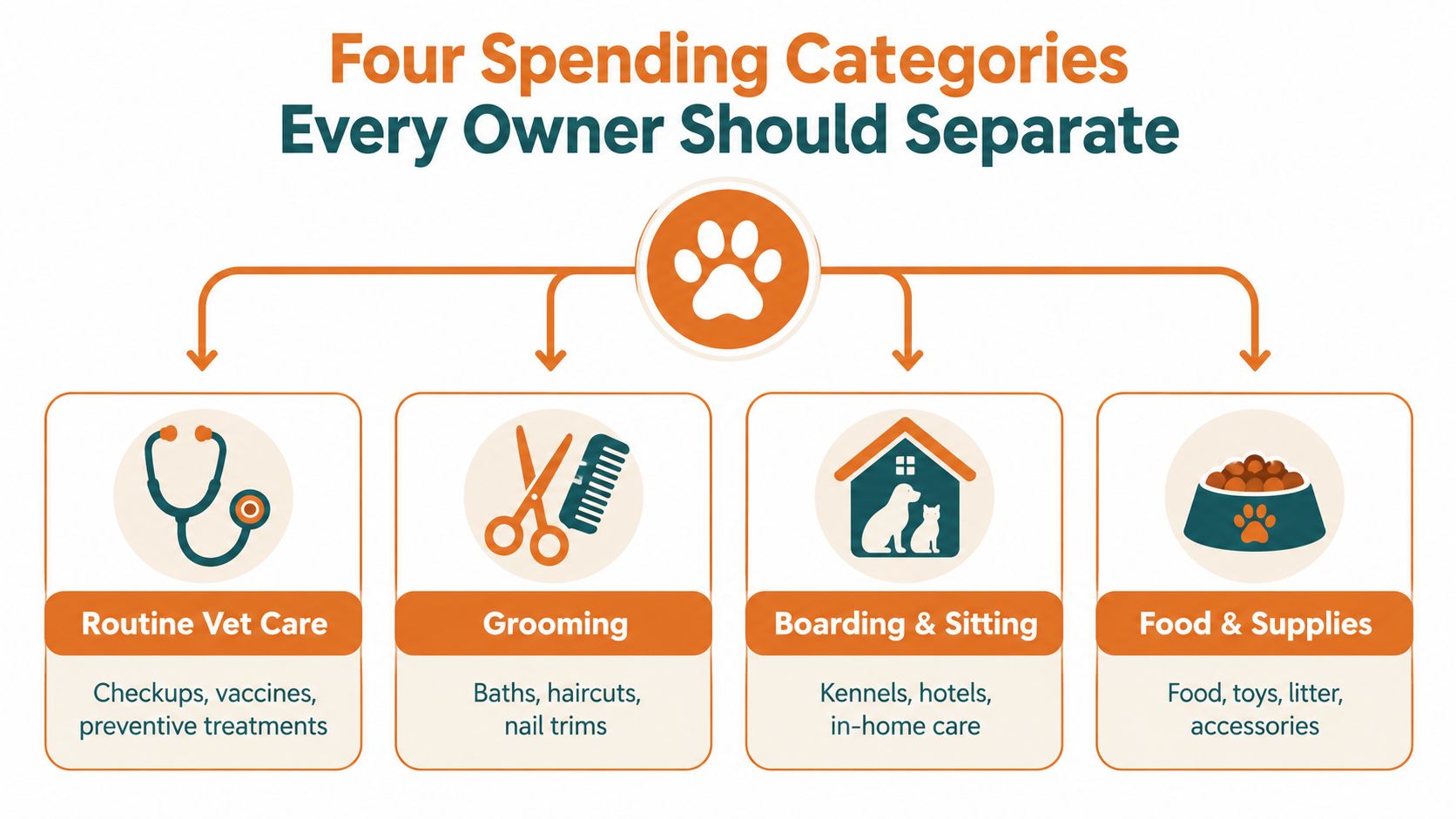
Routine essentials recur whether you're home or away. Food, litter, waste bags, and preventive products belong here because you consume them continuously. You're managing a monthly burn rate, not negotiating a one-off job.
Episodic services are different. Boarding, sitting, grooming, and extra walks spike around holidays, work travel, or coat condition. They're labor-based, so local wages, travel time, and peak demand move the price far more than product costs do.
The Two Categories Owners Forget
Add-ons are where surprises live. A second pet, injections, plant watering, key returns, or late-night arrival can all be reasonable charges, but only if they're listed before you book. Emergency reserves are the fourth category, and they shouldn't compete with food money. Keep that reserve separate, even if you also carry insurance.
If you want a wider system for this kind of separation, budgeting methods that actually work offers practical ways to assign money by purpose instead of watching one balance. Apply the same discipline here.
Use this test for every expense: is it consumed routinely, bought occasionally as labor, added to a base service, or reserved for the unexpected? Assign it to exactly one category and your quotes get much easier to audit.
In-Home Pet Sitting Prices and What Drives Them
A sitter's quote is only useful when you know what the time covers. Price each service by its unit: a drop-in visit, an overnight stay, or live-in care. Ask for the hours included in any daily quote, especially if the sitter's schedule affects how long your pet is alone.
A drop-in should specify feeding, fresh water, litter or yard cleanup, play, observation, and an update. Overnight care adds evening and morning routines and a sitter sleeping at your home. Live-in care means the sitter is based there and follows your pet's usual schedule more closely. Spell out the service before comparing prices.
The quote should reflect the work, not just the number of pets. Two cats sharing bowls usually take less time than a dog, a cat, and a small mammal with separate routines. Medication also changes the workload: giving a tablet with food differs from timed injections or monitoring for a missed dose.
Timing and logistics matter too. Holidays, short notice, unusual arrival or departure times, travel distance, parking, stairs, and longer visits can all increase the total. Ask which charges apply and get them in writing.
For a two-cat household, calculate the full cost this way: start with the overnight or drop-in rate, add any disclosed second-cat fee, then include holiday and travel charges. Multiply that total by the length of your trip. A lower base rate can cost more once extras are included.
Before you confirm, compare your quote with this guide to how much to pay for a house sitter. Get cancellation terms, key handling, cleaning expectations, veterinary transport, and excluded veterinary fees in writing. A friendly message is not a complete booking agreement.
Boarding Versus In-Home Sitting
Choose based on your pet's temperament first, then price. Boarding can suit a social, healthy dog who enjoys group play and a fixed routine. In-home sitting usually suits an older, anxious, medically complex, or routine-driven pet who settles best in familiar territory.
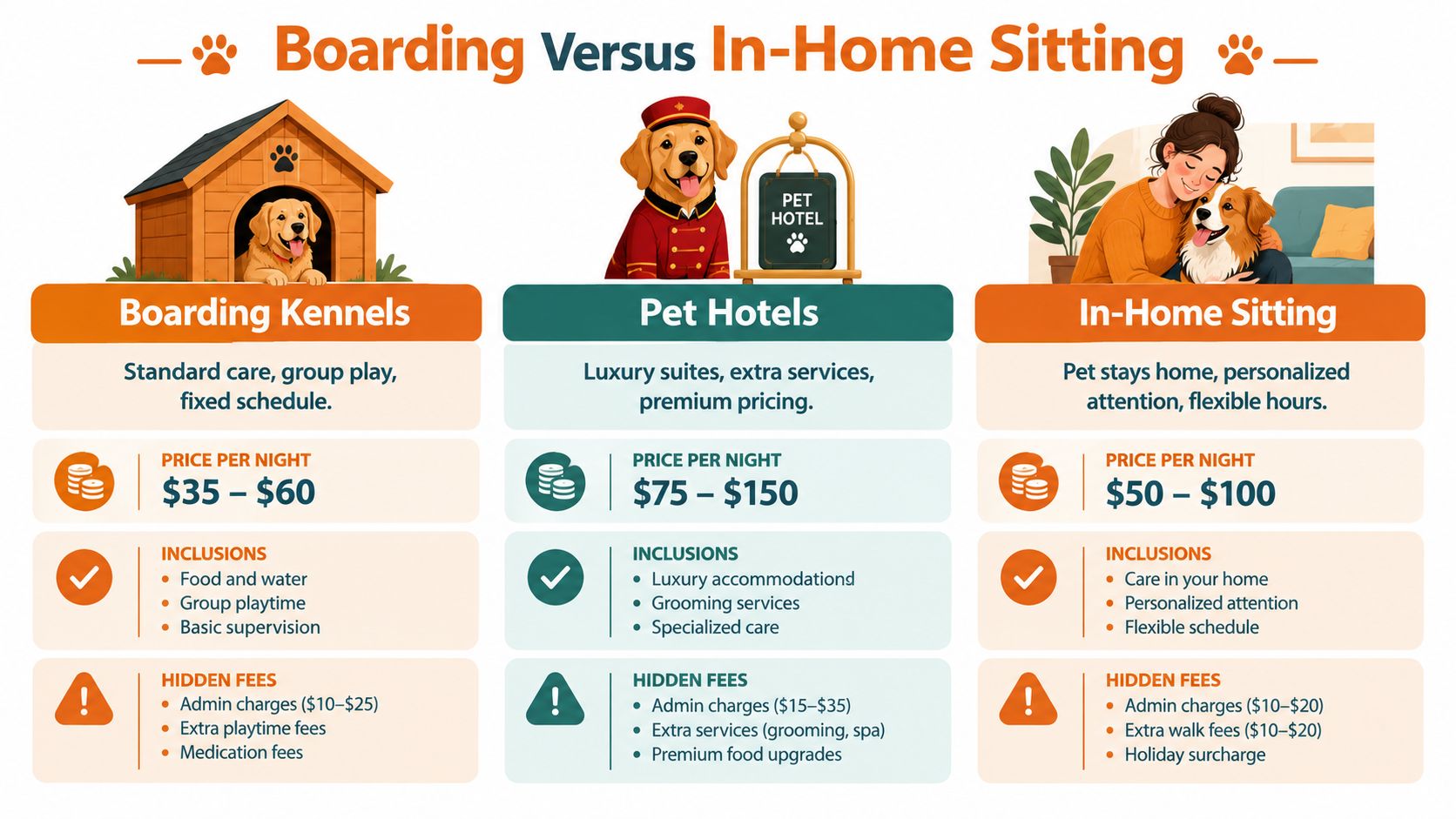
Facilities bundle staffing, cleaning, and premises into the nightly rate, but extras can change the comparison fast. Ask about administration fees, individual playtime, medication administration, late pickup, bathing before departure, and holiday minimum stays. In-home sitting shifts the cost toward one person's time and travel, and it can also cover mail, bins, and a lived-in home.
Boarding vs In-Home Sitting at a Glance
| Option | Typical Price per Night | Inclusions | Best For |
|---|---|---|---|
| Boarding kennel | Quoted per night locally | Enclosure, feeding, cleaning, scheduled exercise | Social pets comfortable away from home |
| Pet hotel | Premium nightly quote locally | Upgraded space, added play or grooming options | Owners wanting facility extras |
| In-home sitting | Quoted per night or visit locally | Care at home, normal routine, updates | Anxious, senior, or multi-pet households |
My recommendation is direct. Pick boarding when supervised company and specialist facility handling matter more than familiar surroundings. Pick in-home sitting when stress, medication timing, or multiple species make moving your pet the bigger risk.
For a fuller side-by-side view, use this pet sitting versus boarding comparison before you pay a deposit. Then visit the facility or interview the sitter with the same inclusion checklist, so you're not comparing a polished tour with an informal chat.
Dog Walking Rates and How Weekly Costs Add Up
A single walk looks modest. Five walks a week, every week, becomes a serious recurring service budget. That's why you should quote dog walking monthly in your own planning, even if the walker prices it per outing.
Start with format. A solo walk gives your dog one-to-one attention and suits reactive, senior, recovering, or very young dogs. A group walk can cost less per dog and adds social exercise, but you need to know group size, transport arrangements, and how matching is handled. Puppy and senior visits may be shorter, gentler, and focused as much on toileting, feeding, and observation as distance.
Build Your Monthly Figure
Picture a working owner booking weekday walks plus a longer Saturday outing. Don't multiply by a generic rate and stop. Add the second-dog charge if you have one, weekend or peak-time differences, key collection, feeding, towel drying, and basic medication if the walker provides those tasks. Then check what happens in extreme heat, heavy rain, or icy weather, because shortened safety visits can be sensible but should be agreed in advance.
Route matters too. An apartment building with lifts, concierge access, and paid parking takes longer than a suburban house with a side gate. A walker who quotes per service and states the time at your home, not just time on the street, is easier to trust.
Don't buy minutes you can't verify. Buy a defined visit with arrival updates, route or activity notes, water refreshed, and a clear policy for missed or shortened walks.
Ask whether the price includes solo handling or shared transport, how cancellations work, and who covers if your regular walker is sick. Consistency matters to your dog, and backup arrangements matter to your schedule.
Grooming Prices for Dogs and Cats
A grooming quote should spell out the service, coat work, and handling your pet needs. Size, coat length and condition, behavior, and desired finish all affect the price. A bath for a small, smooth-coated dog is a different job from grooming a large, matted double-coated dog.
Compare the actual service before comparing quotes. For dogs, ask whether the price covers a bath and brush, a full groom, or breed-specific styling, and check which size band applies. Larger dogs need more drying time, product, and physical handling. For cats, coat type and tolerance shape the appointment. Choose a groomer experienced with feline handling, not one who treats it as an afterthought.
Check the Extras Before You Book
A low base quote can leave out work your pet needs. Confirm whether these items are included:
- De-matting and de-shedding: Ask for a separate estimate if the coat needs extra time.
- Nails, ears, and teeth brushing: Check each service individually, since they may be bundled or charged separately.
- Flea baths and sensitive-skin products: Ask whether special products or extra cleaning change the total.
- Mobile or in-home grooming: Confirm any travel charge and whether parking or water access affects the appointment.
For a medium double-coated dog, price the full groom first, then add de-shedding if the coat is shedding heavily and nail trimming if it is excluded. That gives you a more realistic total and shows whether regular brushing at home could reduce future coat work. Discuss product choices with your groomer; Evo Dyne's pet grooming guide offers background on gentler products and between-appointment coat care.
Set a maintenance schedule with the groomer before matting turns routine care into corrective work. Regular appointments protect your pet's comfort and make grooming costs easier to budget as a predictable expense, rather than a surprise add-on.
Veterinary Care and Emergency Costs
Veterinary pricing feels opaque because you're buying clinical judgment, staff time, diagnostics, drugs, facilities, and sometimes after-hours availability in one invoice. Split routine care from urgent care in your budget, or one bad weekend will wreck the whole year's plan.
The figures below show the annual planning scale for dogs and cats before you adjust for where you live.
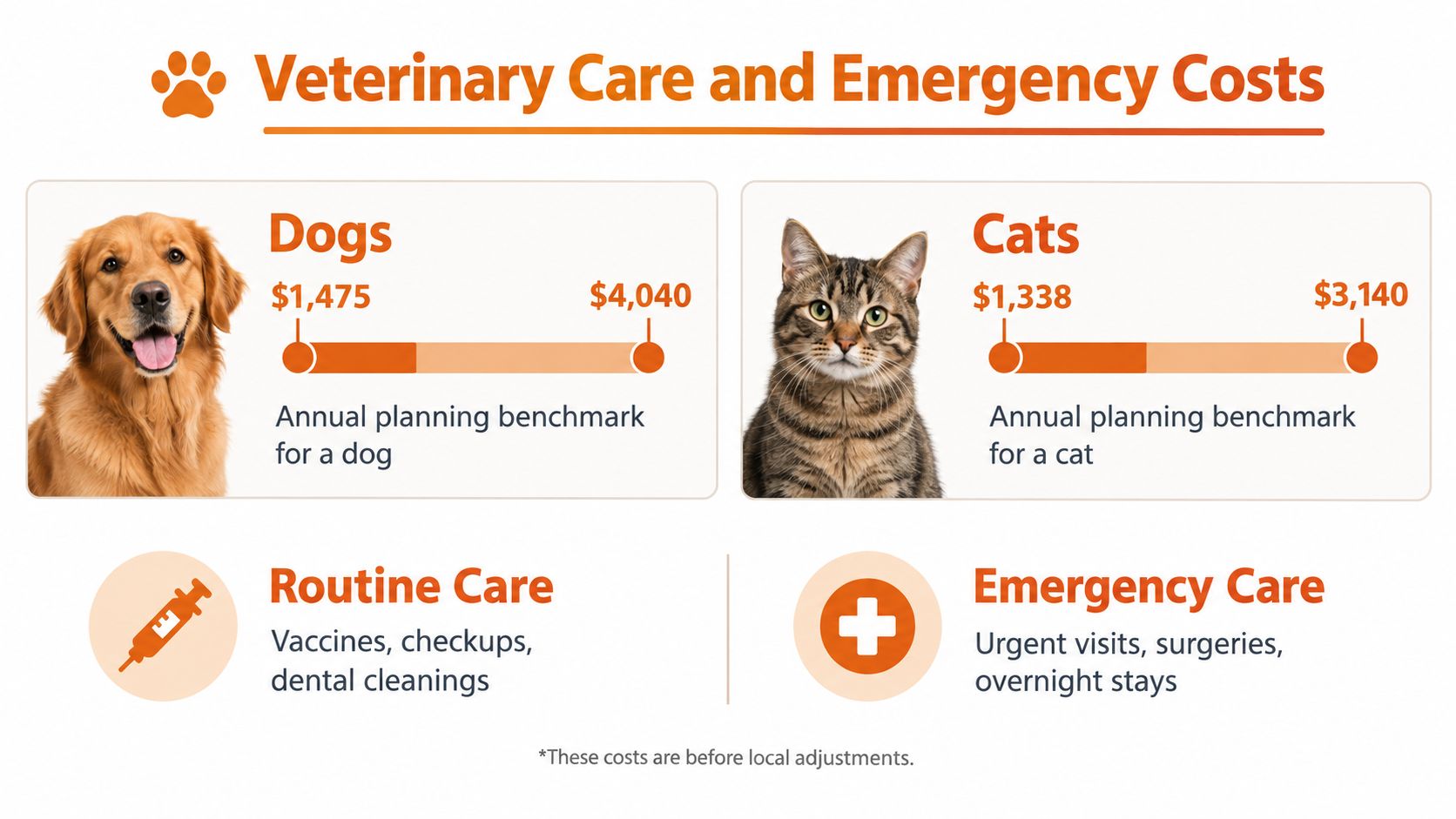
For lifetime context, the AVMA reports $22,125 to $60,602 for a dog over 15 years and $20,073 to $47,106 for a cat over the same lifespan, implying roughly $1,475 to $4,040 per dog-year and $1,338 to $3,140 per cat-year in its guidance on preparing clients for unexpected veterinary costs. Treat those as broad planning benchmarks, not a quote for your breed, age, or medical history.
Routine care includes examinations, vaccinations, parasite testing or treatment, dental assessment, and diagnostics your veterinarian recommends. Urgent and emergency care adds speed, out-of-hours staffing, imaging, hospitalization, and procedures that can't wait for a normal appointment slot. That's why the same symptom can produce very different invoices depending on timing and severity.
The video below is useful preparation before you discuss estimates, options, and payment timing with a clinic.
Keep an emergency reserve or insurance as its own line, and ask for a written estimate before non-urgent treatment begins. A good clinic can explain what's essential now, what can be staged, and what changes if test results point another way.
What to Do When the Quote Is Unaffordable
A quote you cannot pay is a problem to address with the clinic, not a reason to disappear. Ask for options before delaying care. In a survey of dog and cat owners in late 2024 and early 2025, 52% had skipped or declined necessary veterinary care, and 71% of those owners cited cost as the main reason, according to USA Today's reporting on owners declining pet care because of veterinary costs. The same report found that 73% of owners who declined treatment were not offered a more affordable alternative, and fewer than one in four had ever been offered a payment plan.
Be specific about your budget. Ask the clinic to separate the estimate into what needs attention now, what can safely wait, and what follow-up will cost. Request medically appropriate alternatives and ask what changes with each option. A lower-cost plan should still address the health problem, not postpone a decision without guidance.
Payment arrangements may not be offered unless you ask. Check whether the clinic has a payment plan, and look into nonprofit, shelter, university, or community veterinary programs nearby. If you already have insurance or wellness cover, confirm what your policy applies to before paying the full bill.
If the service is not urgent, compare itemized estimates from other providers, but do not delay treatment that the clinic says cannot wait. Tell the veterinary team what you can afford and ask for clear instructions on monitoring your pet and which warning signs require prompt care. You or a sitter can track appetite, movement, toileting, breathing, and behavior. Those observations help you report changes, but they do not replace diagnosis or treatment.
Use the price list to prepare for that conversation and budget for predictable care, episodic services, and emergencies separately. The goal is a workable next step, not the most expensive option by default.
Regional and International Price Differences
Don't convert a foreign quote into your currency and assume you've found a bargain or a rip-off. Local wages, rent, taxes, insurance, fuel, licensing, and demand all sit inside pet-care labor. A lower nominal price can reflect lower operating costs, not lower quality.
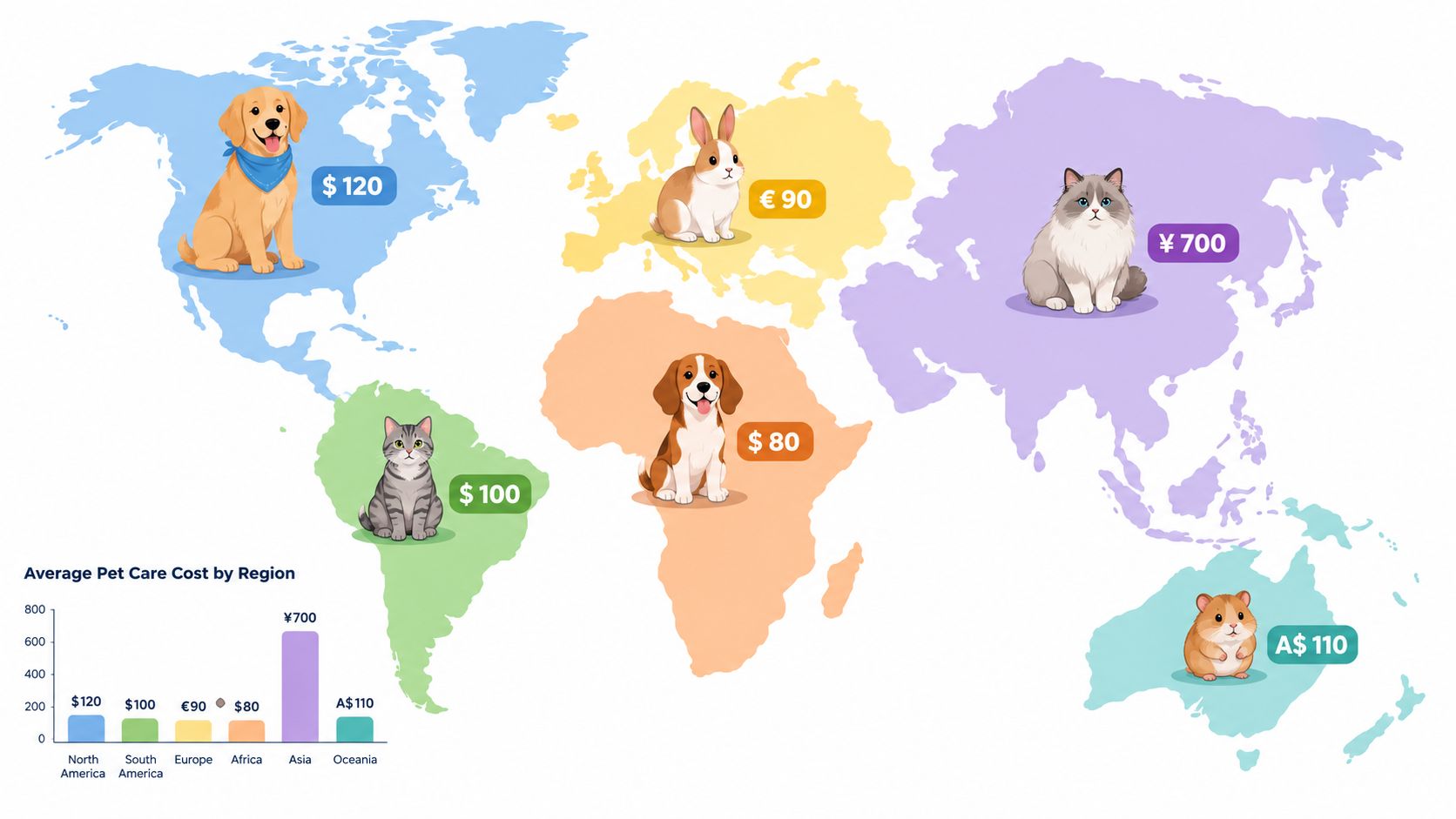
Europe shows the diversity clearly. FEDIAF recorded approximately 299 million pets and 139 million pet-owning households across 41 European countries, including roughly 129 million cats and 106 million dogs, in its FEDIAF Facts and Figures 2025 report. A market that broad can't support one meaningful global sitting, walking, or grooming rate.
Separate mainstream dog and cat care from specialist work for birds, fish, reptiles, and small mammals. Feeding a cat is widely available labor. Maintaining aquaria, terraria, aviary routines, or species-specific handling may require scarcer experience and different insurance. The quote should say so.
Four items swing especially hard by region: multi-pet discounts, medication administration, overnight presence, and holiday surcharges. Compare those line by line before you judge the headline. If you're booking in the United States, this pet sitting in the USA guide gives local context that's more useful than a worldwide average.
Published ranges are more honest than a single global number. Read them as local labor markets with standardized service descriptions, and you'll make better comparisons across borders.
A Preventive-Care Matrix You Can Hand to Any Sitter
A sitter's quote is only useful when it covers the care your pet needs. Give every caregiver one written matrix showing the task, timing, responsible person, and response if something is missed. This separates routine work from veterinary costs and other unpredictable expenses.
The annual veterinary visit belongs in your budget, not in the sitter's duties. AAHA and AVMA guidance recommends at least one examination a year for every dog and cat. The AAHA preventive healthcare guidelines for dogs and cats cover physical exams, vaccination, parasite control, nutrition, dental care, behavioral health, diagnostic testing, and client education. A sitter can keep daily routines on track, but clinical decisions stay with your veterinarian.
For a usable handover, write down the details that affect labor, safety, and price:
- Routine care: Food amounts, water, cleanup, exercise, observation, and how often you expect updates.
- Preventive products: Product name, due date, storage spot, and who provides refills.
- Medication support: Drug, dose, route, timing, storage, and whom to contact after a missed dose.
- Service details: Visit length, included walks, permission to transport your pet, and overnight expectations.
- Emergency authority: Clinic contact, transport approval, payment instructions, and a reachable backup person.
Add testing reminders for heartworm and internal parasites when your veterinarian advises them. For cats, record feline immunodeficiency virus and feline leukemia virus test status when relevant. These details help the sitter follow instructions without taking on medical judgment.
Handover standard: For every important task, record the time, amount, location, and escalation step. Memory is not a care plan.
Attach the matrix to each booking. Sitters can quote the workload, and you can resolve gaps before you leave.
Quick-Reference Price List You Can Copy Into Your Budget
Use this as a worksheet, not a promise of local rates. Fill in your own low and high quotes from providers near you, keep the unit consistent, and refuse to compare entries that don't describe the same inclusions.
Quick-Reference Pet Care Prices by Service
| Service | Unit | Typical Low | Typical High | Usually Includes |
|---|---|---|---|---|
| In-home sitting | Per visit or night | Your lowest local written quote | Your highest local written quote | Feeding, water, sanitation, observation, updates |
| Boarding | Per night | Your lowest local written quote | Your highest local written quote | Lodging, feeding, cleaning, scheduled exercise |
| Dog walking | Per walk | Your lowest local written quote | Your highest local written quote | Walk, water refresh, basic update |
| Grooming | Per session | Your lowest local written quote | Your highest local written quote | Bath or groom for stated size and coat |
| Routine veterinary care | Per year | Your clinic estimate | Your clinic estimate with diagnostics | Exam, prevention, dental assessment |
| Emergency care | Reserve | Your chosen reserve | Your insured or uninsured exposure | Urgent assessment and stabilization |
Add a species overlay beneath the table. Dogs usually add walking and more exercise labor. Cats often add litter, territory-sensitive home care, and medication challenges. Small mammals, birds, fish, and reptiles need habitat checks and specialist feeding that shouldn't be folded into a generic pet fee.
Before you accept any entry, audit it for visit duration, number and species of animals, medication complexity, overnight expectations, cancellation terms, emergency authorization, and whether veterinary fees are excluded. If one field is blank, chase it before money moves. That's how this Ultimate Pet Care Price List becomes a working budget rather than a souvenir.
Frequently Asked Questions About Pet Care Pricing
Should you tip sitters and walkers? Tip for exceptional care, difficult conditions, or help beyond the booked scope if tipping is customary where you live. Don't use an expected tip to excuse an unclear base price.
Is pet insurance worth it? It can be, if the policy fits your pet's age, breed risks, exclusions, and your ability to pay upfront while awaiting reimbursement. Compare it with a self-funded emergency reserve and read waiting periods carefully. Don't buy on fear alone.
How do you negotiate without damaging quality? Negotiate scope, not safety. Book longer blocks, offer flexible timing outside peak periods, simplify add-ons, or commit to repeat work. Don't push a sitter to cut visit time, skip medication checks, or crowd too many animals into one booking.
What if payment currency or platform looks unfamiliar? Pause. Confirm the legal name of the provider, the currency, refund route, fees, and who holds the money before you transfer anything. Use traceable payment methods and keep the written quote. If a provider pressures you to move off a documented channel, walk away.
Your next step is simple. Get two written quotes for the service you need, force both into the same categories, and compare inclusions before price.
Build your pet-care budget around clear inclusions, then use Global Pet Sitter to post your dates and pet details, message trusted sitters, and arrange in-home care that keeps your pet comfortable while you're away. Join the community today, compare real sitter profiles and reviews, and book your next trip with the routine, emergency contacts, and care notes already organized.
Please sign in to leave a comment
