You've booked the flights, found somewhere you want to stay, and then your dog looks up from its bed and the planning starts. Deciding what to do with dog when on holiday is rarely simple, especially if you've never left your dog for long, or if your dog is anxious, elderly, reactive or on daily medication. You're balancing trust, routine and cost all at once.
It helps to start with your dog, not the price list. Can your dog settle with unfamiliar people, cope alone overnight, and manage a new environment without stopping eating or pacing? That question matters at scale, because the PDSA Animal Wellbeing Report 2024 estimated 10.6 million pet dogs lived in the UK, with 28% of UK adults owning a dog.
We compare eight options below against those needs, with the trade-offs stated plainly. You'll also find the handover steps that make any option safer, from medication charts to emergency vet authorisation. While you're preparing, keep coat and skin care simple too, since stress can show up in scratching and dullness, and this grooming advice for dry canine skin is a useful reminder not to change products just before you leave.
1. In-home house sitting
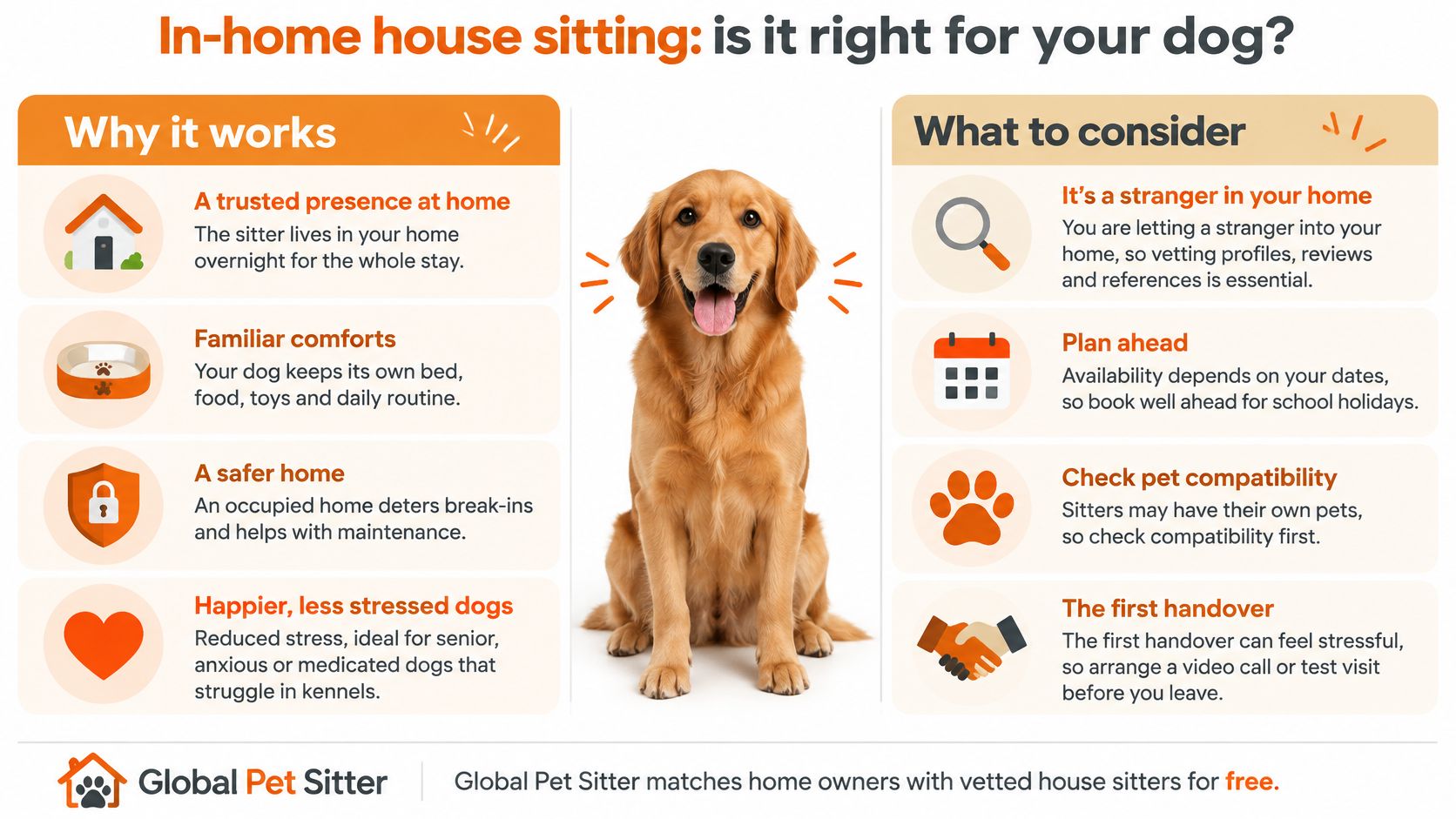
A house sitter moves into your home for your trip and keeps your dog in its own bed, garden, walking routes and daily rhythm. Your post is collected, your home looks lived in, and your dog doesn't have to learn a new place while also missing you. For anxious, senior or medicated dogs, that continuity is often the deciding factor.
That reaction is common. The Dogs Trust National Dog Survey 2024 reported that veterinary consultation was sought for separation-related behaviours by 23% of owners who experienced them. A sitter who's there in the evening and overnight can spot appetite changes, restlessness or a missed tablet far sooner than a twice-daily visit.
What a good arrangement looks like
Say a family leaves a senior Labrador for two summer weeks. They set up a dated medication chart, leave food measured into daily pots, and agree on photo updates after the morning walk. Or say a rescue dog panics with strangers. The owner chooses a sitter with nervous-dog experience, does a handover walk first, and schedules video calls during week one.
- Read profiles properly: Check references and reviews, then video call before you confirm anything.
- Watch for warning signs: Use our red flags guide for choosing a sitter when messages feel vague or rushed.
- Put it in writing: Our pet sitting contract template helps you cover dates, duties, vet details and house rules.
- Use a key safe: Avoid spare keys under mats or with several neighbours.
We match owners with sitters who stay in your home, and you review profiles before agreeing to anything.
2. Professional kennel boarding
Kennels house dogs in individual runs or pens, with set feeding times, staff on site and supervised exercise. They're a clear, fixed-location option, and confident dogs that enjoy bustle and other dogs often do fine. The trade-off is noise, unfamiliar smells and a routine built around the kennel, not your dog.
In England, paid boarding is licensed. GOV.UK guidance on boarding for cats or dogs says councils must inspect premises before issuing a licence, and conditions cover suitable accommodation, food, bedding, exercise, disease protection, emergencies and trained carers. Ask to see the licence, check the expiry date and confirm the address matches where your dog will sleep.
Cost and suitability checks
Budget needs the same honesty. A Go.Compare survey of UK pet owners found 43% of owners spending £10 to £30 per day mainly use kennels or catteries, although your quote will vary by area and what's included. If that model doesn't suit your dog, read our guide to an alternative to kennels before you commit.
Say you book four nights for a work trip. A good kennel will assess your dog first, offer a quiet run away from group play if needed, and tell you who's on site overnight.
- Visit before booking: Look at runs, bedding, drainage, exercise areas and how dogs are separated.
- Ask about nights: Confirm staffing, checks and the emergency vet arrangement.
- Book early: School holidays fill licensed capacity quickly.
- Send familiarity: Bring usual food, bedding and a worn jumper that smells of home.

3. Home boarding with a host family
Home boarding sits between a kennel and care in your own home. Your dog lives in a host's house, usually with one or a few other dogs, joins family walks and sleeps indoors. Sociable dogs often enjoy it. A dog that guards food, struggles with children or needs a very quiet house may not.
This is a sizeable regulated sector in England. An analysis of animal licensing data covering 2022 to 2024 found an average of 5,187 home dog boarding licences issued annually. That licence matters, but it doesn't tell you whether this host suits your dog's temperament, sleep habits or medication schedule.
Questions that reveal fit
Say a friendly Cocker Spaniel is booked with a small-scale host. The owner does a meet and greet, watches the interaction with the resident dog, and checks the garden gate, stairs and sleeping area. A playful young dog might love daily group walks. An older dog may need one guest dog only, and rest away from play.
Our overview of dog home boarding covers the format in more detail if you're comparing hosts.
- Confirm numbers: Ask how many dogs stay at once and whether yours can be separated.
- Check cover: Ask about insurance, first aid training and the vet they'll use.
- Trial it: Arrange one night before a longer booking.
- Agree payment in writing: For extras and gratitude, our advice on whether to tip pet sitters explains what's normal.
Practical rule: If a host won't let you visit with your dog before booking, don't book.
4. Drop-in visits and dog walking
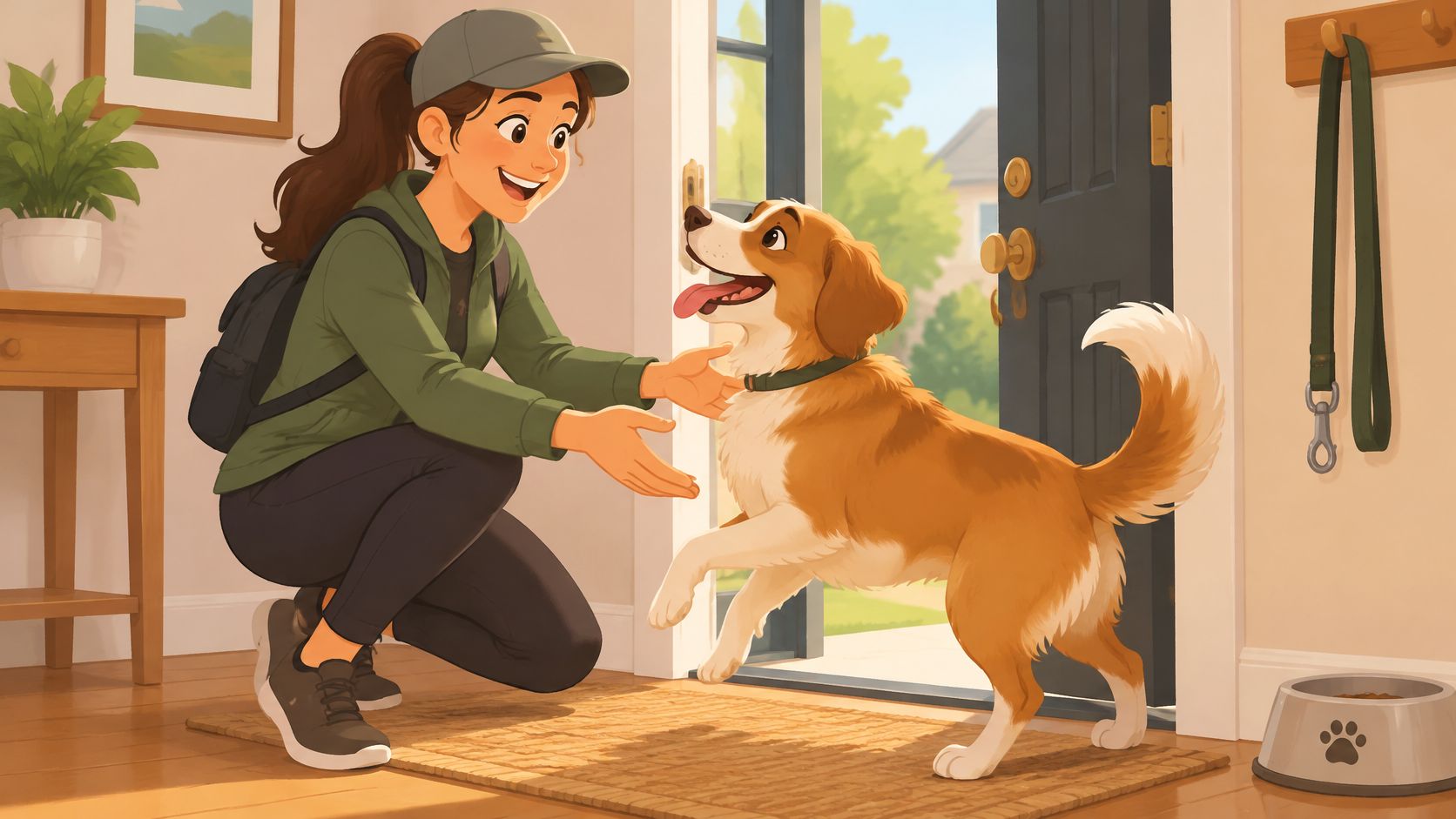
Drop-in care keeps your dog at home while a walker visits to feed, toilet, walk and play. It can work for a confident adult dog over a long weekend, particularly if visits are frequent and someone local can step in. It doesn't provide evening company or someone to notice a 2 a.m. vomiting episode.
Many owners do keep pets at home during trips. A Direct Line study of 2,000 UK pet owners reported by Aviva found 38% leave their pet at home. The useful question is whether at home means alone between visits, or looked after by someone living there. Those are very different welfare propositions for a dog with separation anxiety.
Making short visits work
Say you book breakfast and evening visits for three nights. Your walker sends a photo after each walk, refreshes water, checks the garden gate and notes appetite and stools. For a senior dog with arthritis, a midday medication and short stroll visit may help, but four nights alone can still be too much.
- Set visit windows: Put feeding, toileting, walk length and medication times on the fridge.
- Require updates: Ask for time-stamped photos or messages after every visit.
- Secure access: Use a key safe and record exactly who holds codes or keys.
- Add backup: Ask a neighbour to check the house if a visit is missed.
- Know the limit: For longer trips, combine visits with overnight care.
5. Doggy day care
Day care gives your dog supervised play, rest and company at a facility during the day. It's built for working days, not a full holiday, because most settings don't keep dogs overnight. Used well, it's an add-on. Used as your only plan, it leaves evenings and nights uncovered.
Energetic, sociable dogs can come home happily tired, settle better for a sitter and keep a social routine while packing and travel happen around them. Dogs that are fearful, reactive, elderly or easily overstimulated may spend the day stressed rather than entertained. A trial session tells you more than a glossy activities list.
How owners combine it
Say a young Border Collie goes to day care for three days before departure while suitcases appear at home. The house sitter then handles evenings, nights and morning walks once the owners leave. Another owner books one trial day, sees their dog avoiding the group and guarding a water bowl, and chooses quieter home-based care instead.
If you're considering a smaller home-based setting, our guide to in-home dog day care explains how that differs from a larger facility.
- Ask about ratios: Confirm group sizes, staff supervision and how rest breaks work.
- Check health rules: Vaccinations and parasite treatment need time to organise.
- Share triggers: Tell staff about resource guarding, lead reactivity and escape attempts.
- Confirm transport: If pick-up is offered, ask how dogs are secured in vehicles.
A tired dog isn't automatically a relaxed dog. Ask how the day is paced, not just how much play happens.
6. Friends, family and neighbours
A relative may know your dog well, but familiarity alone does not settle who gives medication, covers a late shift or makes decisions if your dog needs urgent care. Agree the practical details before you travel. Some owners have no informal backup, so start looking at other care options early if that applies to you.
Treat family help like a real booking
Say a grandparent plans to care for your dog for a week. Provide measured food, a medication schedule, veterinary details and your dog's usual routine. Check that they can manage stairs, garden access and lead handling. For a neighbour covering a short trip, agree who can step in if they are delayed.
- Write down the routine: Include feeding times, walks, triggers, house rules, allergies and emergency contacts.
- Try it out: Arrange a handover walk and, if possible, a practice night before your holiday.
- Agree on costs: Decide in advance who will pay for food, damage or veterinary treatment.
- Make it easy to say no: Ask whether the arrangement feels manageable, and give them room to decline.
7. Taking your dog on holiday
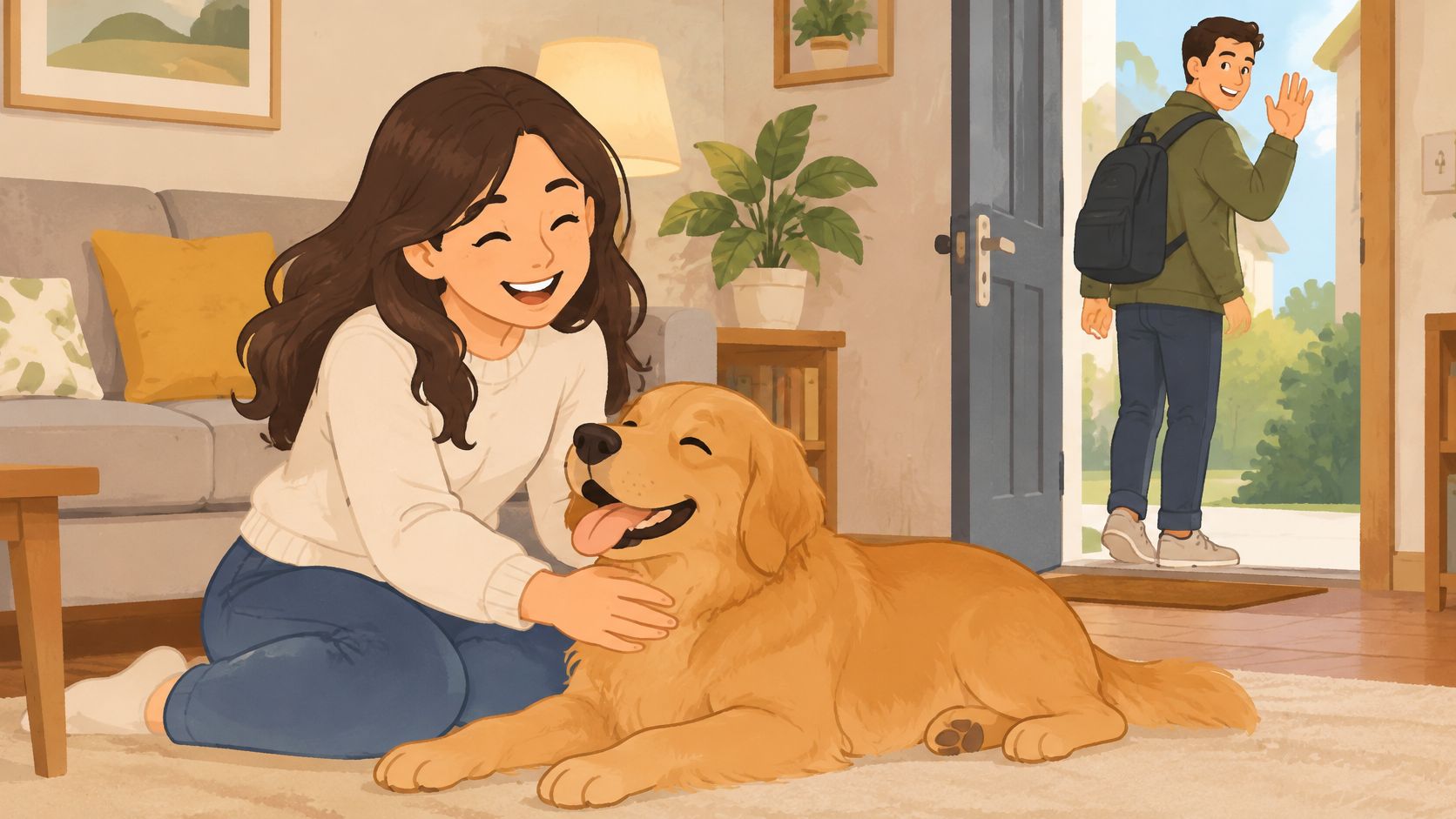
Taking your dog removes the separation, but it replaces it with journey stress, unfamiliar accommodation, heat, toilet logistics and activities your dog can't join. A cottage with a secure garden and short drive can be lovely. A packed itinerary where your dog waits alone in new rooms is not a treat.
The friction is real even for enthusiasts. Caravan and Motorhome Club research found 86% of dog owners who travel in caravans, campervans, motorhomes, tents or roof tents take their dogs, yet 57% struggle to find dog-friendly stops. If you're planning that style of trip, tips to camp comfortably with pets in your RV can help with shade, water and safe rest stops.
UK trips and travel abroad
Say a Spaniel joins a Cornwall cottage week with beach walks and dog-friendly pubs, but the owners still plan one activity where the dog rests with a known adult. For Europe, paperwork drives the timetable. GOV.UK guidance on taking your pet abroad says you need an animal health certificate for an EU country unless another accepted document applies, and your dog must be microchipped before or at the same time as its rabies vaccination.
- Confirm the policy directly: Ask accommodation about size, breed, dogs alone in rooms and garden security.
- Pack the routine: Bring food, medication, bedding, records, poo bags and familiar toys.
- Plan vet access: Save a destination vet and out-of-hours number before departure.
- Never risk heat: Don't leave your dog alone in a hot car.
8. Veterinary boarding
Some veterinary practices board dogs overnight, mainly for patients who need injections, wound checks, post-operative monitoring or careful observation. Your dog is around clinical staff and a vet is on site or nearby. That's reassuring when health is fragile, but a clinic environment can be noisy and isn't designed as a holiday home.
Vet readiness deserves weight in any choice. Research reported in 2026 found nearly 29% of UK pet owners had a pet require veterinary treatment shortly before or during a holiday, in the Aviva news release summarising the Direct Line study. Treat those consumer survey figures as a prompt to plan, not a prediction for your dog.
When clinical care wins
Say a senior dog on heart medication needs timed doses and overnight checks while you're away for a week. Veterinary boarding may be safer than asking a sitter to manage symptoms they can't interpret. A dog recovering from surgery may also need restricted exercise, pain relief and wound checks that fit a practice routine.
Availability is limited and pricing reflects clinical staffing, so ask early. Not every practice offers boarding, and some only accept registered patients.
- Book a pre-stay consult: Review history, allergies, dosage and warning signs with the team.
- Supply labelled medication: Include a dosing chart and enough reserve for delays.
- Ask about nights: Confirm who monitors dogs and how emergencies escalate.
- Send comfort items: Familiar bedding helps, if the practice allows it.
How the eight holiday care options compare
| Item | Overnight cover | Dog stays in its own home | Best for | Cost level |
|---|---|---|---|---|
| In-home house sitting | Yes, sitter stays overnight | Yes | Dogs needing familiar surroundings and routine | Can be cost-effective for longer stays |
| Professional kennel boarding | Usually, confirm with facility | No | Dogs comfortable with structured care and kennels | Varies by facility |
| Home boarding with a host family | Usually, dog stays with host | No | Sociable dogs suited to a family home | Per-night pricing; varies |
| Drop-in visits and dog walking | No | Yes | Confident dogs on shorter trips | Lower cost for short trips |
| Doggy day care | No | No | Sociable, energetic dogs needing daytime company | Daytime care; varies |
| Friends, family and neighbours | Depends on arrangement | Depends on arrangement | Dogs familiar with a trusted, available carer | Usually free or low cost |
| Taking your dog on holiday | Yes, stays with you | No | Dogs comfortable travelling and in new places | Often higher accommodation costs |
| Veterinary boarding | Yes | No | Dogs needing medical supervision or ongoing care | Usually more expensive |
Choosing the Right Option and Preparing Your Home
Start with a short triage of your dog, written clearly. Age and health come first: puppies, seniors and dogs on timed medication need someone present more often than a healthy adult. Next comes behaviour. A dog that can't settle alone, barks through the night in new places, guards food or tries to escape needs a calmer setting and a carer briefed on triggers, not just the cheapest available space.
Then score the trip itself. Two nights nearby is different from two weeks abroad with poor phone signal. Drop-in visits may cover the first, and fail the second. Day care can support a sitter but cannot replace overnight care. Kennels and home boarding suit many confident dogs, while your own home protects routine for a dog unsettled by change. The kindest answer to what to do with dog when on holiday is the one your dog can cope with, tested where possible before the trip dates.
Your Trust and Handover Checklist for Anyone Entering Your Home
Whoever you choose, we require owners to hold a mandatory handover before leaving, either in person or by video call. Cover feeding schedules, walks, medication, toilet routine, sleep arrangements, house rules, emergency contacts and veterinary information. Follow it with written care instructions, and stay reachable for questions or emergencies while you're away.
Give your carer your vet's details and authorisation for emergency care before the sit begins, including your preferred practice, out-of-hours provider, insurance details and microchip number. Your sitter should contact you immediately if your dog needs veterinary care, and before incurring expenses where possible. If you can't be reached, they should use their best judgement to protect your dog's welfare, including seeking treatment.
Prepare your home as carefully as your dog. Make sure vaccinations are current, maintain adequate home and contents insurance, and disclose the location of any security cameras or recording devices. Turn off all internal security cameras during a sit, while external doorbell or garden cameras may remain active. Tell your sitter about any weapons on the property, agree sole occupancy unless you've arranged otherwise in advance, and state that your dog must not be removed overnight without prior approval.
Budget too, because free family help, paid visits, kennels and clinical boarding carry different hidden costs in travel, food, medication and emergency cover. What matters most is matching supervision to need. A dog that needs company at night shouldn't be left hoping a morning visit will do, and a sociable dog shouldn't be denied company it enjoys.
If in-home care fits your dog and your home, start by reading profiles, reviews and references, then meet by video before you agree dates. Find a trusted house sitter for free and take the decision one checked step at a time, so you can leave knowing the routine at home will hold while you're away.
We help home owners find vetted house sitters who stay in your home, follow your written care instructions and keep your dog in its familiar routine while you travel. Browse profiles, arrange a proper handover and agree emergency vet details before you leave by visiting Global Pet Sitter.
Please sign in to leave a comment
