You're on the kitchen floor with a nine-week-old puppy asleep across your foot, and three people are throwing names at you. Someone wants something heroic. Someone else wants the dog from that film. You want the one you won't regret saying forty times a day for the next twelve years.
More rides on that choice than it feels like right now. A boy dog name has to survive real life: being called across a muddy park in the rain, being understood by a vet nurse on the phone, and being picked up quickly by the person staying in your home while you're away on holiday. Short, clear and distinct from your training cues does that job far better than clever.
Below are ten boy dog names UK owners keep coming back to, each with practical notes on how it works with a new puppy, a house sitter and a set of care instructions. We'll finish with how to arrange care for a new pet before your first trip.
1. Max
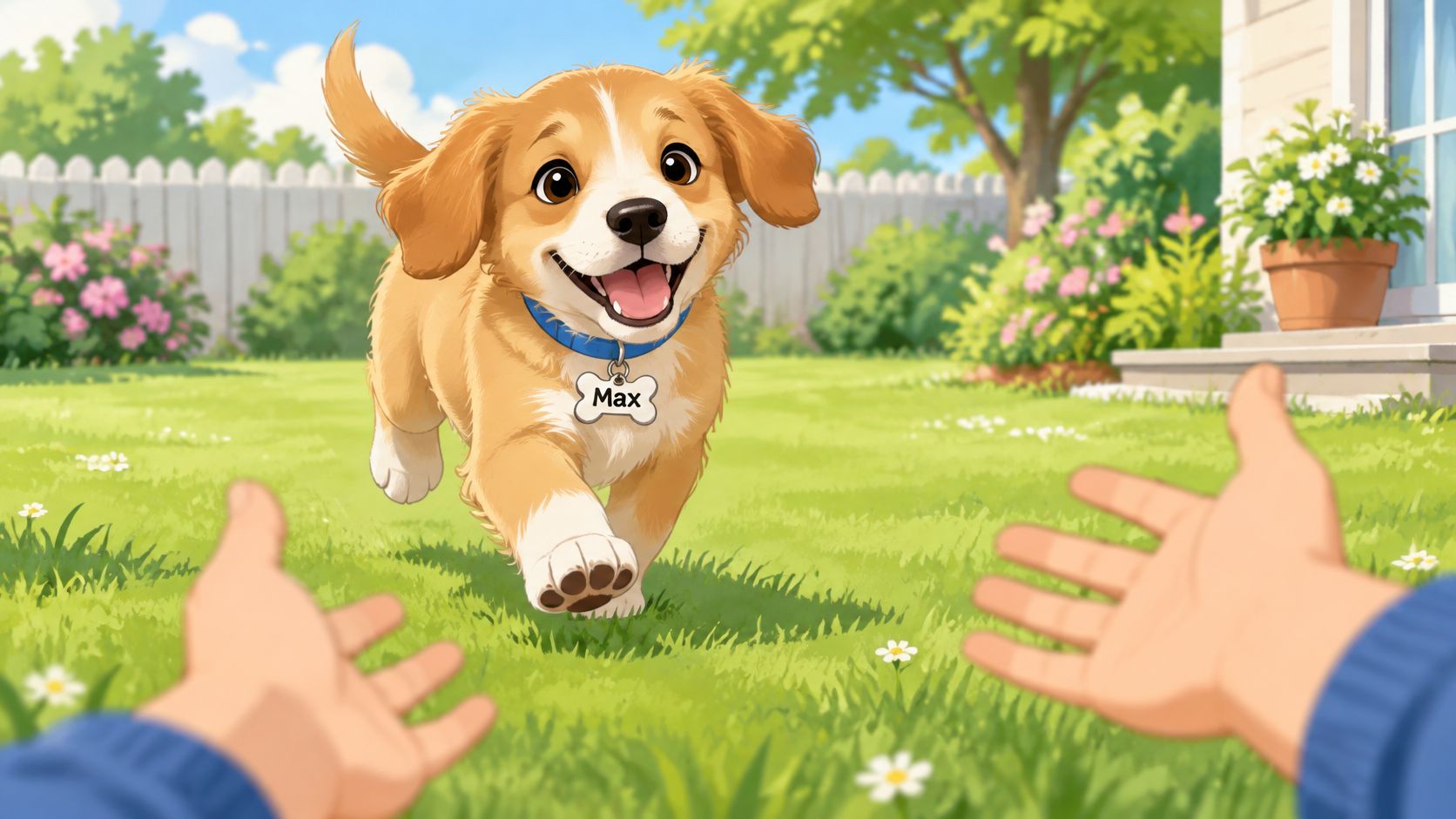
Max earns its place because it is short, hard and easy to hear. One syllable carries across a wet park, down a garden path or through a kitchen doorway, and a puppy in his first week can pick it out from the radio, the kettle and the general clatter of home.
It also sits clear of the words you will use most. “Sit” and “stay” begin softly and end sharply, while Max has a firm start and a clean stop, so your puppy is less likely to mistake his name for a cue when the house is noisy.
Why it works when someone else is in charge
A long weekend away is where a name proves itself. Your sitter calls him from the garden at dusk, uses the same bright tone you use, and gets a head turn rather than a blank look. Put Max at the top of the written care instructions, with feeding times, routines, emergency contacts and vet details, and ask for the name to be used exactly as you say it.
Travel needs a little more care. Before you book anything, check the current official pet travel rules, because microchip and vaccination paperwork can decide whether your dog is allowed to travel.
A name you can say in one breath is a name a sitter can use all week.
Here is a short film on first-day naming and early recall practice:
- Start on day one: pair the name with a treat and a bright tone, never with a telling-off.
- Write it down: use the same spelling on the vet record, insurance and sitter notes, then keep it there.
- Test recall indoors first: hallway recalls are easier than park recalls and build the habit before you go.
If the household is split, our guide to girl dog names shows the other half of the list before you settle on Max.
2. Charlie

The first time you hear someone else call your puppy, you learn something about the name. Charlie tends to come out well: two syllables, a soft start, an ending that doesn't get swallowed when the caller is at the far end of a field.
It's also the sort of name a sitter can use warmly on day one. A familiar, friendly sound helps a nervous puppy decide the new person in the kitchen is probably fine, which is half the battle in the first twenty-four hours and the part you can't do from a hotel room.
One household, one version: pick either Charlie, Charl or Chaz and put it in writing. Two versions of the same name in one house is how a recall gets muddled.
- Agree the pronunciation: tell your sitter how you say it, and which tone means come here rather than who's a good boy.
- Add context to your notes: a line on how he reacts when he hears his name tells a sitter more than the name alone.
- Keep the spelling consistent: the same version on the vet record, the insurance and the handover sheet.
3. Milo

Call "Milo" across a busy park and there is a fair chance more than one head turns. In the Dogs Trust National Dog Survey, Milo ranked third, with 3,574 dogs recorded under the name (Dogs Trust 2024 survey results).
Popularity has a practical upside. A name this familiar is one your sitter has almost certainly said, spelled and heard called before, so there is no learning curve at the handover. The trade-off shows up at the park: if your recall word belongs to the dog two benches down as well, pair it with something only you do, a whistle pattern or a hand signal, so your Milo knows which voice is his.
The sound itself does the heavy lifting. Two syllables, a lift at the end, and nothing that blurs into "no" or "down", so it stays clear whether you use it warmly over the food bowl or sharply from a doorway.
- Practise in every room: a name learned only in the kitchen becomes a kitchen-only name.
- Don't let a sitter invent a nickname: ask for your version and your tone, nothing else.
- Staple a photo to the handover: name, face and feeding times on one page.
4. Archie
Archie sounds like it's been in the family for years, which is exactly the feeling you want at a handover. It's two syllables, rounded at the edges, and it doesn't collide with "sit", "stay", "heel" or "down" the way shorter, sharper names sometimes do.
Where it earns its place
Picture a puppy who is calm and curious rather than bouncy. A gentle name matches that temperament, and it's easy for a sitter to say without sounding like a drill sergeant at bedtime. First-time owners often tell us the name felt comfortable to write into instructions, which matters when you're already nervous about leaving him.
- Spell it out: include the full name and any nickname on your sitter agreement and the vet contact sheet, so a phone call to the practice doesn't stall at reception.
- Practise with different voices: ask a neighbour or a family member to call him in the garden. A puppy who responds to a voice that isn't yours has done the work your sitter will thank you for.
- Keep it short outdoors: one call, one reward, then carry on with the walk.
5. Alfie
Alfie is bright, short and easy to fire across a park, and it suits a puppy who is still working out where his feet end and the furniture begins. Two syllables, an upbeat start, and no chance of being confused for a command at close range.
The test that matters more than style
Say it out loud next to the cues you use every day. Names that sound close to "sit", "stay", "heel", "no" or "down" create avoidable confusion, particularly for a young puppy, an older dog with reduced hearing or an anxious dog who needs calm, consistent handling. Guidance from Pedigree's puppy naming advice makes the same case for one or two syllables paired with positive reinforcement.
Try this before you commit: stand at the far end of your garden and call the name, then say "sit". If the two sound similar at that distance, keep looking.
A calm, consistent tone does the rest. Agree with your sitter that his name means good things and a biscuit, not a telling-off, and put your house rules and daily routine in writing before you leave. Read our red flags guide when you're choosing who stays in your home.
6. Cooper
Cooper has a sturdy, slightly workmanlike feel that suits an active puppy, and it shortens neatly to Coop when you're in a hurry. Both versions are easy to call on a walk, which matters when your sitter is juggling a lead, a poo bag and a puppy who has just spotted a pigeon.
What a sitter needs from you
A clear daily rhythm does more for a new puppy than any name. Write out walk times, meal times, play and nap windows, and the word you use to end play, so the day doesn't drift into one long game.
- Keep the call consistent: the same name, the same tone, the same reward, on every walk.
- Put the routine in writing: a one-page schedule stuck to the fridge beats a long chat on the doorstep.
- Say thank you properly: our guide on whether you tip a pet sitter covers the options if you want to show appreciation.
If you're still weighing up kennels against home care, our piece on what to do with your dog when you're on holiday sets out the trade-offs.
7. Teddy
Teddy is the UK's most common male dog name, and the numbers make the point. In the 2025 Dogs Trust National Dog Survey it was attached to 2,750 dogs, ahead of Milo on 2,711 and Alfie on 2,487 (Dogs Trust National Dog Survey 2025 results).
It won by 39 dogs. That's a photo finish rather than a landslide, and it tells you something useful about British taste: the top of the list is crowded with warm, soft, human-style names rather than anything exotic.
For a cuddly puppy, the name fits. Use it in calm moments, at feeding and grooming, so it settles him rather than winding him up before bed.
- Same tone, same name: ask your sitter to keep your nicknames and your volume rather than inventing their own.
- Keep home familiar: bedding, toys and routine stay where they were, which is the whole advantage of in-home care over a kennel run.
- Leave the comfort items out: his usual blanket on his usual chair says more than any note.
Our guide to home from home dog sitting explains how that looks over a week.
8. Buddy
Buddy does exactly what it says on the tin. It's welcoming, sociable and two syllables long, so it carries across a park and sounds friendly rather than formal when someone calls it in a hallway.
It suits a puppy who likes people. If yours greets every visitor like a long-lost friend, a name that matches his temperament is easier to say with the right warmth, and easier for a sitter to use without feeling silly.
The meet before the trip
Arrange for your sitter to meet him once before you go. Twenty minutes in your own kitchen does more than a week of messages, and it means the name, the voice and the treat routine are already familiar when you close the front door.
- Write the routine down: walks, feeding, play and bedtime, in the order they happen.
- Agree how you'll stay in touch: a daily photo at a set time beats a stream of anxious messages.
- Leave the boring details: bin day, alarm code, where the lead lives.
9. Bear

Bear is one syllable with a strong consonant at each end, so it lands clearly even when it's said across a room. That makes it a practical choice for a sturdy puppy and a reassuring one for an owner handing over the house for the first time.
It behaves well in writing too. Short names are hard to misspell on a form, a vet record or a set of instructions, which is worth more than it sounds when three people are typing your puppy's details into three different systems.
Practical rule: before you travel, put the name, microchip number and vet details on one sheet and leave a copy in the kitchen. If a sitter has to ring the practice in a hurry, everything is in front of them.
Review our pet sitting contract template so the boring but important things, from the name on the record to the emergency contact, are agreed well before you leave.
10. Monty
Monty has a distinctly British charm, the sort of name that sounds like it belongs to a dog with opinions. Two syllables, easy to say, and it carries more character than most of the names above, which is why it appeals to owners who don't fancy meeting three other dogs with the same name at the park.
It suits a cheeky, independent puppy. If yours has already worked out how to open the cupboard where the treats live, this is his name, and a sitter will need to know it fast.
- One sheet with everything: name, microchip, vet, medication and emergency contacts together.
- A settling-in visit first: an hour together before you go is worth more than any handover note.
- The small favourites: his toys, his walking route and the order of his day, because those are what make a strange week feel normal.
Comparing the 10 boy dog names at a glance
| Name | Syllables | Best suited for | Standout quality |
|---|---|---|---|
| Max | 1 | Puppies of many breeds and temperaments | Clear and distinct from common commands |
| Charlie | 2 | Playful or calm puppies | Warm, friendly sound |
| Milo | 2 | Dogs of any size | Cheerful and easy to recognise |
| Archie | 2 | Calm, friendly, or curious puppies | Traditional British feel |
| Alfie | 2 | Energetic and sociable puppies | Lively and easy to call |
| Cooper | 2 | Active and sociable puppies | Strong, confident sound |
| Teddy | 2 | Gentle and cuddly puppies | Soft, affectionate feel |
| Buddy | 2 | Sociable and affectionate puppies | Welcoming, companionable sound |
| Bear | 1 | Sturdy, confident, or cuddly puppies | Strong yet warm feel |
| Monty | 2 | Cheeky, independent, or playful puppies | Characterful British charm |
From First Name to First Trip: Getting Ready for Life With Your Puppy
Say the name out loud once more, then take it outside. Stand at the end of the garden and call it, then check it against "sit", "stay" and "down". A short, clear name is easier for a house sitter to learn on the first morning and easier for your puppy to hear in an unfamiliar voice. If a stranger could call him to breakfast in your kitchen without stumbling over it, you have chosen well.
When the first trip comes, you do not need kennels. A trusted house sitter stays in your home, keeps your puppy in his own routine and follows the care notes you have already written, from the food he eats to the route he walks. That continuity matters most for young, anxious or medicated dogs, who gain little from a week of strange smells and strange faces.
Arranging care for a new pet
Start earlier than you think you need to. Build your listing, describe his routine, note any medication, and leave emergency contacts and vet details where a sitter can find them on day one. Reply to enquiries promptly, ideally within 72 hours, so a good sitter does not drift away while you are deciding. Our page on arranging care for a new pet walks through the handover step by step, and we charge no booking fees, ever.
Make the handover practical rather than perfect. Write down feeding times, walking routes, house rules, his name and recall cues, any special requirements, and what counts as an emergency for your dog. Keep your vaccinations current, be upfront about his history with people and other animals, and stay reachable during the sit for questions or decisions. If he needs veterinary care, your sitter should contact you immediately, so leave clear authorisation and the practice details before you go.
If he is travelling with you rather than staying behind, the paperwork has hard edges. GOV.UK requires your dog to be at least 12 weeks old when vaccinated, and you must wait at least 21 full days after the first vaccination before entry to Great Britain, with the record showing his date of birth, microchip number, vaccination date, manufacturer, product name, batch number and validity dates (GOV.UK on taking your pet abroad). Coming home, tapeworm treatment must be given no less than 24 hours and no more than 5 days before arrival (the rules for bringing a pet to Great Britain). Keep copies in the house for whoever is caring for him, and use a pet record checklist so the microchip number, vaccination dates and vet details stay together.
Find a trusted house sitter for free.
Global Pet Sitter connects owners with trusted house sitters who stay in your home, keep your puppy in his own routine and follow the care notes you have already written. No kennels, no catteries, no stressed puppy. When you are ready, visit Global Pet Sitter to arrange a first meet in your own kitchen before the trip.
Please sign in to leave a comment
